



Tours in Aberdeen


Cruising to Aberdeen in a group?
Skip the crowded ship excursion bus. One dedicated planner will design a private shore experience around exactly what your group wants — coordinated from first enquiry to the moment you're back on board. More memorable, more flexible, and more affordable than you might expect. Spend less time organising, more time enjoying.
Explore Group Travel →Cruising to Aberdeen
Aberdeen occupies Scotland's northeastern coast where the Rivers Dee and Don meet the North Sea, earning its nickname the 'Granite City' from the silvery-grey stone that defines everything from Victorian civic buildings to ancient kirks. The working harbour has served fishing fleets, traders, and North Sea oil industries for centuries, giving the city a distinctly practical character alongside its cultural institutions. Old Aberdeen preserves a remarkably intact medieval streetscape around King's College, founded in 1495, while the city centre is anchored by Marischal College — one of the world's largest granite buildings. The stone and sea identity threads through Aberdeen's character in ways both architectural and atmospheric.
Top things to do in Aberdeen on a cruise stopover
Granite Architecture: Aberdeen's Defining Visual Identity
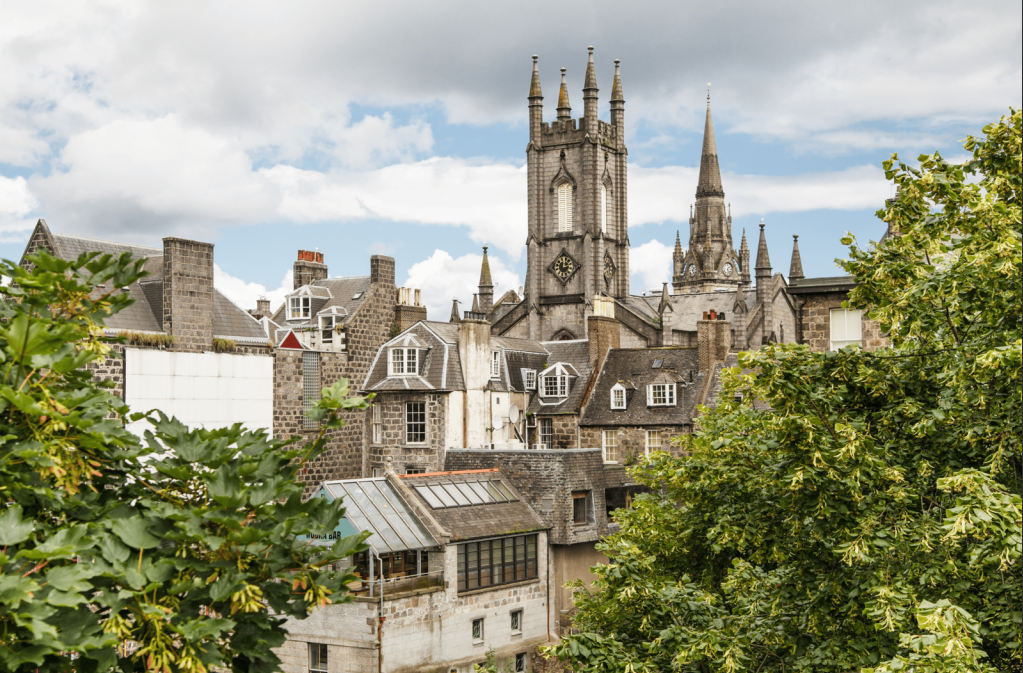
The sheer scale and consistency of Aberdeen's granite streetscapes is unlike anywhere else in Britain. Quarried from local Aberdeenshire hills, the silvery-grey stone catches light in unexpected ways — appearing almost luminous in low sun and sombre under cloud. Union Street, the city's main artery, presents a long Georgian and Victorian granite canyon, while side streets reveal churches, civic buildings, and tenements built from the same material across several centuries. The stone's ubiquity gives Aberdeen a cohesive urban character that rewards simply walking and observing, without needing to enter any specific attraction.
Old Aberdeen and the Gothic Towers of King's College
Old Aberdeen stands apart from the modern city, preserving a medieval street plan that has changed little in centuries. King's College, founded in 1495, anchors the quarter with its distinctive crown tower — one of Scotland's most recognisable Gothic spires. The adjacent High Street of Old Aberdeen is a rare example of a largely intact pre-industrial Scottish town centre. St Machar's Cathedral, a short walk away, is a 14th-century granite structure with a remarkable heraldic ceiling. The quarter can be explored on foot in under two hours and offers a markedly different atmosphere to the Victorian city centre.
Marischal College: One of the World's Largest Granite Buildings
Marischal College on Broad Street is a remarkable architectural statement — a vast perpendicular Gothic facade built entirely in grey granite, completed in 1906. The building served as part of the University of Aberdeen for centuries before becoming Aberdeen City Council's headquarters. The intricate stonework is all the more impressive for being carved from such a hard material, and the building's scale in relation to the surrounding streets creates a dramatic civic presence. The adjacent Marischal Museum holds significant collections relating to Aberdeen and its wider connections and is free to enter.
Aberdeen Harbour and Maritime Heritage
Aberdeen's harbour is one of the busiest in Scotland, reflecting a long history of fishing, trade, and — since the 1970s — North Sea oil support operations. The harbour area has undergone significant regeneration, with a new development alongside the historic inner harbour. Walking the quayside gives a direct sense of the city's working relationship with the sea — fishing vessels, supply ships, and commercial infrastructure are visible alongside cafes and waterfront spaces. The area connects Aberdeen's granite identity to its other defining characteristic: an enduring relationship with the cold North Sea.
Aberdeen Esplanade and the North Sea Coastline
Aberdeen Beach stretches for almost two miles north of the harbour, backed by a Victorian esplanade that once drew seaside visitors from across Scotland. It remains one of Scotland's longest beaches, with the North Sea stretching to a flat horizon. The seafront offers a clear sense of Aberdeen's coastal exposure — the air is typically brisk, the light dramatic, and the scale of the sea impressive. The esplanade links the city centre to the beach by foot or bus, and the contrast between the dense granite streets and the open coastal edge is a distinctive aspect of the Aberdeen experience.
Aberdeenshire: Stone Villages and Coastal Countryside
Beyond Aberdeen's city limits, Aberdeenshire opens into a landscape of rolling farmland, fishing villages, and river valleys. The region holds a remarkable concentration of Scottish baronial castles — Crathes, Drum, and Fraser among them — and coastal villages retain an architecture shaped by granite building traditions. Sightseeing tours from the port typically move between the city's stone heritage and the sea views, rural scenery, and historic sites that give Aberdeenshire its distinctive character. The contrast between city and countryside is accessible within the timeframe of a typical shore excursion.
Aberdeen travel tips
Pack Layers and a Waterproof Jacket. Aberdeen's weather can shift from sunny to overcast to rainy within the same morning, even in summer. Coastal exposure means wind is a constant factor, and granite cobblestones can be slippery when wet. A packable waterproof jacket and comfortable walking shoes with grip are more important here than in many European cruise ports. Temperatures rarely exceed 20°C even in July, so a light warm layer is worth carrying regardless of the morning forecast.
Walk Union Street for Architecture and Atmosphere. Union Street runs east-west through the city centre and offers a concentrated introduction to Aberdeen's granite character. The long Georgian and Victorian facades, the scale of civic buildings, and occasional glimpses down side streets to older structures convey how the city has been shaped by its building material. Walking the full length — about a mile — and exploring surrounding streets takes roughly an hour and requires no admission fees. Castlegate at the eastern end, with its historic Mercat Cross, is worth pausing at before turning back.
Allow Time for the Old Aberdeen Quarter. Old Aberdeen is approximately 20–25 minutes on foot from the city centre, or reachable by a short bus ride. Arriving at King's College and walking south along the medieval High Street towards St Machar's Cathedral takes about 90 minutes at a comfortable pace. The quarter has very limited commercial development — which preserves its character but means few options for food and coffee — so eating before heading out is practical. The contrast with the Victorian city centre is considerable and makes the additional journey worthwhile.
Try a Traditional Scottish Bakery. Aberdeen has a strong bakery tradition. Local shops sell butteries (rowies) — a flaky, slightly salty bread roll unique to the Aberdeen area, best eaten fresh with butter or jam. Alongside rowies, look for oatcakes, Scottish shortbread, and hearty soups in city centre lunch cafes. Prices in Aberdeen's cafes are generally reasonable by UK standards. A proper Scottish lunch — soup, bread, and a hot drink — is both filling and affordable, and a good way to experience a distinctly local part of the culture.
Carry British Pounds Sterling in Cash. While card payments are widely accepted across Aberdeen, some traditional bakeries, market stalls, and pubs still prefer cash. Foreign currency exchange is available at city centre banks on Union Street, though using a bank card with low foreign transaction fees is typically more economical. Note that Scotland issues its own banknotes from Scottish banks — these are legal currency throughout the UK but occasionally met with hesitation outside Scotland, so spending them locally is the practical approach.
Note Return Journey Times to the Ship. Aberdeen Harbour is a working port with active commercial traffic. Confirm your ship's departure time and allow adequate time for the return journey from wherever you are in the city. The city centre is compact enough that re-boarding is straightforward from most areas. Those venturing into Aberdeenshire countryside should factor in travel distances and potential delays on rural roads, particularly during the summer tourist season when traffic through coastal villages can slow significantly.
Port Facts Every Cruiser Needs To Know
Aberdeen shore excursion FAQs
Aberdeen Harbour is situated close to the city centre. Union Street — the main commercial thoroughfare — is approximately 15–20 minutes on foot or a short local bus ride from the main quay. The historic core is compact and easy to navigate once ashore.
Aberdeen is known as the 'Granite City' for its distinctive silvery-grey stone architecture, which gives it a unique visual identity among British cities. It is also notable for Old Aberdeen's medieval university quarter, its working harbour with North Sea connections, and proximity to Aberdeenshire's castle-rich countryside and rugged coastal scenery.
Yes — Aberdeen's city centre is compact and walkable. Most key sights, including Union Street, Marischal College, and the harbour area, are within comfortable walking distance of each other. Old Aberdeen is around 20–25 minutes on foot from the city centre, or reachable by local bus. The beach and esplanade are also accessible on foot or by a short bus ride northward.
Tours from Aberdeen typically combine the city's architectural highlights — granite buildings, Gothic towers, medieval Old Aberdeen — with the broader Aberdeenshire landscape. Walking tours focus on the city's stone heritage and urban character, while sightseeing tours extend into the countryside to include coastal scenery, castle sites, and rural villages beyond the city limits.
Aberdeen's cruise season falls primarily in spring and summer (May–September), when temperatures range from around 10°C to 18°C. Weather is variable and can include sunshine, cloud, and rain on the same day. Coastal wind is a consistent factor regardless of season. A light waterproof jacket and comfortable walking shoes are recommended at all times.
Aberdeen's North Sea location makes fresh seafood a highlight — Cullen skink (smoked haddock and potato chowder) is worth seeking in city centre cafes. The buttery or rowie is a flaky, salty bread roll unique to Aberdeen, best from a traditional bakery. Fresh North Sea seafood, Scottish ales, oatcakes with local cheese, and Scottish shortbread are other regional options worth exploring during a day ashore.
Old Aberdeen is around 20–25 minutes on foot from the city centre, heading roughly northward from Union Street. Local buses also serve the route. The quarter is centred on King's College and the medieval High Street, and takes about 90 minutes to explore at a comfortable pace. It offers a markedly different atmosphere to the Victorian city centre and is worth the additional travel time for visitors interested in Scotland's medieval heritage.
Card payments including contactless are widely accepted across Aberdeen's shops, cafes, and attractions. Some smaller traditional bakeries, markets, and pubs prefer cash. Carrying £20–30 in British Pounds Sterling is a practical precaution. Note that Scottish banks issue their own banknotes — these are valid currency throughout the UK but are best used locally to avoid any inconvenience.
Several Aberdeenshire castles — including Crathes, Drum, and Fraser — are within 30–45 minutes' drive of Aberdeen, making them feasible on a full-day shore excursion. Independent access requires a vehicle, as public transport to most castle sites is limited. Organised sightseeing tours from the port often incorporate castle visits alongside city highlights within their itineraries.
Marischal College on Broad Street is a vast Gothic granite building completed in 1906 and considered one of the world's largest granite structures. Its intricately carved facade is a landmark on any Aberdeen walking itinerary. The building is now Aberdeen City Council's headquarters, so interior access is limited, but the exterior and the adjacent Marischal Museum — free to enter — make it a rewarding stop on any walk through the city centre.
Filters
Select a filter to refine results.
Tour Type
Tour Activity
 Cart
Cart
 USD
USD GBP
GBP AUD
AUD EUR
EUR CAD
CAD