



Tours in Dublin


Cruising to Dublin in a group?
Skip the crowded ship excursion bus. One dedicated planner will design a private shore experience around exactly what your group wants — coordinated from first enquiry to the moment you're back on board. More memorable, more flexible, and more affordable than you might expect. Spend less time organising, more time enjoying.
Explore Group Travel →Cruising to Dublin
Dublin sits at the head of a wide bay flanked by the Wicklow Mountains to the south and the Hill of Howth to the north, its Georgian terraces and medieval streets spreading back from the River Liffey. As Ireland's capital and largest city, it draws cruise passengers to a varied set of experiences within easy reach: the Book of Kells and the Long Room at Trinity College, the colourful cultural quarter of Temple Bar, the sweeping grounds of Phoenix Park, and a pub culture that has become one of the city's defining characteristics. A short journey south on the DART coastal railway reaches the elegant harbour town of Dun Laoghaire, while an hour's drive through rolling countryside leads to the ancient monastic site of Glendalough in the Wicklow Mountains — one of the most atmospheric early Christian sites in Europe. Dublin rewards equally those who prefer to wander its Georgian streets on foot and those who venture into the surrounding landscape.
Top things to do in Dublin on a cruise stopover
Dublin City Centre: Georgian Streets and Living History
Dublin's city centre contains a remarkable concentration of Georgian architecture — the elegant brick terraces, fanlit doorways and wrought-iron railings of Merrion Square, Fitzwilliam Square and St Stephen's Green represent some of the finest 18th-century urban planning in Europe. The compact core is best explored on foot: from O'Connell Street and the GPO, site of the 1916 Easter Rising, across the Liffey to the cobblestoned lanes of Temple Bar and the Liberties neighbourhood, with its street art and independent market scene. Dublin's cultural institutions — the National Museum, National Gallery and Chester Beatty Library — are free to enter and richly reward a visit alongside the city's famous pub culture.
Trinity College and the Book of Kells
Founded in 1592 on the grounds of a dissolved Augustinian monastery, Trinity College Dublin occupies a serene 47-acre campus at the heart of the city. Its most celebrated possession is the Book of Kells — an illuminated manuscript gospel book created by Celtic monks around 800 AD and considered among the finest examples of medieval artwork in existence. Displayed in the Old Library's Treasury, it leads into the Long Room: a barrel-vaulted library containing 200,000 volumes, lit by natural light and lined with marble busts of distinguished scholars. The surrounding campus, with its cobblestoned squares and Palladian facades, is worth exploring in its own right. Booking tickets in advance is strongly recommended during peak season.
Glendalough: The Valley of Two Lakes
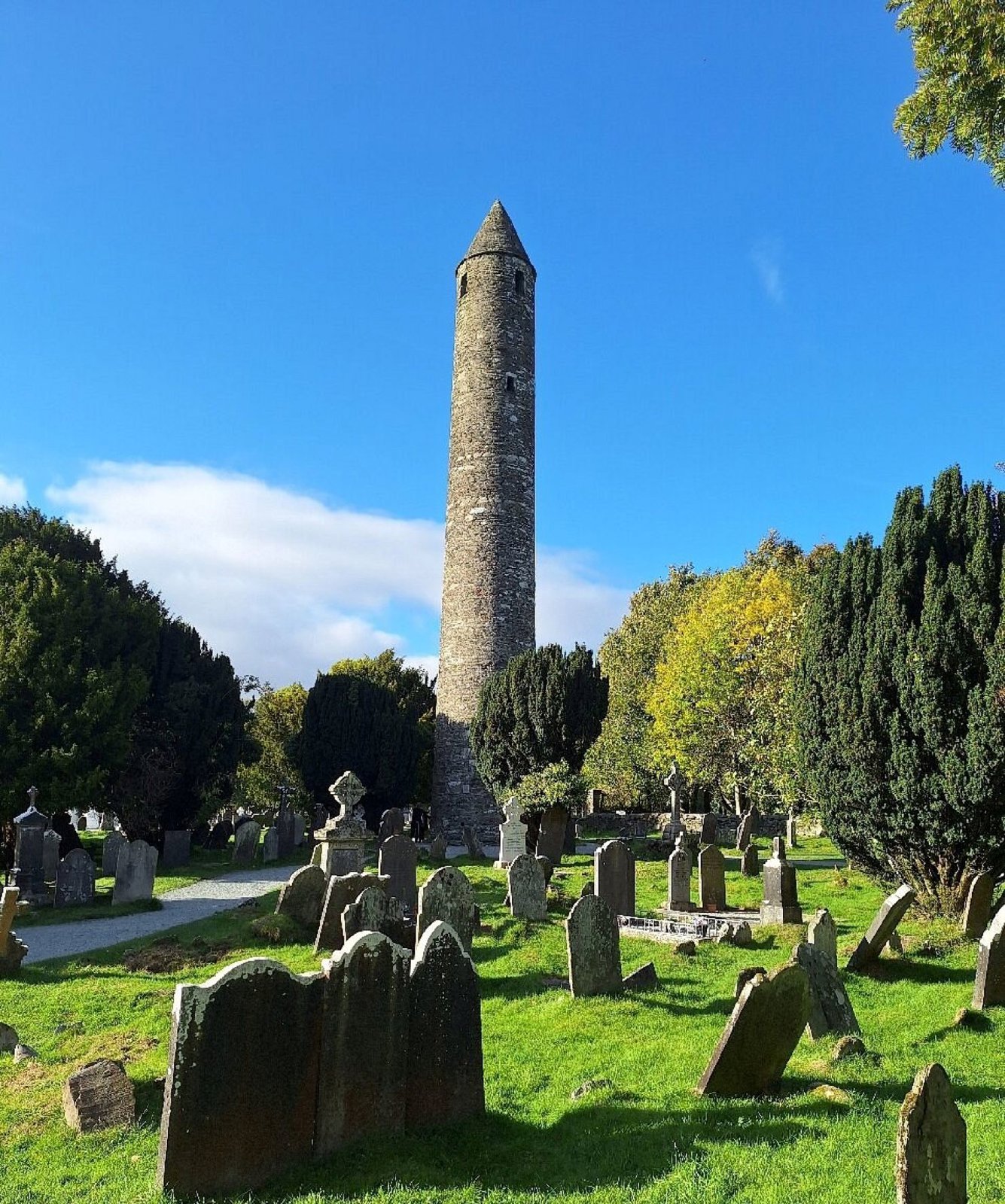
Glendalough — meaning 'valley of two lakes' in Irish — is one of Ireland's most significant early Christian sites and among its most beautiful natural settings. Founded by St Kevin in the 6th century, the monastic settlement grew into an important centre of scholarship before being repeatedly attacked by Viking raiders. The remains include a remarkably well-preserved round tower, a roofless cathedral, St Kevin's Kitchen — a small oratory with its own miniature round tower — and several smaller churches scattered across the wooded valley floor. The two glacial lakes, dense oak woodland and encircling Wicklow Mountains make Glendalough as much a landscape experience as a heritage one. Allow at least two hours on site to appreciate both.
Wicklow Mountains National Park
The Wicklow Mountains rise south of Dublin into a landscape of heather moorland, glacial valleys, fast-running rivers and ancient woodland that feels genuinely remote despite lying within an hour of the capital. The national park covers over 20,000 hectares and encompasses the source of three of Leinster's principal rivers. The Military Road, built after the 1798 rebellion to improve access to rebel-held mountain territory, offers some of the most dramatic driving scenery in Ireland. The park shifts character with the seasons — purple heather in late summer, vivid autumn colour in the oak and birch woodland, and striking winter light across the high blanket bog. Red deer, peregrine falcons and native brown trout inhabit the park year-round.
Guinness Lake: A Scenic Stop in the Wicklow Foothills
Known locally as Guinness Lake, the Poulaphouca Reservoir near Blessington was created in the 1940s when the River Liffey was dammed to generate hydroelectric power for Dublin — with the Guinness Brewery among the key industrial beneficiaries. The resulting lake covers over 2,000 acres and is surrounded by rolling farmland and woodland, with the Wicklow Mountains visible to the east. It makes a peaceful and scenic stop on routes through the Wicklow foothills, offering a calmer landscape contrast to the dramatic upland terrain of the national park further south. The nearby town of Blessington has traditional pubs and cafes well-suited to a lunch break.
The DART and Dun Laoghaire's Victorian Harbour
The DART — Dublin Area Rapid Transit — runs along the coast from Howth in the north through the city centre to Greystones in the south, hugging the shoreline of Dublin Bay and offering one of the most scenic suburban rail journeys in Ireland. The harbour town of Dun Laoghaire (pronounced 'Dun Leary') was once Ireland's principal point of sea connection with Britain and retains its fine Victorian seafront, two long granite piers popular with walkers, and a well-regarded food and arts scene. For cruise passengers docking at Dun Laoghaire, the DART provides direct, frequent and comfortable access to Dublin city centre, making it a natural way to begin and end a day ashore.
Dublin travel tips
Book Trinity College Tickets in Advance. The Book of Kells exhibition at Trinity College is one of Dublin's most visited attractions, and queues without pre-booked tickets can be significant during the summer cruise season. Booking online before your visit guarantees entry at a chosen time and eliminates waiting. The Long Room is worth the visit even for those with limited interest in medieval manuscripts — few library interiors anywhere in the world match its atmosphere and scale.
Use the DART for Coastal Access. The DART is a quick, reliable and scenic way to move between the Dun Laoghaire port area, Dublin city centre and the coastal suburbs. Tickets can be purchased at any station using cash or card. A Leap Card — Ireland's reusable travel card — offers slightly reduced fares and works across Dublin Bus and the Luas tram network as well as the DART. Leap Cards are available from newsagents and at station machines throughout the city.
Allow a Full Day for Wicklow and Glendalough. The Wicklow Mountains and Glendalough reward those who invest a full day. Glendalough alone warrants at least two hours on site; travel from Dublin is approximately one hour each way. Public bus services to Glendalough are limited and infrequent. Starting early significantly improves the experience — the site is quietest in the morning, the light is more atmospheric, and summer afternoons can bring considerable visitor numbers to the valley.
Temple Bar: Choose the Right Time of Day. Temple Bar, Dublin's cultural quarter on the south bank of the Liffey, is most atmospheric in the mid-morning before the tourist crowds build. The cobblestoned streets contain independent galleries, a weekend food market, record shops and several genuinely good cafes alongside the famous pubs. If a traditional Irish pub session is on the agenda, lunchtime in a historic establishment is a very different experience from the busy evening scene — quieter, more authentic, and more conducive to conversation with locals.
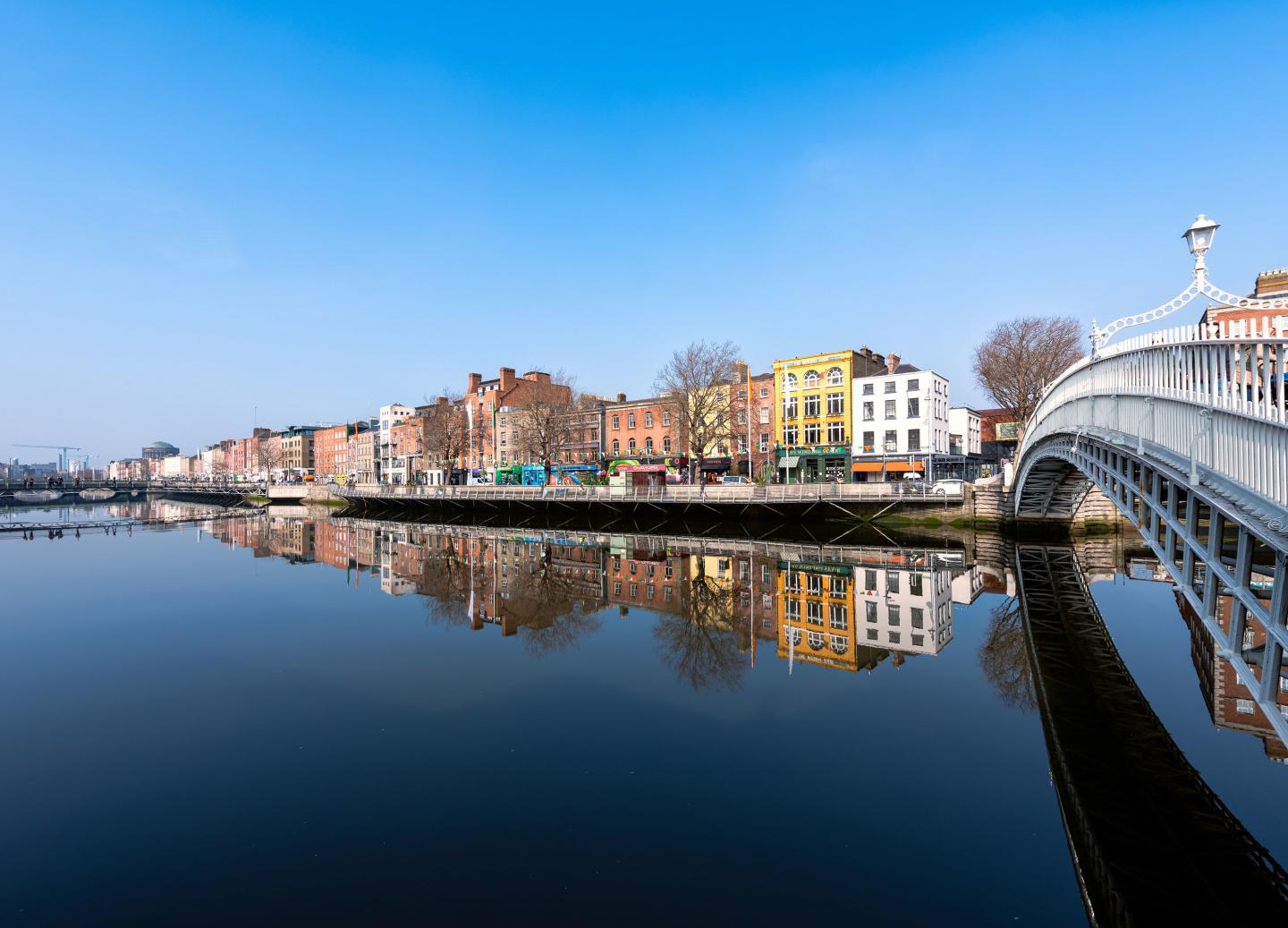
Explore Both Sides of the Liffey. Many visitors focus exclusively on the south side of the Liffey, but the north bank has much to offer. O'Connell Street contains the GPO, site of the 1916 Easter Rising, and the Garden of Remembrance. The Hugh Lane Gallery (free entry) houses an impressive collection of modern and contemporary art, including Francis Bacon's studio reconstructed in its entirety. The historic Smithfield neighbourhood and the Jameson Distillery Bow St are also on the north side and worth the short walk across Ha'penny Bridge.
Pack for Irish Weather. Dublin's weather is mild and maritime, which means it can change rapidly at any time of year. A light, packable waterproof jacket is one of the most useful items to bring ashore, regardless of how the morning looks at the pier. Rain showers tend to be brief and heavy rather than sustained, and most attractions are either indoors or have sheltered areas nearby. The Wicklow Mountains can be notably cooler and wetter than the city — an extra layer is advisable on mountain excursions.
Port Facts Every Cruiser Needs To Know
Dublin shore excursion FAQs
Dublin cruise ships dock at either Dublin Port (Alexandra Quay), approximately 2 km from the city centre, or Dun Laoghaire Harbour, about 12 km south of the centre. Larger vessels typically use Dublin Port; check your itinerary in advance to confirm your docking location, as the transport options to the city differ significantly between the two terminals.
From Dublin Port, the city centre is reachable by Dublin Bus services or on foot (approximately 25 minutes walking along the quays). Some cruise lines operate a shuttle service between the ship and a central drop-off point — check with your line. From Dun Laoghaire, the DART train runs directly and frequently to Dublin city centre stations including Pearse and Connolly, taking around 25–30 minutes.
Glendalough is one of the most compelling excursions from Dublin and rewards those prepared to commit a full day. The site itself warrants at least 2 hours, and the drive from Dublin is approximately 1 hour each way through the Wicklow Mountains. The combination of early Christian ruins — including a perfectly preserved round tower — and the natural beauty of the glacial valley makes it genuinely memorable for those with sufficient time ashore.
The DART (Dublin Area Rapid Transit) is Dublin's coastal commuter rail service, running from Howth in the north to Greystones in the south, passing through the city centre. It is clean, reliable and offers excellent sea views along Dublin Bay. Single tickets can be purchased with cash or card at station machines. A Leap Card, available at newsagents and stations, offers lower fares and works on Dublin Bus and the Luas tram as well.
Independent visits by car offer maximum flexibility. By public transport, St Kevin's Bus Service runs between Dublin city centre and Glendalough twice daily, taking approximately 90 minutes each way — check current schedules as timings vary seasonally. Given the journey time and limited service frequency, an organised excursion is often the most practical way to include Glendalough and the Wicklow Mountains within a single day ashore.
For a single day, the most rewarding city-centre experiences are the Book of Kells and Long Room at Trinity College (book in advance), a walk through St Stephen's Green and the Georgian squares, the Chester Beatty Library (free entry; one of the world's great collections of manuscripts and decorative arts), and a stroll across Ha'penny Bridge to explore Temple Bar and the Liffey quays. The National Museum of Ireland on Kildare Street is free and covers Irish archaeology from prehistoric times to the medieval period.
The historic core of Dublin — roughly bounded by the Liffey to the north, the Grand Canal to the south, and a kilometre either side of O'Connell Bridge — is very walkable. Most major sights are within 20–30 minutes of each other on foot. The city is largely flat and well-signposted for pedestrians. For longer journeys or connections to the port, the DART, Luas tram and Dublin Bus are all straightforward to use.
A pint of Guinness — which genuinely tastes different in Dublin than elsewhere — is almost obligatory. Irish seafood chowder, traditionally made with smoked fish and cream, is widely available and excellent. Soda bread, colcannon and Irish stew are traditional staples worth seeking out. Dublin's restaurant scene now includes excellent options across many cuisines. The weekend food market at Temple Bar showcases local artisan producers and is worth a visit on Saturdays.
The Republic of Ireland has its own visa requirements, separate from the UK. Most passport holders from the US, Canada, Australia and the EU can enter Ireland visa-free for short tourism visits. Check the Irish Naturalisation and Immigration Service guidance well in advance of travel. Note that Ireland is not part of the Schengen Area, so a Schengen visa does not automatically grant entry to Ireland.
Dublin is in the Republic of Ireland, which uses the euro (EUR). Card payments are accepted in the great majority of restaurants, shops and attractions across the city. Some traditional pubs, market vendors and car parks still prefer or require cash. ATMs are readily available throughout the city centre. Pounds sterling are not accepted in the Republic of Ireland.
Filters
Select a filter to refine results.
Tour Type
Tour Activity
 Cart
Cart
 USD
USD GBP
GBP AUD
AUD EUR
EUR CAD
CAD