



Tours in Ringsakiddy
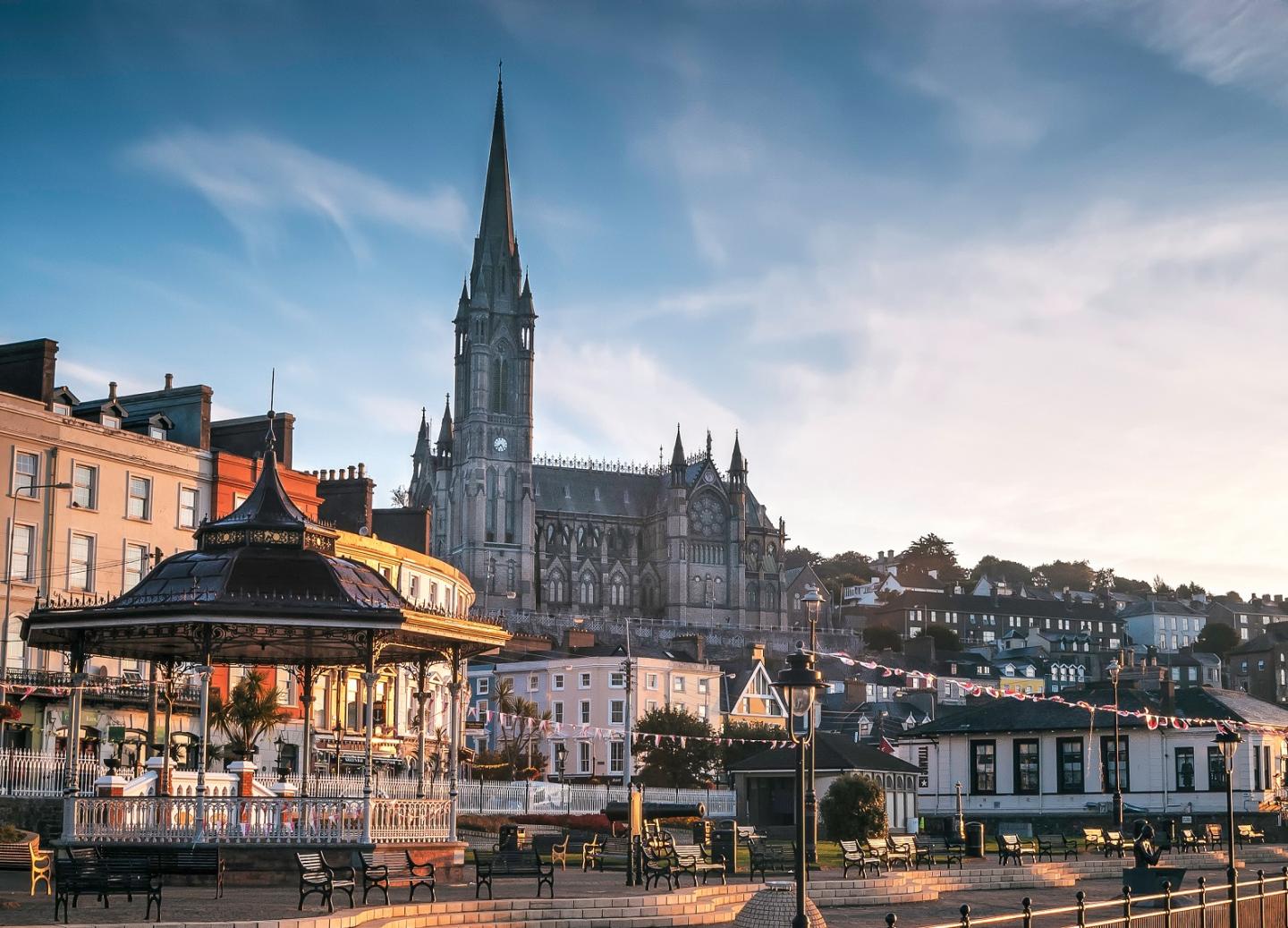


Cruising to Ringsakiddy in a group?
Skip the crowded ship excursion bus. One dedicated planner will design a private shore experience around exactly what your group wants — coordinated from first enquiry to the moment you're back on board. More memorable, more flexible, and more affordable than you might expect. Spend less time organising, more time enjoying.
Explore Group Travel →Cruising to Ringsakiddy
Ringaskiddy sits on the western shore of Cork Harbour, one of the largest natural harbours in the world and a body of water that has shaped Irish history for centuries. From here, the compact and thoroughly walkable city of Cork lies just 12 kilometres to the north — close enough to make a morning ashore feel generous rather than rushed. Ireland's second city punches well above its weight in terms of character, cuisine, and heritage, earning genuine affection from visitors who often find themselves wishing they had stayed longer.
Cork's city centre occupies an island formed by channels of the River Lee, and the layout gives it an intimate, navigable quality. The Grand Parade and St. Patrick's Street form the commercial spine, while the lanes around the Coal Quay and the Shandon neighbourhood reveal a more layered, local character. The city has a reputation for independent thinking — it long styled itself the 'real capital' of Ireland — and that confident distinctiveness shows in everything from its pub culture to its celebrated food scene.
At the heart of that food culture sits the English Market, a Victorian covered market of extraordinary quality that has been operating continuously since 1788. Here, artisan producers, fishmongers, cheesemongers, and deli counters present the finest of the Irish larder in a setting that functions as both a working market and a genuine visitor attraction. A short drive northwest of the city, Blarney Castle provides the quintessential Cork experience: a 15th-century tower house set in extensive woodland gardens, with the famous Blarney Stone set into the battlements above.
Beyond the castle and the city, County Cork extends into a landscape of green hills, coastal inlets, and small market towns. The harbour itself holds the charming Victorian port village of Cobh, where the last transatlantic passengers boarded the RMS Titanic in April 1912, and where the heritage of Irish emigration is powerfully preserved. Whether passengers focus on the city, the castle, or the wider county, Ringaskiddy offers a gateway into one of Ireland's most rewarding regions.
Top things to do in Ringsakiddy on a cruise stopover
Blarney Castle & the Stone of Eloquence
Blarney Castle is one of Ireland's most visited and most recognisable heritage sites — a 15th-century tower house built by Cormac MacCarthy set within extensive woodland gardens that reward exploration well beyond the famous stone. To kiss the Blarney Stone, set into the castle battlements near the top, visitors must climb approximately 120 steep spiral stone steps and lean backwards over a parapet while a guide holds them safely in place — a ritual said to bestow the legendary Gift of the Gab. The tradition has drawn visitors for centuries, though the castle tells a far fuller story. The Rock Close features ancient limestone formations and druidic associations; the Poison Garden cultivates notoriously toxic plants with illuminating interpretation; and the walled Fern Garden offers a tranquil counterpoint to the bustle above. The castle grounds are among County Cork's most beautiful, with ancient yew walks and landscaped water features that make even non-stone-kissers glad they came.
The English Market
Established by royal charter in 1788, Cork's English Market is one of the oldest and most celebrated covered food markets in Europe — a living institution rather than a heritage exhibit. Under the ornate Victorian ironwork canopy of the Princes Street entrance, stallholders trade everything from whole salted ling and locally aged cheddars to handmade chocolates and freshly prepared hot dishes. The market is busiest on Friday and Saturday mornings when the full range of producers is present. Queen Elizabeth II visited during her historic 2011 Ireland trip, pausing at the Boqueria stall in a moment that confirmed international standing for what locals had long known. Budget time for browsing, tasting, and a coffee at the market's upper-level Farmgate Restaurant, which serves an excellent sit-down lunch using market produce and is popular with Corkonians and visitors alike. Note that the market is closed on Sundays.
Cork City Centre & the River Lee
Cork's city centre sits on an island between the north and south channels of the River Lee, giving it a compact geography well suited to a shore day on foot. St. Patrick's Street curves along what was once the main channel of the river, lined with shops, cafés, and occasional buskers. The Grand Parade opens onto Bishop Lucey Park, a relaxed green space in the heart of the centre. Nearby Paul Street and French Church Street form a more bohemian quarter of independent cafés, bookshops, and boutiques. The lanes connecting these arteries hold some of the city's most interesting bars and restaurants. The 18th-century Shandon neighbourhood, across the north channel, offers a quieter residential character, the famous St. Anne's Church with its distinctive pepper-pot tower, and views back across the city's rooftops to the hills beyond.
Cobh: The Great Harbour Town
Sitting on Great Island within Cork Harbour, Cobh (pronounced 'Cove') is one of Ireland's most poignant and visually striking towns — a steep hillside of colourful Victorian terraces rising above a waterfront that witnessed some of the most dramatic events in Irish and Atlantic history. It was the last port of call for the RMS Titanic, which departed on 11 April 1912 taking on passengers who would never arrive in New York. The Titanic Experience Cobh, located in the original White Star Line booking office, tells that story with immersive skill. Cobh was also the primary departure point for millions of Irish emigrants during the Famine decades — a history told with great sensitivity at the Cobh Heritage Centre in the former Victorian train station. The town's soaring Gothic cathedral and its painted-house waterfront make it one of Ireland's most photographed coastal settlements.
St. Fin Barre's Cathedral
Rising dramatically above Cork's south side, St. Fin Barre's Cathedral is among the finest examples of Gothic Revival architecture in Ireland and one of the city's defining landmarks. Built between 1865 and 1879 to a design by William Burges, the cathedral is celebrated for its intricate stone carvings, glittering mosaic floors, and the spectacular west front with three ornate spires. Burges brought his characteristically dense decorative vision to every element of the interior — from the carved marble pulpit and gilded apse ceiling to the extraordinary stained-glass windows. The cathedral stands on a site of Christian worship dating to the 7th century and the founding of Cork by St. Finbarr himself. Visits are self-guided and take around 30–45 minutes; the peaceful close surrounding the building offers a welcome respite from the city's busier streets.
County Cork: Hills, Coast & Countryside
Beyond the city and Blarney, County Cork extends across one of Ireland's most scenically varied and historically layered landscapes. The rolling agricultural hinterland around the Lee Valley gives way to dramatic coastline along the Old Head of Kinsale, the sheltered inlets of West Cork, and the food destination of Kinsale town — often described as Ireland's gourmet capital. For cruise passengers with limited time, even the drive to Blarney reveals the characteristic patchwork of hedgerow-lined fields, whitewashed farmhouses, and ancient standing stones that define the Irish countryside. The county's strong association with the Ballymaloe Cookery School has raised its profile further as a destination for those drawn to Ireland's extraordinary contemporary food culture, while the village of Midleton nearby is home to the famous Jameson Irish Whiskey distillery.
Ringsakiddy travel tips
Know What Kissing the Blarney Stone Involves. Kissing the Blarney Stone requires climbing approximately 120 steep, narrow spiral stone steps to reach the top of the castle tower. The stone is set into the outer battlements wall, and the process involves leaning backwards over a substantial drop while a guide holds you in place — iron railings provide grip. Those with mobility concerns, claustrophobia, or aversion to heights should consider whether the experience is right for them before committing. The castle grounds — Rock Close, the Poison Garden, the Fern Garden — are rewarding in their own right and fully accessible at ground level. Early morning visits tend to have shorter queues at the stone itself.
Visit the English Market Early in Your Shore Day. The English Market is at its best and busiest on weekday and Saturday mornings when the full complement of stalls is operating and the produce is freshest. Most stalls begin winding down in the early afternoon, and Sunday sees the market closed entirely. If your ship docks in the morning, prioritising the market early — before heading to Blarney — maximises what you see and taste. The upper-level Farmgate Restaurant offers an excellent sit-down lunch using market ingredients and is popular with locals and visitors alike; booking in advance is recommended if you plan to dine there.
Always Pack a Rain Layer. Cork sits in the mild, wet southwest of Ireland, and rain is a real possibility at any time of year. The good news is that showers are typically brief and skies can clear rapidly. A lightweight, packable waterproof jacket takes up minimal bag space and dramatically improves comfort when moving between indoor sites like the English Market and outdoor attractions like Blarney Castle's grounds. Temperatures rarely dip below 5°C or exceed 22°C, so extreme heat or cold is seldom a concern — but layering is always the sensible approach for a day that moves between interiors and open-air historic sites.
Cobh is Worth Considering if Maritime History Interests You. Cobh is only 23km east of Cork city centre and makes a compelling addition to any Ringaskiddy shore day for those drawn to the Titanic story or the history of Irish emigration. The Cobh Heritage Centre provides excellent context for both subjects, and the town's painted waterfront is genuinely beautiful. The steep streets leading up to the cathedral offer panoramic harbour views. Cobh and Blarney are not easily combined in a single half-day — consider which holds greater appeal for your interests before settling on an itinerary. Attempting both alongside a Cork city walk is ambitious within typical shore-day time constraints.
Embrace Cork's Distinctive Pub Culture. Cork's pub scene has a character distinct from Dublin — quieter, more locally rooted, and generally more welcoming of unhurried visitors. Traditional music sessions appear in certain pubs, particularly on weekday evenings, though shore-day timing means you are more likely to experience a lunchtime or afternoon atmosphere. Murphy's stout, brewed in Cork since 1856, is the local choice — smoother and less bitter than Guinness according to Corkonians. Many pubs also serve excellent food: a bowl of seafood chowder with brown soda bread in a Cork pub is one of the most straightforwardly satisfying shore-day lunches available anywhere in Ireland.
Build a Buffer Into Your Return Journey. The drive from Cork city centre or Blarney back to Ringaskiddy takes around 20–30 minutes in normal traffic, but busy afternoon periods or unexpected road disruptions can add time. If exploring independently, leave a comfortable buffer of at least 45–60 minutes before your ship's latest return time. The N28 approach road to the terminal can back up during busy port days. Organised excursions manage return timing on your behalf, which removes this particular planning pressure and ensures you do not find yourself rushing through the final hours of what should be a relaxed day ashore.
Port Facts Every Cruiser Needs To Know
Ringsakiddy shore excursion FAQs
Ringaskiddy is approximately 12 kilometres south of Cork city centre on the western shore of Cork Harbour. The journey by road typically takes 20–30 minutes depending on traffic, making it an easy and practical connection for a shore day exploring the city and surrounding county.
Walking the full distance from Ringaskiddy to Cork city centre is not practical within a shore excursion timeframe — it is approximately 12km and would take well over two hours along roads not designed for pedestrians. Public bus services operate between Ringaskiddy and the city, and many visitors use organised excursions for the most efficient use of time ashore.
Blarney Castle is one of Ireland's most iconic heritage sites and a popular choice for cruise passengers. Beyond the famous stone, the castle's woodland grounds — including the Rock Close and Poison Garden — are beautiful in their own right. The site is approximately 8km northwest of Cork city centre. Allow at least two hours to do it justice, including the climb and a walk through the gardens. Pre-booking tickets online is recommended, particularly in summer.
The English Market is a covered food market that has operated continuously in Cork city centre since 1788. It is one of the oldest markets of its kind in Europe — stalls sell fresh fish, artisan cheeses, local meats, baked goods, spices, and hot food. It is particularly known for traditional Cork products including tripe, drisheen, and locally smoked fish. The market is open Monday to Saturday and is at its best and most active in the morning hours.
Cork uses the Euro (€), the currency of the Republic of Ireland. ATMs are widely available in the city centre and accept most international cards. Card payments are accepted at virtually all shops, cafés, restaurants, and visitor attractions. It is worth carrying a small amount of cash for market stalls and traditional pubs, some of which may not accept cards for small purchases.
English is the primary everyday language throughout Cork and Ireland. Irish (Gaelic) is the country's first official language and is taught in schools, but English is used in all commercial and tourist contexts. Signage is typically bilingual in Irish and English. Visitors from any English-speaking country will find communication entirely straightforward throughout the city and county.
Cork has a temperate oceanic climate — mild throughout the year but prone to showers at any time. Summer temperatures typically range from 15–22°C, while winter days sit between 5–10°C. Rain is always possible regardless of the forecast. A lightweight waterproof jacket is the single most useful item to pack. Comfortable walking shoes are essential for Cork's hilly streets and Blarney Castle's uneven stone stairs.
Cobh (pronounced 'Cove') is a picturesque Victorian harbour town on Great Island within Cork Harbour, approximately 23km east of Cork city centre. It is best known as the last port of call for the Titanic and as a major departure point for Irish emigrants. The Cobh Heritage Centre and the Titanic Experience Cobh are its main visitor attractions. Both Cobh and Ringaskiddy sit within Cork Harbour, making them natural companions on a day that explores the broader harbour geography.
The Cork Harbour coastline holds several beaches, including Fountainstown Beach approximately 10km south of Ringaskiddy. However, given the limited time of a typical shore day and the compelling cultural attractions of Cork city and Blarney Castle, beach visits are best suited to passengers whose priority is relaxation rather than sightseeing. Water temperatures in the Cork area are cool even in summer, typically 14–16°C.
Blarney Castle and Gardens typically open from 9am, with last entry around one hour before closing (generally 6pm in summer, 5pm in winter — confirm current hours before visiting). A visit including the climb to kiss the stone and a walk through the main garden areas takes 1.5 to 2.5 hours depending on queue times and personal pace. Pre-booking tickets online is recommended to guarantee entry and reduce waiting time, particularly during the busy summer cruise season.
Filters
Select a filter to refine results.
Tour Type
Tour Activity
 Cart
Cart
 USD
USD GBP
GBP AUD
AUD EUR
EUR CAD
CAD