



Tours in Geiranger


Cruising to Geiranger in a group?
Skip the crowded ship excursion bus. One dedicated planner will design a private shore experience around exactly what your group wants — coordinated from first enquiry to the moment you're back on board. More memorable, more flexible, and more affordable than you might expect. Spend less time organising, more time enjoying.
Explore Group Travel →Cruising to Geiranger
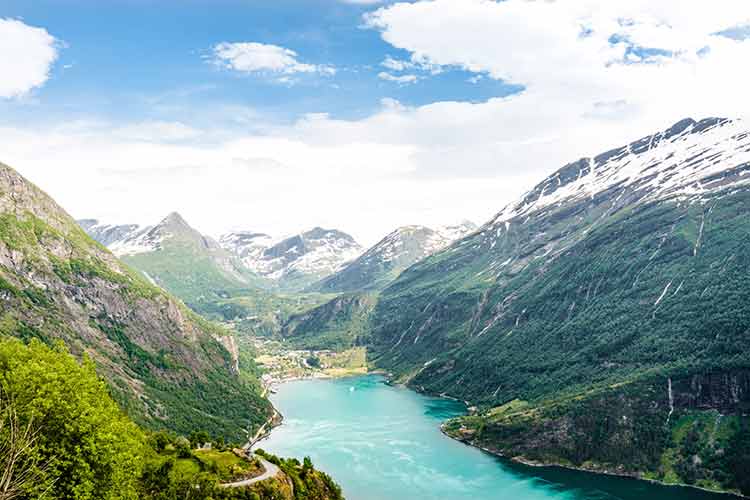
Geiranger sits at the innermost point of the Geirangerfjord, a 15-kilometre arm of the Sunnylvsfjord carved by glaciers over millennia and now recognised as a UNESCO World Heritage Site alongside the neighbouring Nærøyfjord. The village itself is tiny — fewer than 300 permanent residents — yet it receives hundreds of thousands of visitors each summer, drawn by scenery that has no equal on the Norwegian coast. Arriving by ship means sailing through the fjord itself, the surrounding walls rising almost vertically above the waterline while ribbon waterfalls — the Seven Sisters, the Suitor, the Bridal Veil — tumble from the plateau far above.
For cruise guests, Geiranger punches well above its size. The surrounding landscape is genuinely accessible: mountain roads built with extraordinary engineering reach viewpoints that photographers and nature lovers travel far to reach. The Dalsnibba plateau sits at 1,476 metres and on clear days offers a panorama across the fjord and neighbouring peaks that is simply one of the finest views in Europe. The Eagle Road — Ørnevegen — with its eleven hairpin bends is itself an attraction as much as a means of getting there.
On the water, the fjord rewards active exploration. RIB boat excursions put guests close to the waterfalls and abandoned farmsteads clinging to cliff faces, places that were once home to farming families who somehow cultivated these precipitous slopes. The combination of mountain and fjord means that almost every hour in Geiranger yields something genuinely remarkable, regardless of whether you choose to stay in the village or venture up into the surrounding highlands.
Geiranger's season is concentrated between May and September, when cruise ships arrive in numbers and the mountain roads are clear of snow. The weather in this window can be spectacular, though the fjord creates its own microclimate and light rain is always possible. Most visitors find that even an overcast day softens the light beautifully on the waterfall faces and fjord surface, and the village's compact centre, with its historic hotel, small museum, and waterfront, provides a warm base between excursions.
Top things to do in Geiranger on a cruise stopover
Dalsnibba Skywalk: Norway's Highest Fjord Viewpoint
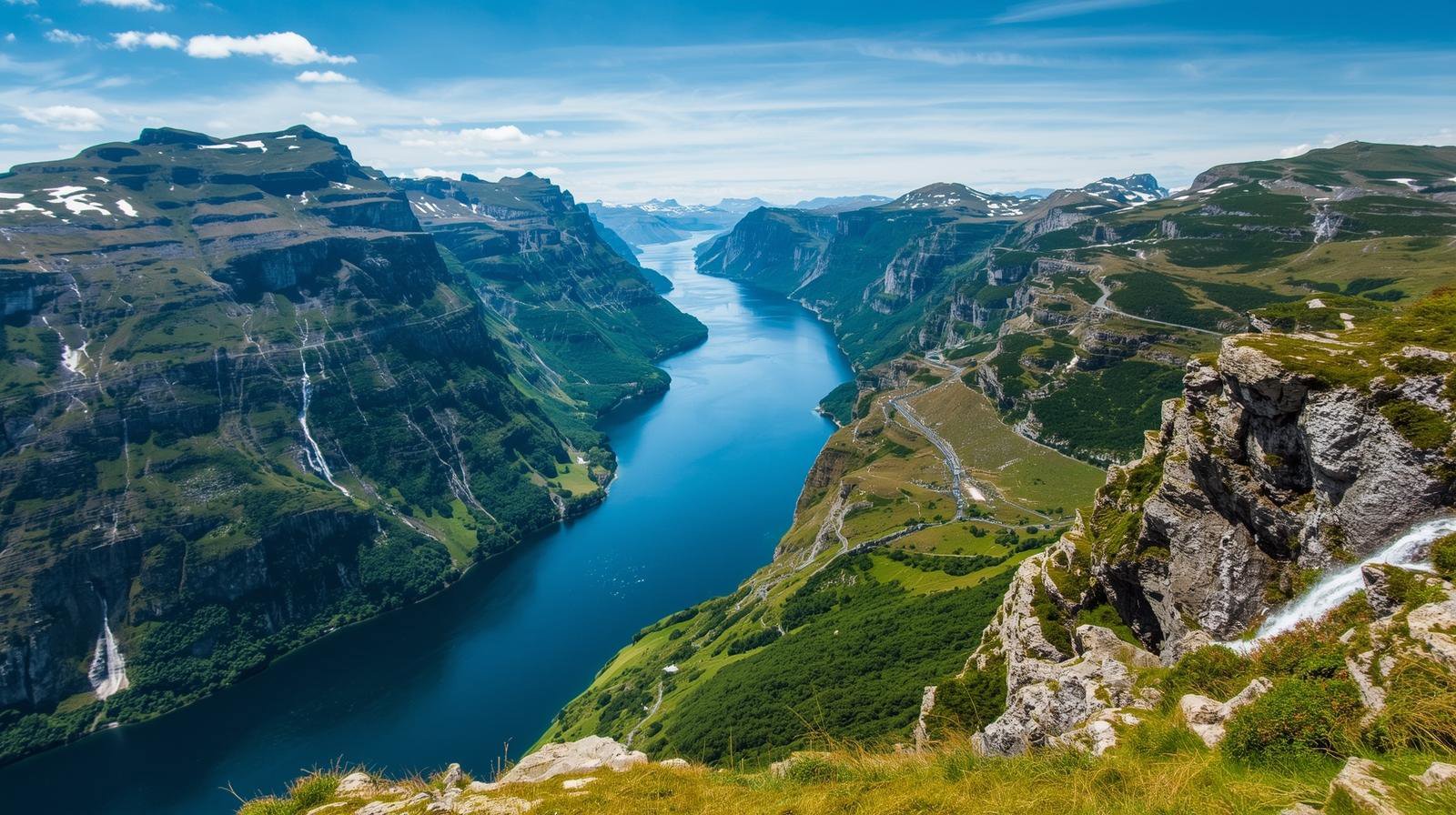
At 1,476 metres above sea level, the Dalsnibba Skywalk platform delivers one of the most dramatic panoramas in all of Scandinavia. The cantilevered viewing deck extends out over the void, with the Geirangerfjord a ribbon of deep green far below and the surrounding peaks stretching to the horizon in every direction. The road to the summit — the Nibbevegen toll road — is itself a feat of mountain engineering, climbing through snowfields that persist well into summer. On clear days the view is simply breathtaking; even in thin cloud the atmosphere is extraordinary. This is the centrepiece of the Dalsnibba Skywalk and Eagle Road Tour offered by Venture Ashore, and it represents one of those travel experiences that stays with visitors long after the cruise has ended.
Eagle Road (Ørnevegen): Eleven Hairpins to the Sky
The Eagle Road is one of Norway's most celebrated mountain routes — a sequence of eleven tight hairpin bends that climb the fjordside wall above Geiranger, offering increasingly spectacular views with every turn. Built in the 1950s to connect the valley with the plateau above, it now serves primarily as a scenic drive and walking challenge. From the top, the entire sweep of the fjord is visible, with cruise ships below reduced to white specks against the dark water. The road is included in the Dalsnibba and Eagle Road Tour, and the views from the upper hairpins are among the most photographed in Norway. Whether ascending or descending, passengers are advised to look up from their cameras long enough to simply absorb the scale of what surrounds them.
RIB Boat Adventure: The Fjord at Full Speed
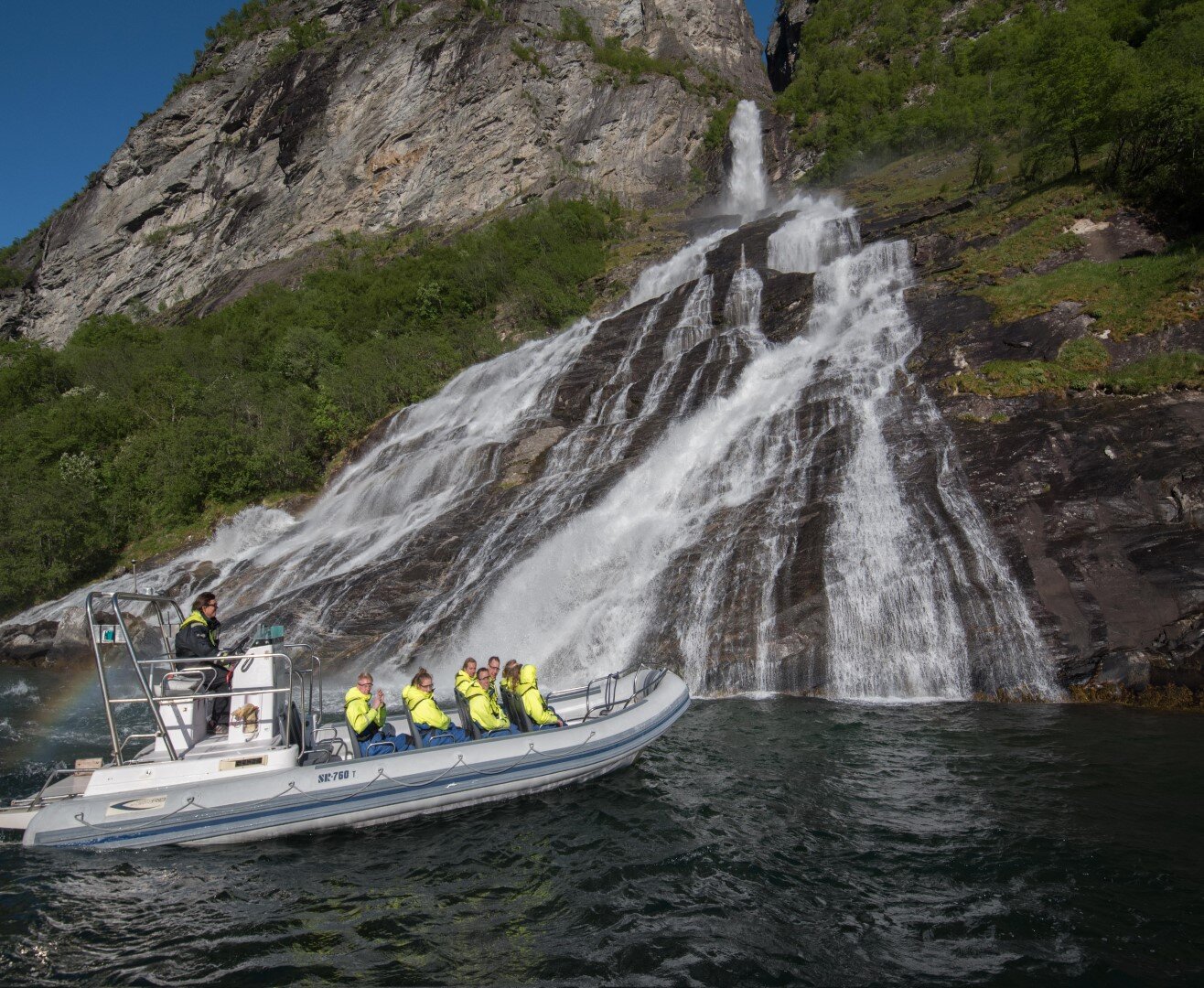
The most exhilarating way to experience the Geirangerfjord is from the water, and a RIB (Rigid Inflatable Boat) excursion delivers exactly that. These powerful craft navigate directly beneath the waterfall faces — close enough to feel the spray of the Seven Sisters as she drops 250 metres from cliff top to fjord — and pass the abandoned farms clinging to near-vertical ledges, relics of a farming community that somehow cultivated these impossible slopes into the 1960s. The RIB boats also reach areas inaccessible from shore, giving a perspective on the fjord walls that no viewpoint on land can replicate. Venture Ashore offers both group and private RIB boat departures, making this one of the most dynamic and memorable ways to spend time on the water in Geiranger.
The Seven Sisters and Suitor Waterfalls
The Seven Sisters waterfall is Geiranger's most iconic natural feature — seven separate streams falling 250 metres from the plateau directly into the fjord in a cascade that changes character depending on the season and the light. Norwegian legend holds that the seven sisters were caught by the Suitor waterfall on the opposite cliff, who tried and failed to win their affections. The Bridal Veil falls complete the tableau, partially hidden behind a rocky promontory. These falls are best experienced from the water on a RIB boat excursion, where the guide will position the boat for the closest possible view, but they are also visible from several points along the Geiranger Highlights Tour route. In late spring and early summer, snowmelt pushes the volume of water to its dramatic maximum.
Geiranger Highlights: The Village and Its Story
Beyond the grand scenery, the Geiranger Highlights Tour introduces guests to the human story of this remarkable place — the farming families who once lived on the cliff-hanging farms of Skageflå and Knivsflå, the early tourism pioneers who recognised the fjord's appeal in the late 19th century, and the small community that today manages life at the end of a long fjord with grace and considerable charm. The village itself has a waterfront hotel of considerable history, a small fjord centre with an exhibition on the UNESCO designation, and a handful of craft and souvenir shops worth a browse. The highlights tour connects these elements into a coherent narrative that enriches the experience of everything else you will see during the day.
Hop On Hop Off Geiranger: Freedom to Explore at Your Own Pace
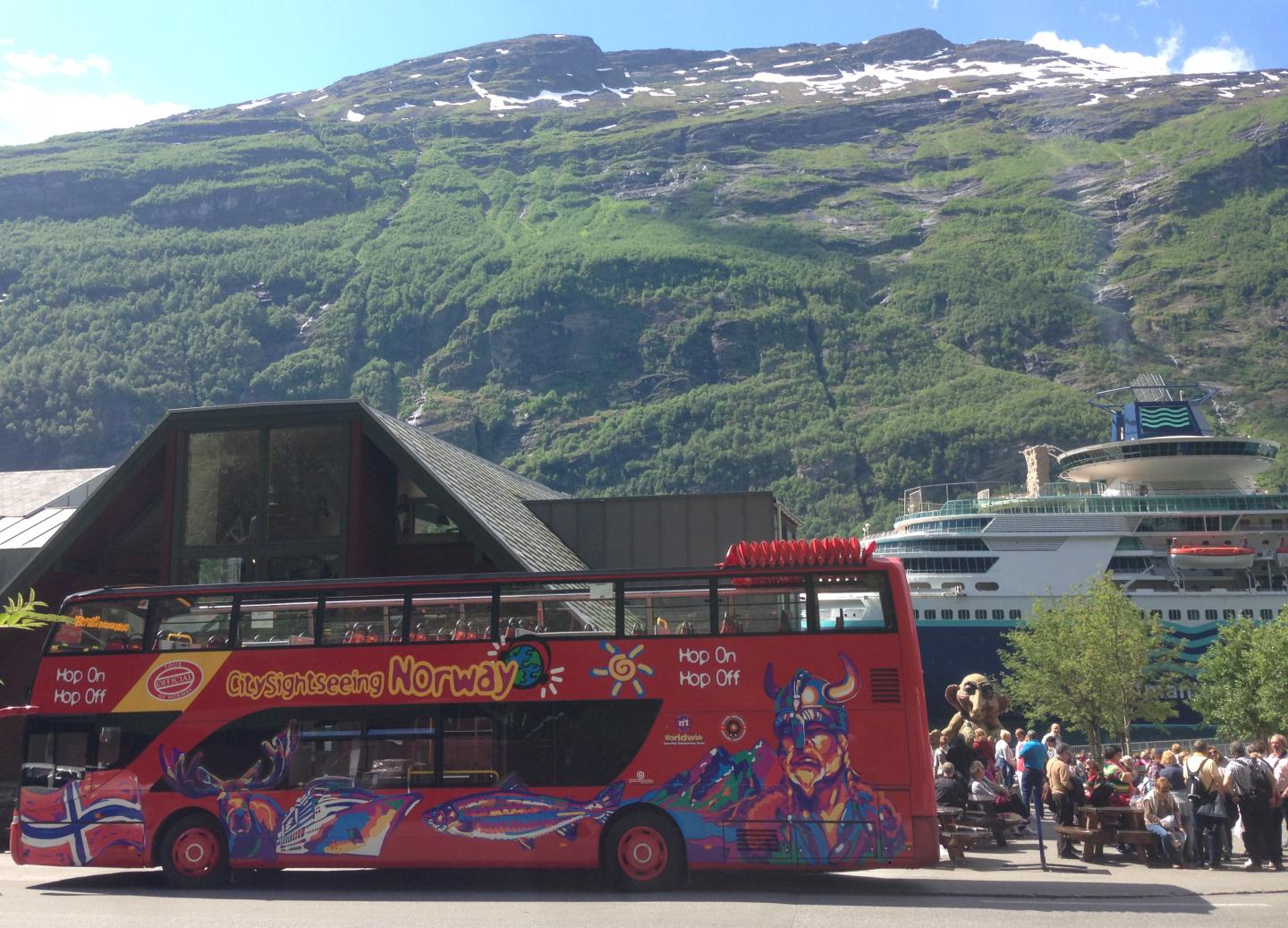
For travellers who prefer to set their own schedule, the City Sightseeing Hop On Hop Off service in Geiranger provides a practical and flexible way to access key viewpoints and stops along the fjord road without committing to a fixed group itinerary. The bus stops include the Eagle Road viewpoints and scenic stops above the village, allowing guests to disembark, spend time at each location, and re-board a later service. This format works particularly well for photography enthusiasts who want to linger at viewpoints and for families with varying pace preferences. Combined with the spectacular backdrop that awaits at virtually every stop, the Hop On Hop Off service makes for a relaxed and satisfying introduction to the Geiranger landscape.
Geiranger travel tips
Allow Extra Time for Tendering. Geiranger has no deep-water dock, so all ships anchor and use tender boats to bring passengers ashore. During busy summer days when multiple ships are in port simultaneously, tender queues on both departure and return can run 20–30 minutes or more. Factor this into your planning and aim to be at the tender station early in the morning if you have booked a morning excursion. Return tenders before all-aboard tend to be calmer, but never cut it too fine — the ship will not wait.
Dress in Layers Whatever the Forecast. The fjord creates its own microclimate, and the mountain roads above Geiranger can be significantly cooler than the village waterfront. A clear morning in the village can turn to low cloud on the Dalsnibba plateau within an hour, and a light rain jacket is invaluable even on a sunny day. At higher elevations, snowfields persist into July and the wind can be sharp. Wear comfortable walking shoes regardless of your planned activity — the village streets and viewpoint paths are uneven.
Visit the Waterfalls Early or Late for the Best Light. The Seven Sisters waterfall faces roughly north-west, meaning it is at its most photogenic in the warmer light of late afternoon rather than the harsher midday sun. If your ship's schedule allows you to be on the water in the later part of the day, the falls glow against the cliff face in a way that makes for exceptional photography. Early morning departures avoid the crowds but may face flatter light. In either case, the spray thrown up by the falls can mist your lens from surprisingly far away.
Norway Is Nearly Cashless — Don't Worry About Krone. Norway has one of the lowest rates of cash usage of any country in the world. Every shop, café, and tour operator in Geiranger will accept Visa and Mastercard without question, and many prefer not to handle cash at all. There is no practical need to obtain Norwegian Krone before arrival or from a ship currency desk. Ensure your bank card does not charge excessive foreign transaction fees and you will find payments completely frictionless throughout the day.
Photography: Look Beyond the Obvious Spots. The classic Geiranger photograph from the Eagle Road viewpoints is well worth taking, but the fjord rewards those who look in less obvious directions. The cliff-side abandoned farms, visible from the RIB boat, photograph beautifully and tell a story that the landscape shots alone cannot convey. The reflection of the valley walls in still fjord water on calm mornings is another underrated subject. If you are on a RIB boat, ask your guide to pause the engine at certain points — the silence, and the sound of falling water in it, is as memorable as any image.
Peak Season Means Significant Crowds — Plan Accordingly. July is Geiranger's busiest month, and on days when three or more cruise ships are in port simultaneously, the village centre and Eagle Road viewpoints can feel genuinely crowded. The Dalsnibba road, being longer and requiring a separate toll, typically has fewer visitors than the Eagle Road. If crowds concern you, prioritise the higher-elevation excursions which naturally filter visitor numbers. The fjord itself, experienced from a RIB boat, provides complete escape from land-based congestion and is the best way to have the scenery largely to yourself.
Port Facts Every Cruiser Needs To Know
Geiranger shore excursion FAQs
All cruise ships anchor in the fjord and use tender boats to bring passengers to the village quay. There is no cruise ship dock in Geiranger. Tendering is provided at no additional charge as part of your cruise fare. Check with your ship for the tender schedule and all-aboard time, and allow extra time during busy periods when multiple ships are in port.
The village waterfront is reasonably flat and accessible for guests with moderate mobility. However, the main scenic attractions — the Eagle Road viewpoints and Dalsnibba Skywalk — involve some steps and uneven terrain at stopping points. The RIB boat excursion requires stepping into a low-sided inflatable craft, which may be challenging for some guests. If mobility is a concern, discuss specific requirements with your tour operator before booking.
Geiranger's summer (June–August) brings mild temperatures, typically 15–22°C in the village. The fjord creates its own microclimate and rain is possible at any time, even on otherwise fine days. At higher elevations such as Dalsnibba, temperatures are considerably cooler and light snowfall can occur even in July. Always pack a waterproof layer regardless of the morning forecast.
The Dalsnibba plateau sits at 1,476 metres above sea level, making it one of the highest accessible viewpoints in western Norway. The toll road (Nibbevegen) typically opens in May once snowploughs have cleared the route, but the opening date varies by year depending on winter snowfall. In early May some snow may still surround the platform. By June the road is reliably open and the views are at their most dramatic with snowmelt waterfalls at full force.
Walking to the Eagle Road is theoretically possible but demanding — the road climbs steeply from the village and the distance to the upper hairpin viewpoints is several kilometres of significant elevation gain. For cruise guests with limited time ashore, walking is not a practical way to reach the main viewpoints. The Hop On Hop Off bus and organised tour excursions provide reliable access without consuming the majority of your day in transit.
The abandoned farms of Skageflå and Knivsflå cling to the cliff faces above the fjord, accessible only by steep hiking paths. Farming families lived and worked these precipitous slopes until the mid-20th century, raising livestock and cultivating the thin soil in near-vertical fields. The farms were eventually abandoned as younger generations moved to more accessible communities. They are best seen from the water on a RIB boat excursion, and their presence adds a powerful human dimension to the dramatic landscape.
The most celebrated are the Seven Sisters (seven streams falling 250 metres), the Suitor on the opposite bank, and the Bridal Veil which is partially concealed behind a rocky outcrop. Dozens of smaller, unnamed falls emerge from the plateau walls, particularly after rainfall or during peak snowmelt in May and June. The waterfalls are all visible from the fjord surface, and a RIB boat excursion brings guests close enough to feel the spray from the largest falls.
Norway is among Europe's most expensive countries and Geiranger, as a heavily visited tourist destination, reflects this. A coffee and a snack at a waterfront café will typically cost significantly more than equivalent items in Southern Europe. However, the main expenses of the day are likely to be your pre-booked excursion, and a moderate lunch. If you are comfortable paying Scandinavian café prices, the village has enough options for a pleasant meal. Card payment is universally accepted.
The Geirangerfjord and Nærøyfjord were jointly inscribed as a UNESCO World Heritage Site in 2005, recognised for outstanding natural beauty and the exceptional quality of their geological and landscape features. The designation covers the fjord itself, the surrounding mountain walls, the waterfalls, and the historic cultural landscape including the abandoned farms. The UNESCO status imposes environmental restrictions on shipping and development in the area, which is one reason why the fjord has retained its pristine character.
The village itself is very walkable and rewarding for independent exploration — the waterfront, the small fjord centre museum, and the lower valley paths are all accessible without booking anything. For the headline experiences (Dalsnibba, Eagle Road, RIB boat), organised excursions or the Hop On Hop Off bus are the most practical options given the distances involved. The Hop On Hop Off service offers a good middle ground for travellers who want flexibility without self-driving on mountain roads.
Filters
Select a filter to refine results.
Tour Type
Tour Activity
 Cart
Cart
 USD
USD GBP
GBP AUD
AUD EUR
EUR CAD
CAD