



Tours in Queensferry (Edinburgh)


Cruising to Queensferry (Edinburgh) in a group?
Skip the crowded ship excursion bus. One dedicated planner will design a private shore experience around exactly what your group wants — coordinated from first enquiry to the moment you're back on board. More memorable, more flexible, and more affordable than you might expect. Spend less time organising, more time enjoying.
Explore Group Travel →Cruising to Queensferry (Edinburgh)
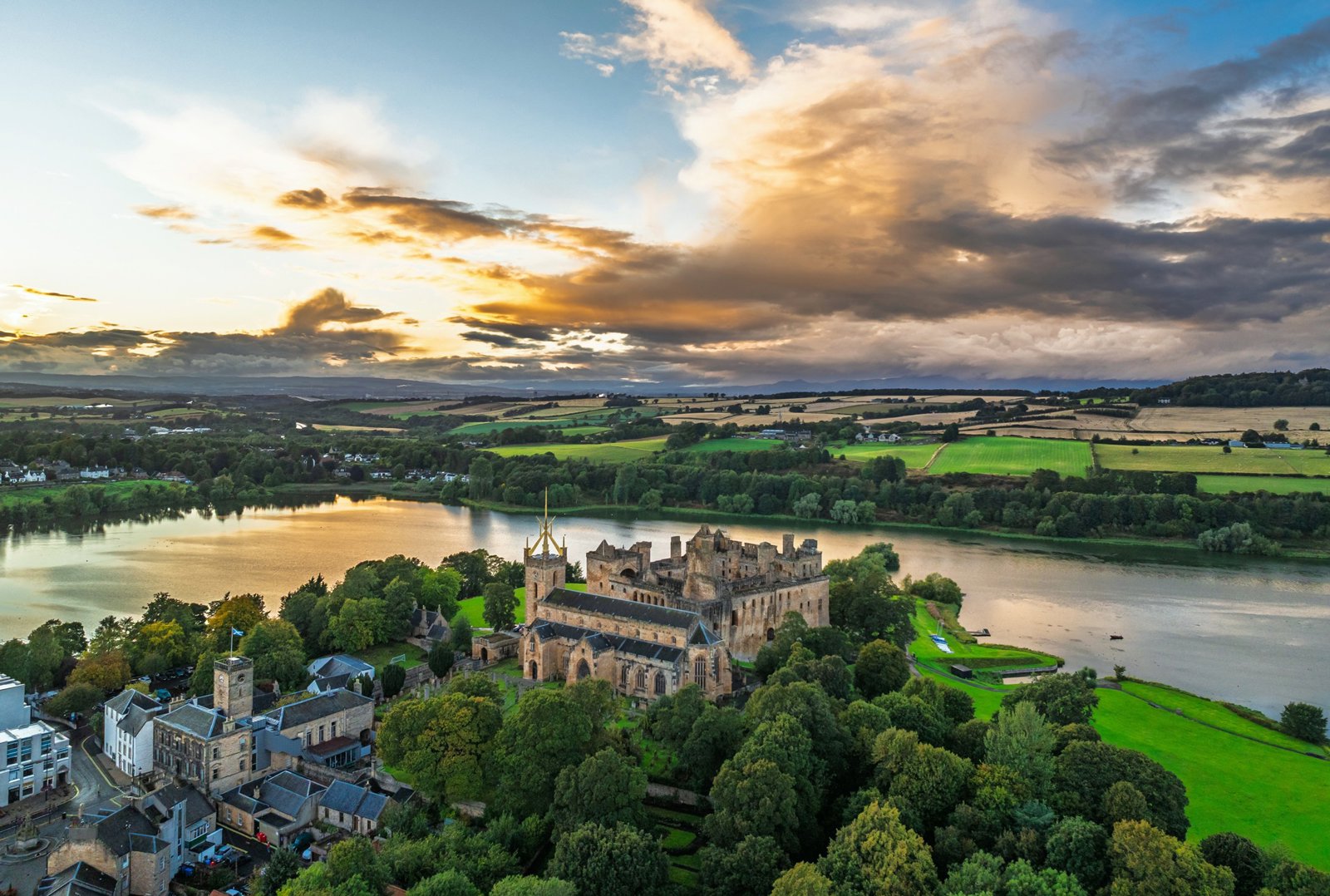
South Queensferry sits where the Firth of Forth narrows to its most dramatic crossing point, a small historic town wedged between water and the soaring spans of one of engineering history's most celebrated structures. The Forth Railway Bridge — completed in 1890 and a UNESCO World Heritage Site — looms directly above the town's medieval high street, its cantilever towers visible from every angle and on every scale. Arriving here by cruise ship means pulling into one of Scotland's most photographed settings before a single step is taken ashore, and the view from the water — three bridge generations spanning over a century of progress — is a fine introduction to a country that takes pride in both its heritage and its engineering.
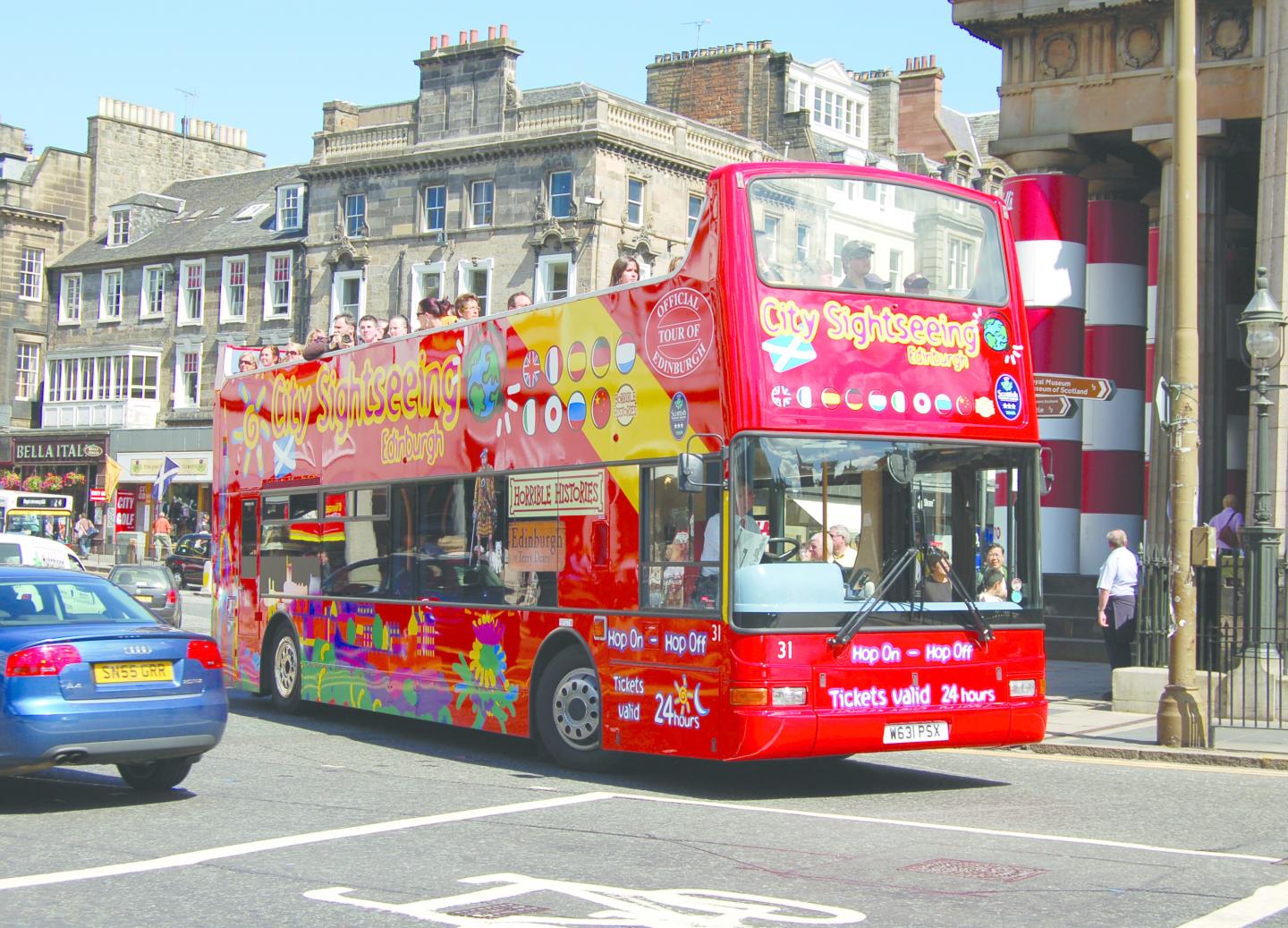
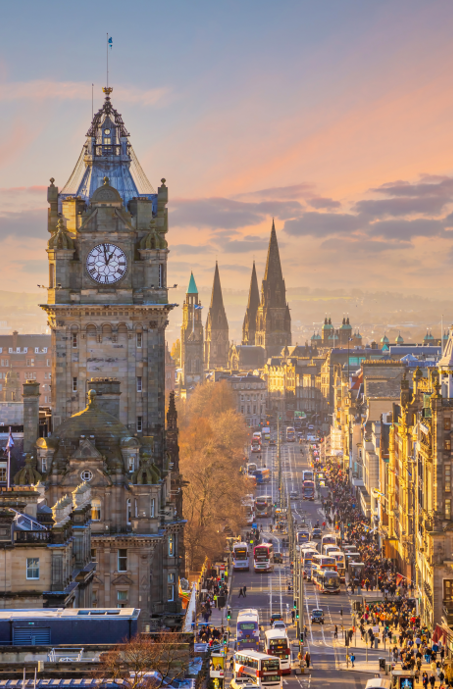
Edinburgh lies just 14 kilometres east, and for most passengers this compact capital city is the day's centrepiece. Few cities in Europe carry the same concentrated weight of history and drama: a medieval castle on a volcanic crag, a Royal Mile of wynds and closes running to a palace at the foot of an extinct volcano, and a Georgian New Town that set the template for planned urban elegance across the world. Scotland's national collections, the Royal Yacht Britannia, and one of the world's great whisky cultures are all within reach of a single well-planned day. The city rewards curiosity, and its compact layout means that significant distances between its headline attractions can be covered on foot.
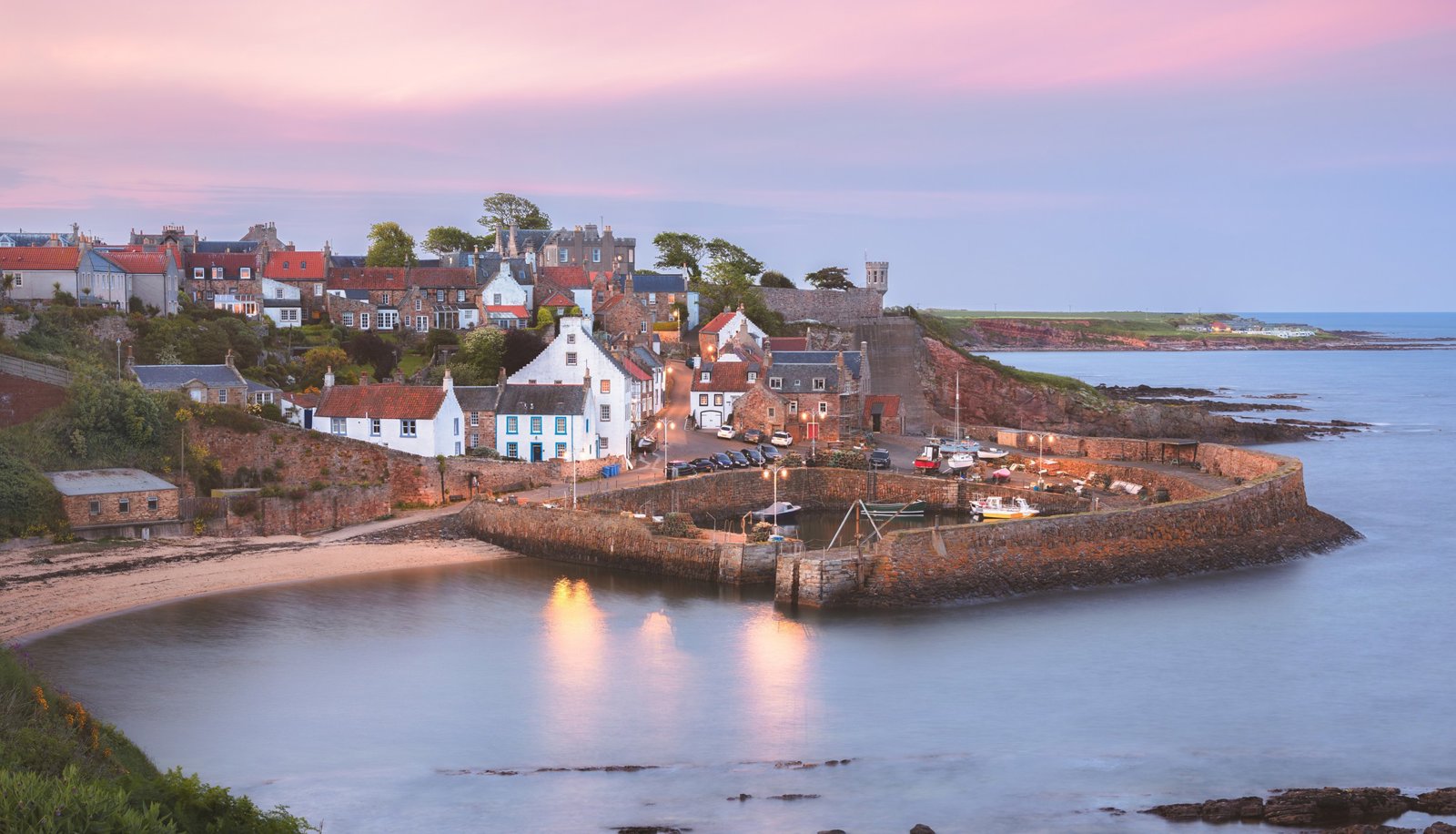
An alternative direction leads north across the Forth into the Kingdom of Fife, where the East Neuk coast presents a sequence of ancient fishing villages — Crail, Pittenweem, Anstruther — whose harbours and crow-stepped gabled houses have a distinct character rooted in centuries of maritime life. At the far end of this coastline sits St Andrews, a town of international significance both as the ancient seat of Scottish ecclesiastical power and as the birthplace of golf, where the Old Course has been played since the 15th century and continues to draw visitors from every continent.
For cruise passengers with a day ashore, the choice between Edinburgh's urban richness and Fife's coastal quietness is the primary decision. Both are rewarding in completely different ways. Edinburgh delivers the concentrated hit of history, culture, and city energy; Fife offers a more contemplative, scenically beautiful experience of Scotland at a gentler pace. The proximity of both from South Queensferry is one of the genuine advantages of this port of call.
Top things to do in Queensferry (Edinburgh) on a cruise stopover
Edinburgh Castle: Scotland on a Volcanic Crag
Few fortresses in Europe carry the same weight of history as Edinburgh Castle, perched above the city on its ancient volcanic plug. The castle has been a royal residence, military garrison, and national symbol for over a thousand years, and its interior holds some of Scotland's most treasured artefacts — including the Scottish Crown Jewels and the Stone of Destiny. The One O'Clock Gun has been fired from the ramparts since 1861, and the views from the battlements extend across the city, the Firth of Forth, and on clear days to the distant Highlands. Guided tours illuminate the castle's multi-layered story, from medieval sieges to its role in Scotland's enduring national identity.
Ancient Edinburgh: The Royal Mile and Old Town
Stretching from Edinburgh Castle down to the Palace of Holyroodhouse, the Royal Mile is one of the great historic streets of Europe — a medieval spine of wynds and closes that branch off into hidden courtyards and unexpected spaces. The Old Town's UNESCO-listed character is evident in every layer: medieval tenements tower above narrow lanes, Georgian churches face ancient taverns, and the sounds of street performers drift through the air on busy days. Whisky shops, tartan merchants, independent bookshops, and excellent restaurants line the route. The Royal Yacht Britannia, berthed at Leith, and Edinburgh Castle at the top complete the city's most celebrated sequence of landmarks.
The Royal Yacht Britannia
Berthed permanently at Ocean Terminal in Leith, the Royal Yacht Britannia served as the British Royal Family's floating home for 44 years, carrying members of the Royal Family on state visits, honeymoons, and tours to more than 600 ports worldwide. The self-guided audio tour leads visitors through the State Apartments, the Royal Family's private quarters, and the working areas below decks — offering a surprisingly intimate portrait of life at sea in royal service. The yacht is preserved exactly as it appeared during active service, down to the details of the final royal voyage in 1997. Leith itself has evolved into a vibrant dining and cultural destination worth exploring around the visit.
The Iconic Forth Bridges
South Queensferry sits in the shadow of one of engineering history's most celebrated achievements. The Forth Railway Bridge — completed in 1890 and inscribed as a UNESCO World Heritage Site in 2015 — stretches 2.5 km across the Firth of Forth in a series of iconic cantilever spans that transformed Victorian ideas of what was structurally possible. Alongside it, the Forth Road Bridge (1964) and the newer Queensferry Crossing (2017) complete a trio of bridge generations spanning over a century of engineering progress. The view from South Queensferry's waterfront, with all three bridges visible simultaneously, is one of Scotland's most photographed vistas and a compelling reason to linger in the town.
St Andrews: Golf, History, and Coastal Character
Set on the Fife coast some 50 km north of Edinburgh, St Andrews occupies a unique place in world cultural geography. The Old Course — home of golf since the 15th century and host to The Open Championship — draws visitors from every corner of the globe simply to walk its fairways and stand on the Swilcan Bridge. The town is far more than golf: its cathedral ruins speak to Scotland's medieval ecclesiastical importance; its university, founded in 1413, is the oldest in Scotland; and its East Sands beach offers a beautiful stretch of natural coastline. The fishing villages of the East Neuk lie along the coastal road and reward time in their own right.
Fife's Fishing Villages: The East Neuk Coast
The East Neuk of Fife presents a coastline of remarkable character — a series of ancient fishing villages whose harbours, stone houses, and seafaring traditions have survived largely intact. Crail, with its picturesque harbour and crow-stepped gabled buildings, is among the most photographed villages in Scotland. Pittenweem remains an active fishing port where lobster and crab are landed daily. Anstruther is home to the Scottish Fisheries Museum and coastal fish-and-chip shops of outstanding reputation. The coastal path connecting these villages offers walking of the highest order, with views across the Firth of Forth and a quieter, more contemplative side of Scotland than the capital provides.
Queensferry (Edinburgh) travel tips
Plan Edinburgh Time With a Clear Priority. Edinburgh rewards focused exploration more than breathless rushing. If Edinburgh Castle is the priority, arrive early and allow two hours minimum — crowds build through the morning. The Royal Mile connecting the Castle to Holyrood is best experienced with time to explore closes and courtyard spaces rather than walking it straight. The New Town, Leith, and the Royal Botanic Garden offer very different facets of the city; trying to see all of them in a single day risks seeing nothing fully. Decide what matters most before arriving ashore.
Carry British Pounds Sterling, Not Euros. Scotland uses British Pounds (GBP), not the Euro — this surprises a number of European cruise passengers. Card payments are accepted almost everywhere in Edinburgh, but having some cash available for smaller vendors, market stalls, traditional pubs, and street performers is advisable. Currency exchange is available at Edinburgh Waverley station and in the city centre. Contactless payments are universally accepted across the city.
Dress for Scottish Weather in All Seasons. Scotland's weather is famously changeable, and summer — peak cruise season — can deliver warm sunshine, driving rain, and cold wind in the same afternoon. A waterproof jacket is essential at any time of year. Layers are the most practical approach: temperatures in Edinburgh rarely exceed 20°C even in summer, and a cold front can arrive with little warning. The castle's higher exposed areas and the Fife coastal path are particularly susceptible to wind.
Take a Few Minutes at the Forth Bridge Viewpoint. Arriving at South Queensferry places one of Scotland's most iconic UNESCO structures directly in front of you. Ten minutes at the waterfront to view the Forth Railway Bridge before heading to Edinburgh is time well spent — the scale and engineering audacity of the structure are most apparent from close range at water level. The short pier walk also provides a useful orientation to the surrounding landscape and the town itself before the day's main exploration begins.
Consider Fife as an Alternative to Edinburgh. For passengers who have visited Edinburgh on a previous call, the Fife coast excursion to St Andrews and the fishing villages offers an equally rewarding but distinctly different Scotland. The golf history, medieval ruins, and East Neuk villages represent a quieter side of Scottish culture — and the crowds are considerably smaller than in the capital. The coastal scenery between Queensferry and St Andrews is outstanding, and the fresh seafood available in Anstruther is reason enough to make the journey.
Explore the Royal Mile's Hidden Closes. Edinburgh's Old Town conceals a labyrinth of closes — narrow alleyways branching off the Royal Mile into hidden courtyards and connecting passages. Many carry fascinating histories: Advocate's Close, Lady Stair's Close with its Writers' Museum, and the preserved underground street of Mary King's Close reward curious visitors who venture off the main thoroughfare. Don't limit your Royal Mile experience to the street itself. The best of Edinburgh's Old Town character is often found in the layers behind the obvious facade.
Port Facts Every Cruiser Needs To Know
Queensferry (Edinburgh) shore excursion FAQs
South Queensferry is approximately 14 km west of Edinburgh city centre. Local buses connect the town with the city, though schedules may not align with cruise departure requirements. Organised shore excursions provide the most reliable and convenient transport, with guaranteed return timings that account for the ship's sailing schedule. The journey by road takes approximately 20–25 minutes in normal traffic conditions.
Yes, though it is primarily a departure point rather than a full-day destination. The medieval high street, waterfront promenade, and extraordinary proximity to the Forth Railway Bridge make for a genuinely atmospheric short walk. The town has cafes, traditional pubs, and a pleasant character distinct from Edinburgh's urban scale. Allow 45–60 minutes to absorb the immediate area and bridges before heading onward.
The Forth Railway Bridge is a UNESCO World Heritage Site completed in 1890. It was the world's first major steel bridge and the longest cantilever bridge in the world at the time of its construction. Its distinctive design — three massive double-cantilever towers connected by suspended spans — was a revolutionary engineering achievement that changed structural thinking globally. It remains one of Scotland's most iconic and recognisable structures.
Edinburgh Castle is among Scotland's most visited attractions, and timed entry slots can sell out well in advance during peak summer months. Booking ahead — either through an organised excursion that includes castle entry or directly through the Historic Environment Scotland website — is strongly advisable for July and August visits. Without pre-booked tickets, wait times at the gate can be substantial, reducing available time within the castle.
The two destinations are approximately 80 km apart, making a combined full-day visit to both genuinely challenging without significant time pressures at each. Most passengers choose one or the other: Edinburgh for the castle, Royal Mile, and Royal Yacht Britannia; the Fife coast and St Andrews for golf history, medieval cathedral ruins, and coastal villages. Excursion descriptions clarify which sites are included in each option.
The Royal Mile offers traditional Scottish gifts — whisky, tartan, cashmere, and Highland crafts — at numerous shops of varying quality. For contemporary Scottish design and independent boutiques, the Grassmarket and Victoria Street areas are excellent. Princes Street provides mainstream retail options along the New Town's main thoroughfare. The Grassmarket is also an excellent area for independent food and drink producers offering artisan Scottish products.
Edinburgh's Old Town involves significant changes of elevation, including steep approaches to Edinburgh Castle. Modern visitor infrastructure at the Castle includes lifts to some areas, though complete accessibility remains limited. The Royal Mile itself is manageable for most visitors, though historic cobblestones can be challenging. The Royal Yacht Britannia and New Town areas are considerably more level and accessible. Adapted transport and accessible excursion options are available for passengers with mobility requirements.
Britannia is berthed at Ocean Terminal in Leith, approximately 3 km from Edinburgh's Old Town. The self-guided audio tour takes around 90 minutes and covers all five decks of the ship. Advance booking is recommended during busy periods. Visitors regularly describe the experience as more personal and moving than expected — the preserved detail of the Royal Family's private quarters gives the yacht an intimate character that contrasts with its grand scale.
Yes. South Queensferry has several cafes, traditional pubs, and restaurants along its high street and waterfront, catering comfortably to visitors arriving from ships. Seafood options reflect the town's coastal setting and proximity to the Firth of Forth. For a wider range of dining options — particularly Scottish cuisine, whisky bars, and international restaurants — Edinburgh's Old Town and Grassmarket area offer outstanding variety.
The Edinburgh Festival and Fringe, held throughout August, is the world's largest arts festival — transforming the city with thousands of performances across theatre, comedy, music, and street performance in every available venue and open space. For cruise passengers arriving during August, the atmosphere is extraordinary and unlike anything else in Europe. However, accommodation, restaurants, and popular attractions are significantly busier than at any other time of year. Free street performances on the Royal Mile are accessible to all visitors regardless of ticket booking.
Filters
Select a filter to refine results.
Tour Type
Tour Activity
 Cart
Cart
 USD
USD GBP
GBP AUD
AUD EUR
EUR CAD
CAD