





Looking for another Cruise?
Tours in La Spezia (Florence)


Cruising to La Spezia (Florence) in a group?
Skip the crowded ship excursion bus. One dedicated planner will design a private shore experience around exactly what your group wants — coordinated from first enquiry to the moment you're back on board. More memorable, more flexible, and more affordable than you might expect. Spend less time organising, more time enjoying.
Explore Group Travel →Cruising to La Spezia (Florence)
La Spezia occupies a strategic position on the Ligurian coast where the Italian Riviera curves south towards Tuscany. As a cruise port, it is one of the most richly endowed in all of Europe — the train station is barely five minutes from the pier, and from that station the tracks fan out towards three entirely different worlds: the Renaissance city of Florence, the iconic Piazza dei Miracoli in Pisa, and the five extraordinary cliff villages of the Cinque Terre strung along the rugged coastline to the north.
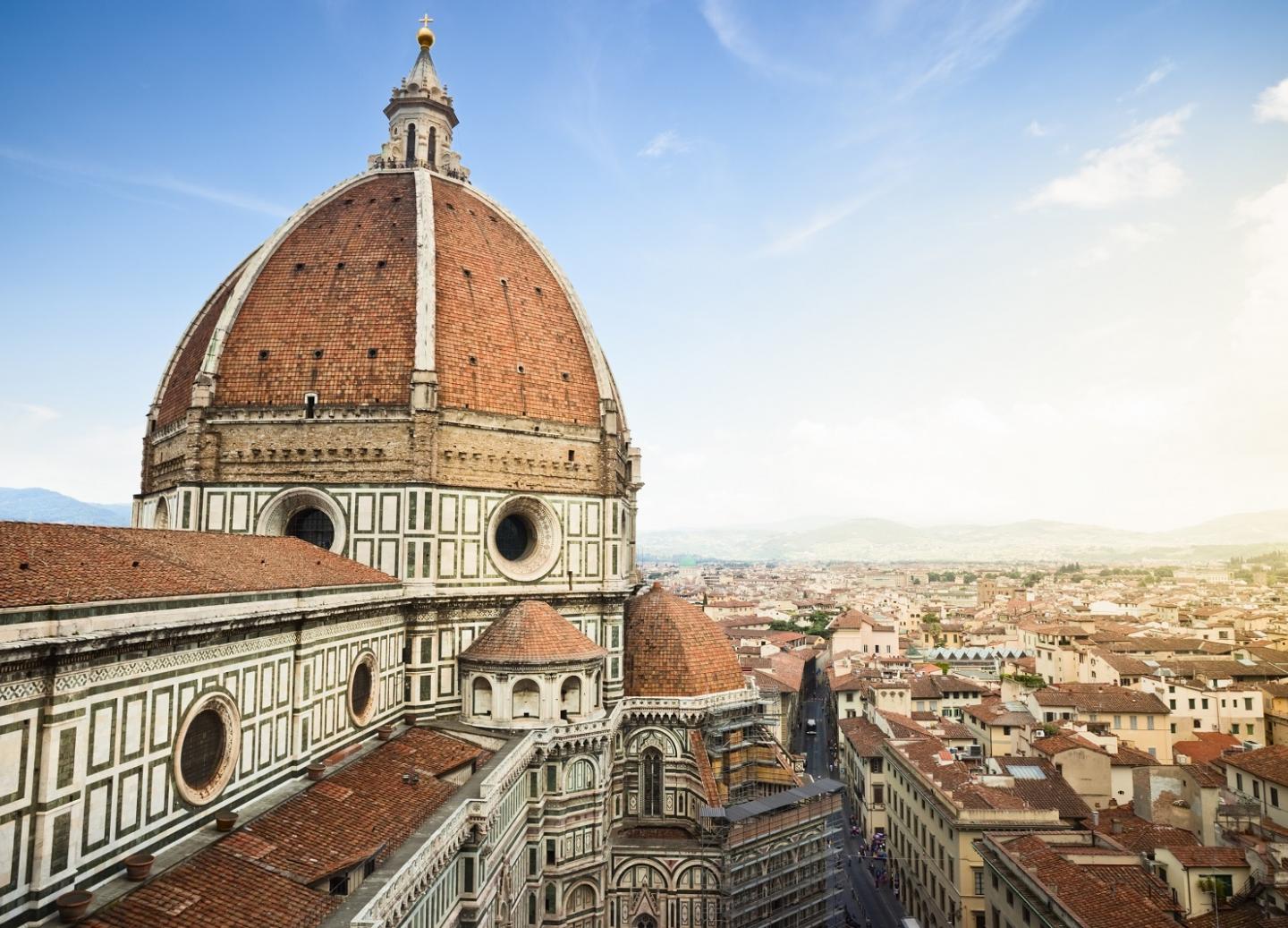
Florence needs little introduction. The Uffizi, the Duomo, the Ponte Vecchio, and Michelangelo's David in the Accademia Gallery rank among the defining achievements of Western civilisation, concentrated in a walkable city centre that has changed remarkably little since the Medici ruled it. A full day in Florence rewards with multiple museum visits; a half-day still allows the Accademia, a walk across the Ponte Vecchio, and the obligatory gelato on the steps of the Piazza della Repubblica. The journey by train takes roughly 75–90 minutes each way from La Spezia.
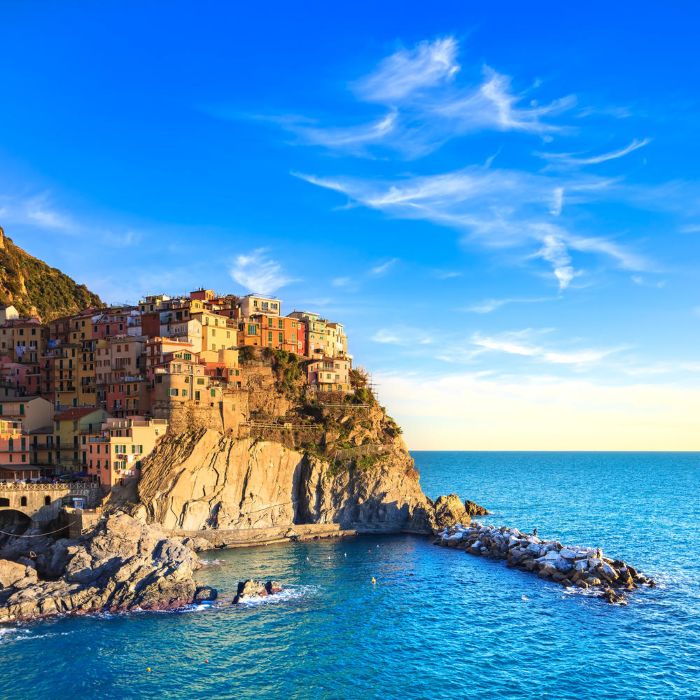
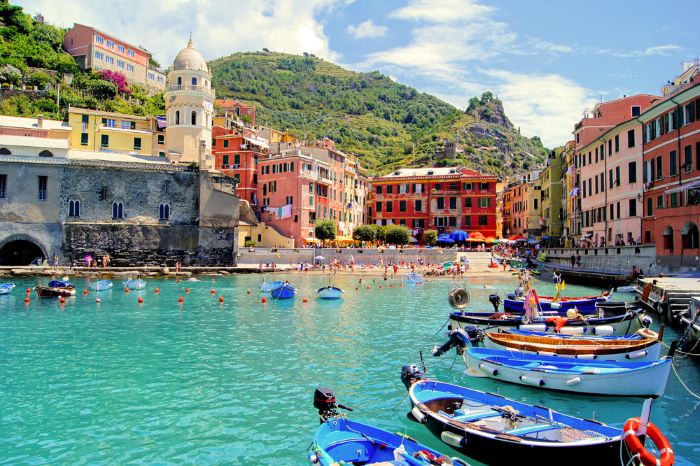
The Cinque Terre — literally the 'Five Lands' — are five small villages clinging to steep terraced hillsides above the Ligurian Sea. Monterosso al Mare, Vernazza, Corniglia, Manarola, and Riomaggiore each have their own character, connected by walking trails (some currently closed for restoration), a ferry service, and the regional train that is the lifeline of these car-free communities. The views from the coastal paths are among the most photographed in Italy; the villages themselves are genuinely ancient working communities, not theme park recreations, though the summer crowds have grown intense.
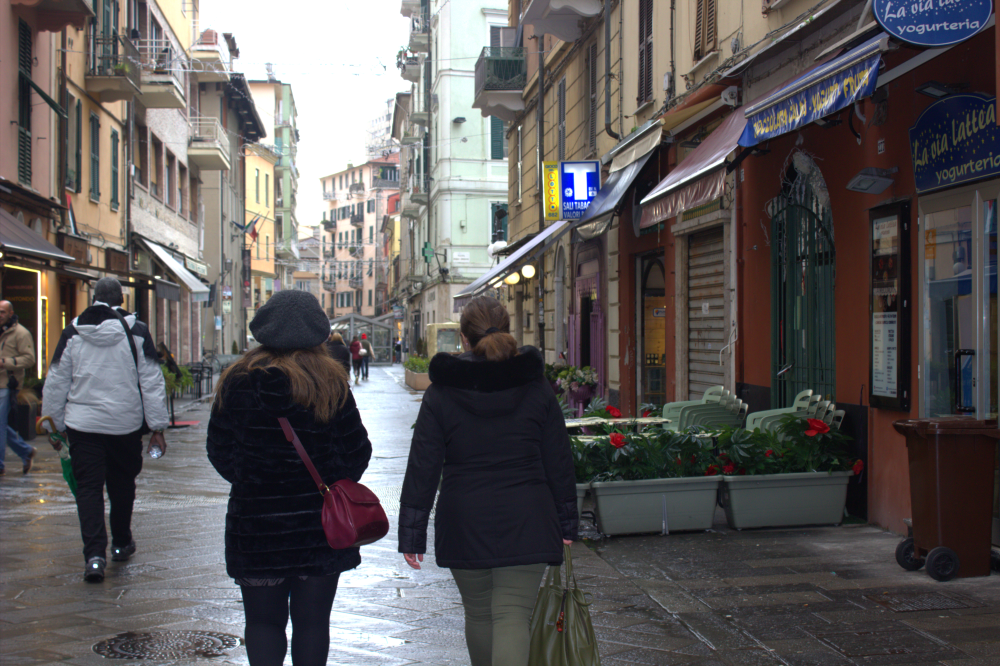
La Spezia itself has its own rewards, often overlooked by passengers intent on reaching the headline destinations. The covered market on Via Vittorio Veneto is one of Liguria's finest, piled with local pesto, focaccia, fresh farinata, and seafood. The city's seafront piazza and the Museum of the Gulf provide context and a slower rhythm for those who prefer to stay close to the ship.
Top things to do in La Spezia (Florence) on a cruise stopover
Florence's Accademia Gallery: Home of Michelangelo's David
The Galleria dell'Accademia contains one of the most powerful works of art ever created. Michelangelo's David — carved from a single flawed block of Carrara marble between 1501 and 1504 — stands 5.17 metres tall in the purpose-built Tribuna at the end of the gallery's main hall. The experience of first encountering it is reliably stunning: photographs do not prepare you for the scale, the precision, or the extraordinary sense of contained energy that Michelangelo captured in the moment before the stone flew. Beyond the David, the Accademia holds Michelangelo's unfinished Prisoners (or Slaves) series — four monumental figures half-emerging from their marble blocks, which many visitors find equally compelling. The museum also contains significant works by Botticelli, Filippino Lippi, and other Florentine masters of the 14th and 15th centuries. Queues without advance tickets can exceed two hours in peak season; pre-booked timed entry is strongly advisable for any visit.
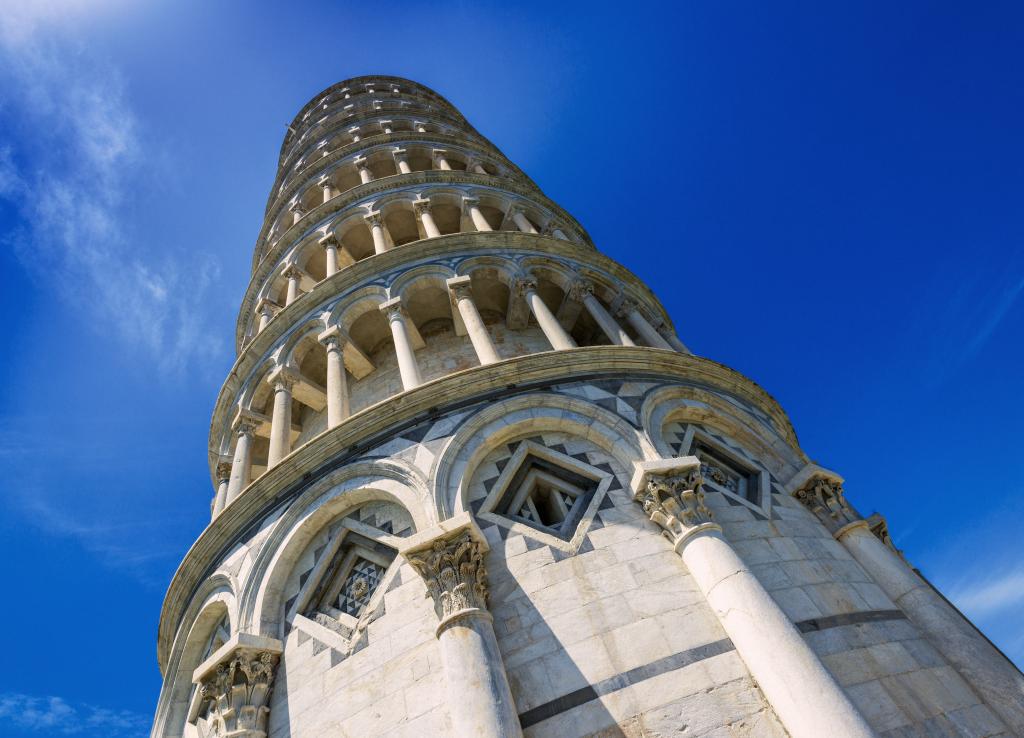
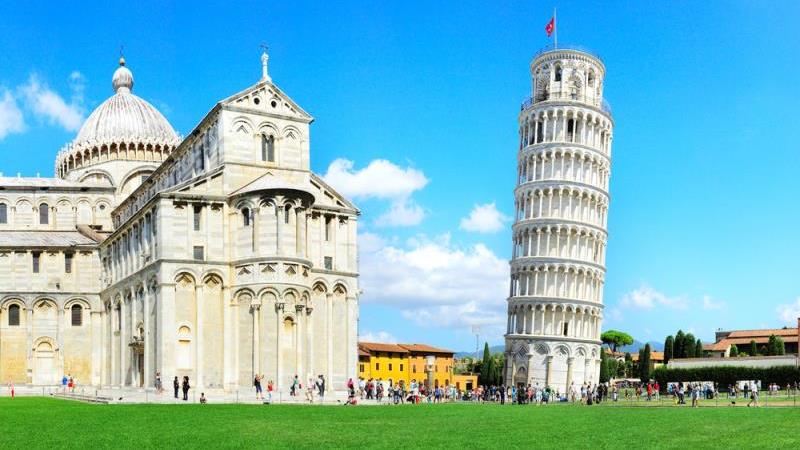
Pisa's Piazza dei Miracoli: The Leaning Tower and Cathedral Square
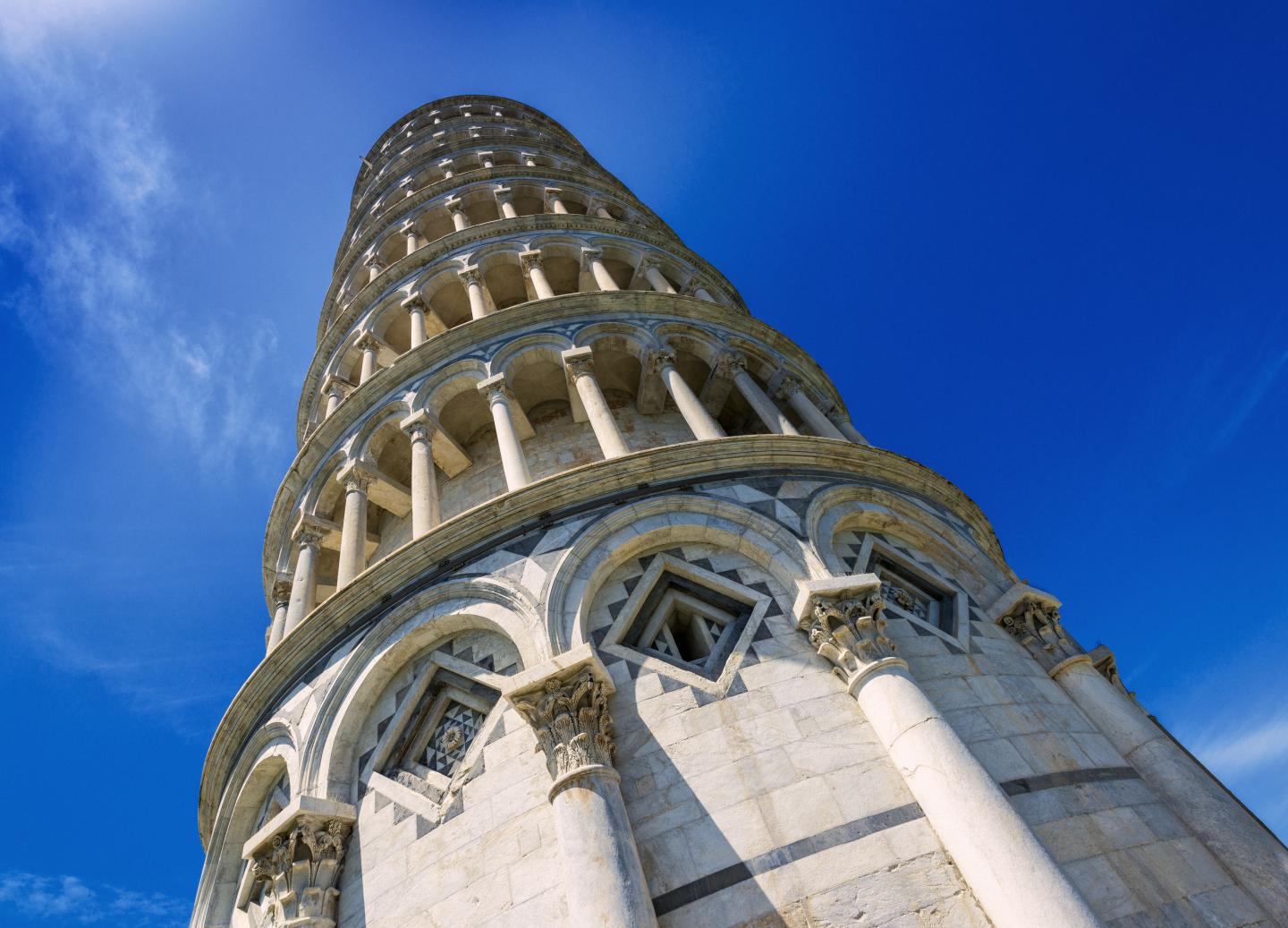
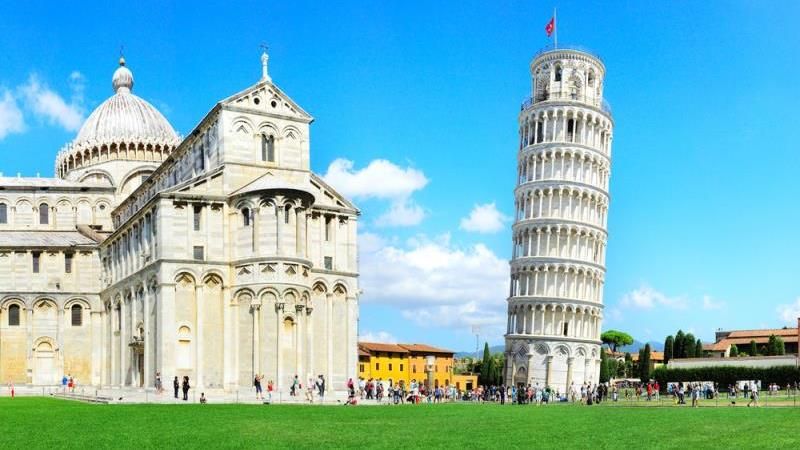
Pisa's famous Piazza dei Miracoli (Field of Miracles) is one of those rare places that exceeds expectations. The Leaning Tower is the obvious draw — and it is genuinely extraordinary, its tilt now precisely calibrated and monitored after decades of stabilisation work — but the entire ensemble of cathedral, baptistery, and Campo Santo (monumental cemetery) is a masterwork of medieval Romanesque architecture that would be considered magnificent even if nothing was tilting. The Cathedral of Pisa (Duomo) houses Pisano's celebrated pulpit and medieval mosaics. The circular Baptistery, with its unusual acoustics, is worth stepping inside to hear the guides demonstrate the remarkable echo. Allow time to walk around the entire piazza rather than rushing to photograph the tower — the green lawns, the white marble facades, and the relative quiet of the northern end of the square away from the souvenir stalls are part of an experience that rewards a slower pace.
The Cinque Terre Villages: Five Worlds Above the Sea
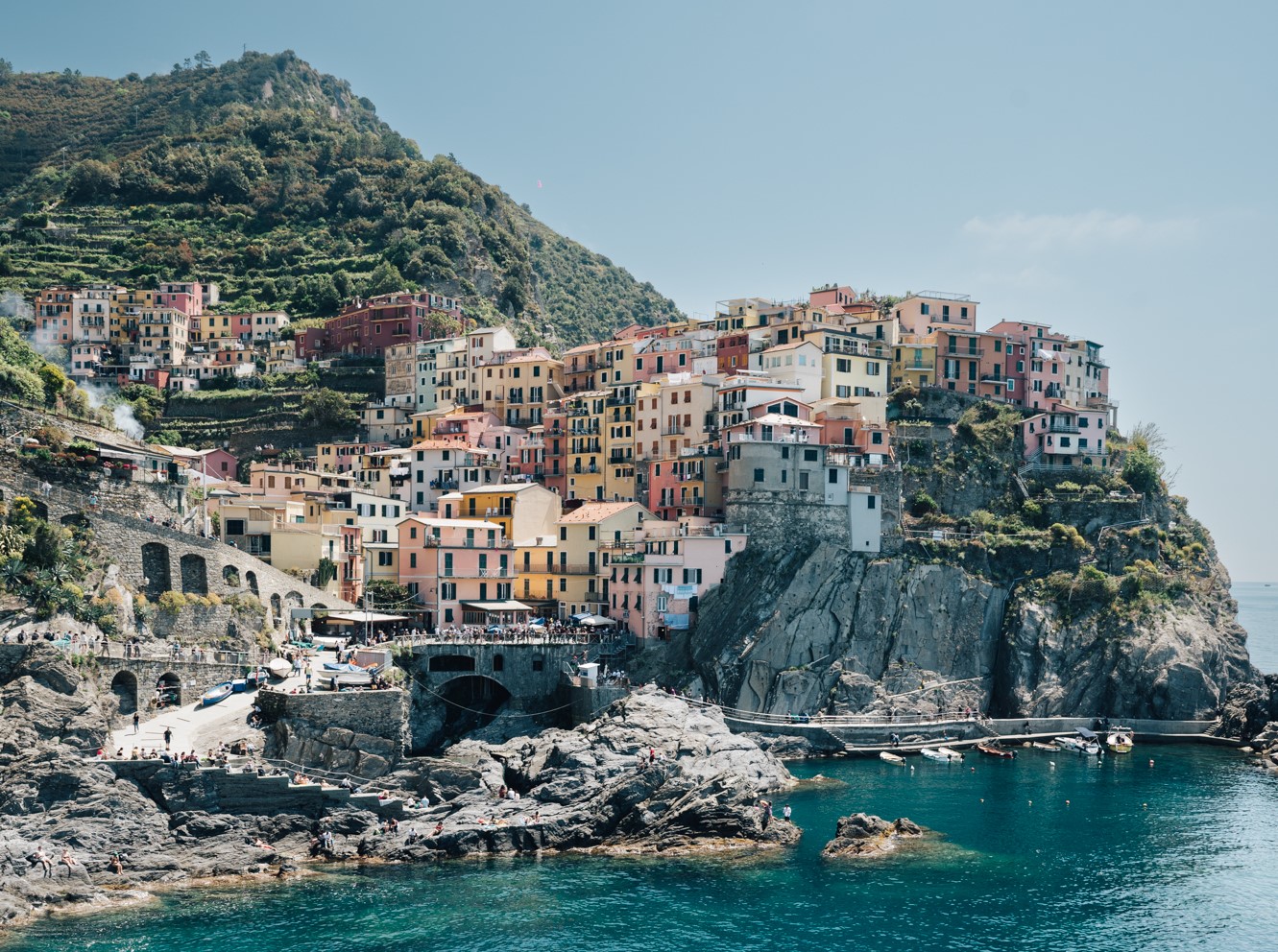
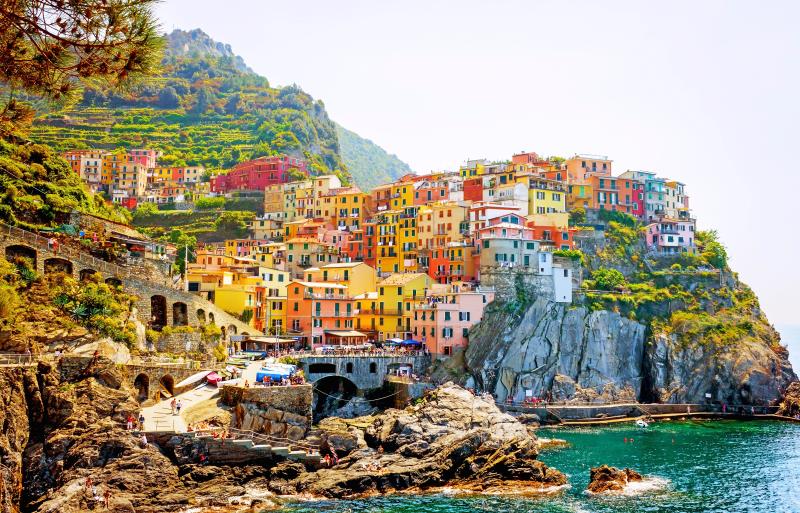
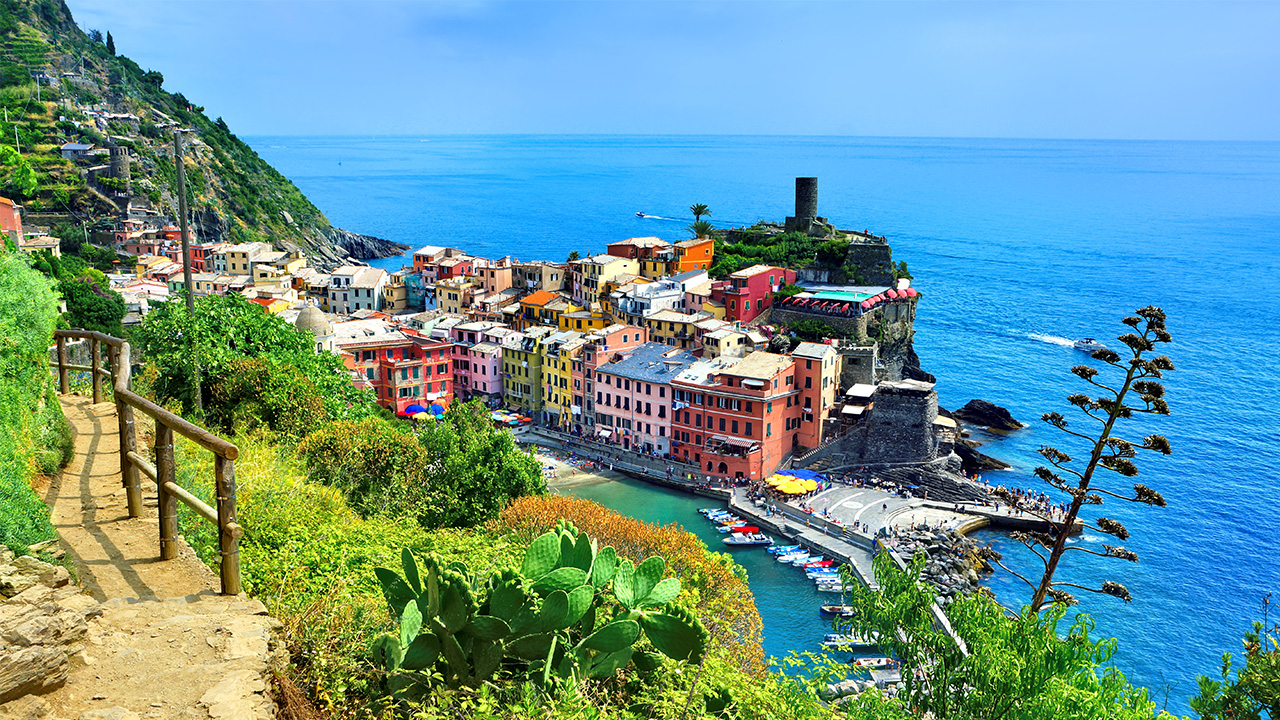
The Cinque Terre's five villages — Monterosso al Mare, Vernazza, Corniglia, Manarola, and Riomaggiore — occupy a coast so steep that until the railway arrived in the late 19th century, they were effectively isolated from the outside world. The result is five distinct communities, each with its own identity and relationship to the sea and the terraced hillsides above. Vernazza, with its natural harbour and central piazza, is generally considered the most picturesque. Manarola's colourful houses stacked above the sea are the most photographed. Monterosso is the largest and has the only proper beach. Corniglia sits highest with no direct harbour access. Riomaggiore is closest to La Spezia and often the most crowded. Arrive early, pick two villages, and walk between them where paths are open.
Cinque Terre Trekking: The Coastal Paths Above the Ligurian Sea
The Sentiero Azzurro (Blue Trail) is the Cinque Terre's famous coastal walking path, connecting all five villages along the cliff edges above the sea. Sections vary in difficulty and availability — some paths have been closed for restoration in recent years following erosion and landslides, while others have reopened. The Via dell'Amore between Riomaggiore and Manarola, famous for its padlocks-on-railings tradition, has undergone significant restoration work. The inland trails above the villages offer an alternative that is wilder, steeper, and far less crowded. Routes through the terraced vineyards and ancient mule tracks connecting the villages via the ridge line provide a completely different perspective — looking down on the coloured villages and the blue sea below rather than across at the cliffs. These paths require reasonable fitness and sturdy footwear, but the rewards are proportionate. The Cinque Terre Card covers access to the maintained path network.
La Spezia Street Food Walk: Tasting Liguria at the Source
La Spezia's food culture rewards those who stay close to the ship rather than rushing to the train. The covered market on Via Vittorio Veneto is one of the finest on the Ligurian coast — a working market where local producers bring olives, anchovies, pesto, fresh pasta, and seasonal vegetables. Farinata — thin, crispy chickpea pancake baked in copper trays in wood-fired ovens — is La Spezia's defining street food, found in its purest form eaten standing at a focacceria counter. The old quarter around Piazza Garibaldi has an authentic, unpolished character: aperitivo bars, neighbourhood trattorias, and the kind of everyday Italian street life that the overcrowded Cinque Terre villages can no longer provide. A food walk here offers a thoughtful and delicious alternative to the headline destinations.
Lucca: The Walled Renaissance City Within Easy Reach
Lucca is one of Italy's best-kept secrets — a Renaissance city surrounded by its perfectly preserved medieval walls, entirely intact and now converted into a 4-kilometre tree-lined promenade from which residents cycle and stroll above the rooftops. Within the walls, the city is a model of Italian urban life: Romanesque churches, Roman amphitheatre foundations visible in the oval of the Piazza dell'Anfiteatro, excellent restaurants, and notably fewer tourists than any comparable Tuscan city. Lucca can be combined with a Pisa visit in a single day — both are roughly an hour from La Spezia by train. Puccini was born in Lucca, and the city celebrates this musical heritage with festivals and a dedicated museum. The Torre Guinigi, topped with oak trees growing from its medieval summit, is the city's most unusual landmark and offers fine views over the terracotta roofscape. For travellers who have been to Florence before and want something fresh, Lucca rewards with genuine discovery.
La Spezia (Florence) travel tips
Book Florence Accademia Tickets Well in Advance. The Galleria dell'Accademia is one of Italy's most visited museums, and the queue for walk-in visitors can easily exceed two hours in peak season (June–August). Timed entry tickets are available online and should be booked well before your cruise departure — not on the morning of your port call. The booking fee is modest relative to the time saved. The same advice applies to the Uffizi Gallery, though it covers different collections. Pre-booked tickets with a specific entry time are the only reliable way to guarantee access on a day when your ship departs at a fixed time.
Start Florence Days as Early as Possible. The 75–90 minute train journey each way means that Florence visits from La Spezia require the earliest possible start. The first trains leave La Spezia Centrale around 6am, and catching one of these gives 6–7 hours in the city before needing to return — enough time for the Accademia plus the Duomo area plus a proper Italian lunch. Leaving it until mid-morning cuts that window significantly, and rushing back to the station with an anxious eye on your watch is not how Florence is best enjoyed. Plan your return train with a 30-minute buffer before your latest possible departure time.
Go Early or Late in the Cinque Terre — Not Mid-Morning. The Cinque Terre villages, particularly Riomaggiore, Manarola, and Vernazza, become extraordinarily crowded between 10am and 4pm in summer. The village centres, the coastal paths, and the train connections between villages are all overwhelmed by sheer numbers during these hours. Arriving at the first village by 8–9am gives a two-hour window of relative calm before the crowds build. Alternatively, an afternoon arrival (after 4pm) as day-trippers leave offers a similar respite — though this limits return time to La Spezia. Weekdays are noticeably calmer than weekends.
Wear Proper Footwear for Cinque Terre Paths. The Cinque Terre walking paths are uneven, steep, and can be slippery when damp. Flip-flops and flat-soled sandals are genuinely dangerous on many sections of the coastal and inland trails. Trainers or walking shoes with grip are the minimum requirement for any path beyond the village centres themselves. Even within the villages, the streets are steeply cobbled. The path surfaces have improved in some sections following recent restoration work, but they remain challenging terrain that repays appropriate footwear.
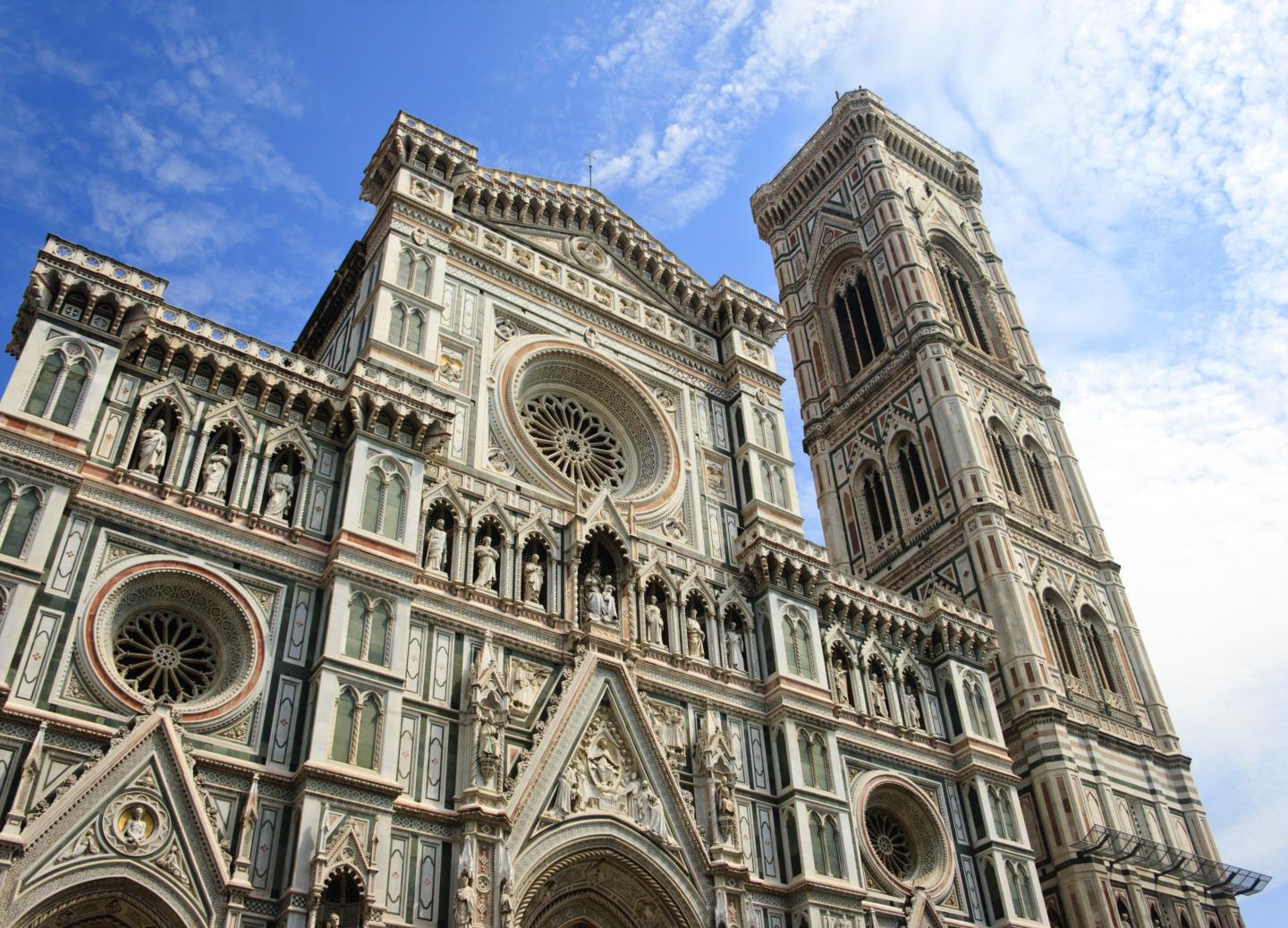
Dress Appropriately for Italian Churches. Florence's Duomo (Cathedral of Santa Maria del Fiore), its Baptistery, and virtually all churches throughout Tuscany and Liguria require covered shoulders and covered knees for entry. This applies to both men and women. Short skirts, shorts, and sleeveless tops will result in refusal at the door — and this is enforced, particularly at the major churches. A lightweight scarf, a cardigan, or a pair of linen trousers rolled up in a day bag adds no meaningful weight but prevents missing out on the interior of one of the world's most extraordinary cathedrals.
The Cinque Terre Card Covers Train Travel Between Villages. The Cinque Terre Card is available in one-day and two-day versions and covers unlimited train travel between the five villages (La Spezia to Levanto via all five stops), access to the maintained coastal walking paths, and use of local buses. If you plan to visit more than two villages by train, or to use the walking paths, the card is better value than buying individual tickets. It is available at La Spezia Centrale station and at the Cinque Terre visitor centre at the port. Note that the card does not cover trains from La Spezia to other destinations such as Pisa or Florence.
Port Facts Every Cruiser Needs To Know
La Spezia (Florence) shore excursion FAQs
La Spezia's cruise terminal is extremely well positioned — the main train station (La Spezia Centrale) is approximately 5–10 minutes on foot from the pier. This is one of the port's great advantages: you can walk from your ship to the station and be on a train to the Cinque Terre, Pisa, or Florence within 20 minutes of disembarking. Taxis are also available at the port for those preferring not to walk with luggage.
It is technically possible but not recommended. Florence alone deserves a full day from La Spezia given the 75–90 minute train journey each way. Attempting to add Cinque Terre villages to the same day means rushing both experiences and significantly increases the risk of missing your ship if trains are delayed. Choose one major destination per port call and enjoy it properly. If your itinerary includes multiple days near La Spezia or Livorno, consider splitting Florence across two visits.
Yes — entry to climb the Leaning Tower requires timed tickets booked in advance via the official Piazza dei Miracoli website. Walk-up availability is limited and cannot be relied upon during the cruise season (April–October). Tickets allow access to the tower in specific 30-minute windows. The Cathedral, Baptistery, and Campo Santo can be visited on a combined ticket that does not require the same level of advance booking, though purchasing before your visit is still advisable in peak season.
Vernazza is widely considered the most picturesque — a small natural harbour, a medieval watchtower, a central piazza facing the sea, and a compact old quarter that rewards exploration. Manarola offers the most iconic photographs, particularly the view of the coloured houses above the rocky inlet. Monterosso is the most relaxed and has the only proper beach. If you're arriving by train, Riomaggiore is the first stop and the most crowded; consider travelling through it to one of the quieter villages further along the line.
Michelangelo's original David is in the Galleria dell'Accademia on Via Ricasoli. The Uffizi Gallery houses a different (though extraordinarily rich) collection focused primarily on paintings, including Botticelli's Birth of Venus and works by Leonardo, Raphael, Titian, and Caravaggio. There is a replica of the David in the Piazza della Signoria outside the Palazzo Vecchio — which is free to see — but the original is in the Accademia. Both museums require advance ticket booking during the cruise season.
The regional train is the most reliable way to travel between the five villages. Trains run approximately every 30 minutes on the La Spezia–Levanto line, stopping at all five village stations, and the journey between any two adjacent villages takes just 3–5 minutes. The Cinque Terre Card covers unlimited train travel between the villages and access to the maintained walking paths. Ferries connect some villages seasonally (typically April–October) and offer a different perspective on the coastline, but they are slower and weather-dependent.
La Spezia is genuinely worth a few hours if you want to experience authentic Ligurian life without the tourist crowds of the Cinque Terre. The covered market on Via Vittorio Veneto is excellent — a real working market with local pesto, focaccia, fresh pasta, seafood, and olives. The old quarter around Piazza Garibaldi has good restaurants and bars. The city's seafront and the Naval Museum are also worth time. For passengers who have visited Florence and the Cinque Terre on previous cruises, or who simply want a more relaxed day ashore, La Spezia itself is a rewarding alternative.
Liguria's culinary identity centres on a few exceptional products. Pesto alla genovese — made with small-leafed Genovese basil, pine nuts, garlic, Parmigiano, and Pecorino — is consumed with trofie or trenette pasta and is extraordinary when freshly made. Farinata (thin chickpea pancake baked in copper trays) is La Spezia's street food signature and found in specialist shops called focaccerie. Focaccia in its plain Ligurian form — olive oil, coarse salt, light and chewy — is sold everywhere and makes an ideal portable snack. In the Cinque Terre, the local Sciacchetrà dessert wine is made from dried Vernaccia and Bosco grapes and is worth seeking out with local cheeses.
La Spezia itself and its train station are reasonably accessible. Florence has extensive flat walking areas in the city centre, though cobblestones are common near the major monuments. The Cinque Terre villages present significant challenges for mobility-impaired visitors — most are built on steep terrain with stairs and narrow lanes, and the coastal paths are unsuitable for wheelchairs. However, some village seafronts and main piazzas are accessible at flat level, and adapted vehicle transfers to Florence with wheelchair-friendly arrangements are available for guests requiring specialised access. It is worth planning specific accessibility requirements carefully in advance.
Pisa is approximately 60 minutes from La Spezia Centrale by regional or Intercity train. Trains run regularly throughout the day. From Pisa's main train station (Pisa Centrale), the Piazza dei Miracoli and the Leaning Tower are about 20 minutes on foot or a short bus ride (Bus LAM Rossa). Lucca, a walled Renaissance city highly worth visiting, is a further 30 minutes from Pisa by train, making a combined Pisa and Lucca day entirely manageable. Remember to book Leaning Tower tickets in advance — walk-up availability is unreliable in season.
Filters
Select a filter to refine results.
Tour Type
Tour Activity
 Cart
Cart
 USD
USD GBP
GBP AUD
AUD EUR
EUR CAD
CAD