



Tours in Catania


Cruising to Catania in a group?
Skip the crowded ship excursion bus. One dedicated planner will design a private shore experience around exactly what your group wants — coordinated from first enquiry to the moment you're back on board. More memorable, more flexible, and more affordable than you might expect. Spend less time organising, more time enjoying.
Explore Group Travel →Cruising to Catania
Catania stands at the foot of Mount Etna on Sicily's eastern coast, a city defined and repeatedly redefined by the volcano that looms above it. Destroyed by earthquakes in 1169 and 1693, the city was rebuilt in the 18th century in a uniformly grand baroque style using the black basalt lava stone that gives its streets and buildings a distinctive, dramatic character. The result — a UNESCO World Heritage-listed baroque city of wide piazzas and theatrical façades, all in volcanic grey — is unlike anywhere else in the Mediterranean. From Catania's port, cruise passengers have access to one of Europe's greatest scenic excursions: the ascent of Mount Etna, Europe's largest active volcano. The hilltop resort town of Taormina, with its Greek-Roman theatre and views across the Ionian Sea to Etna's cone, is perennially regarded as one of Sicily's most beautiful destinations. The Alcantara River Gorge, carved through ancient lava flows, offers a geological spectacle at ground level. Further inland, the village of Savoca attracted Francis Ford Coppola's film crew as the location for the Corleone village scenes in The Godfather, and the original bar where Michael Corleone proposed to Apollonia still stands largely unchanged.
Top things to do in Catania on a cruise stopover
Mount Etna: Europe's Largest Active Volcano
Dominating the eastern Sicilian skyline at 3,357 metres, Mount Etna is Europe's largest and most active volcano, in near-constant eruption in one form or another for hundreds of thousands of years. Its most recent significant eruptions have occurred within the last decade, and the landscape of lava fields, craters and ash-covered slopes changes continuously. Excursions ascend by 4x4 vehicle or on foot to the upper craters, where the scale of the volcanic environment becomes viscerally apparent — blackened lava fields stretching to the horizon, steam venting from fissures, and views across all of eastern Sicily and the Ionian Sea on clear days. The slopes also nurture some of Sicily's most celebrated vineyards, where mineral-rich volcanic soils produce wines of distinctive character.
Taormina: The Pearl of Sicily
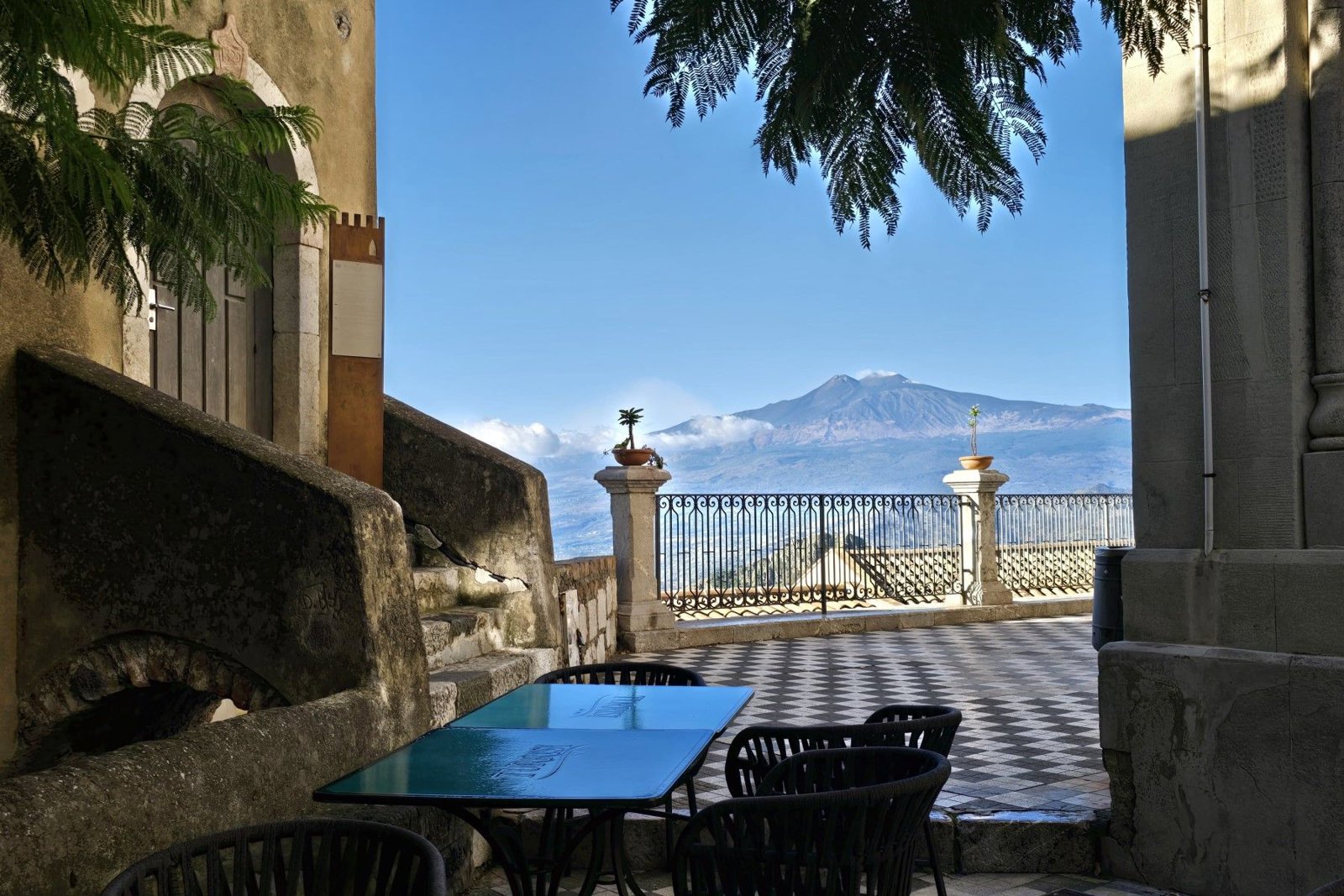
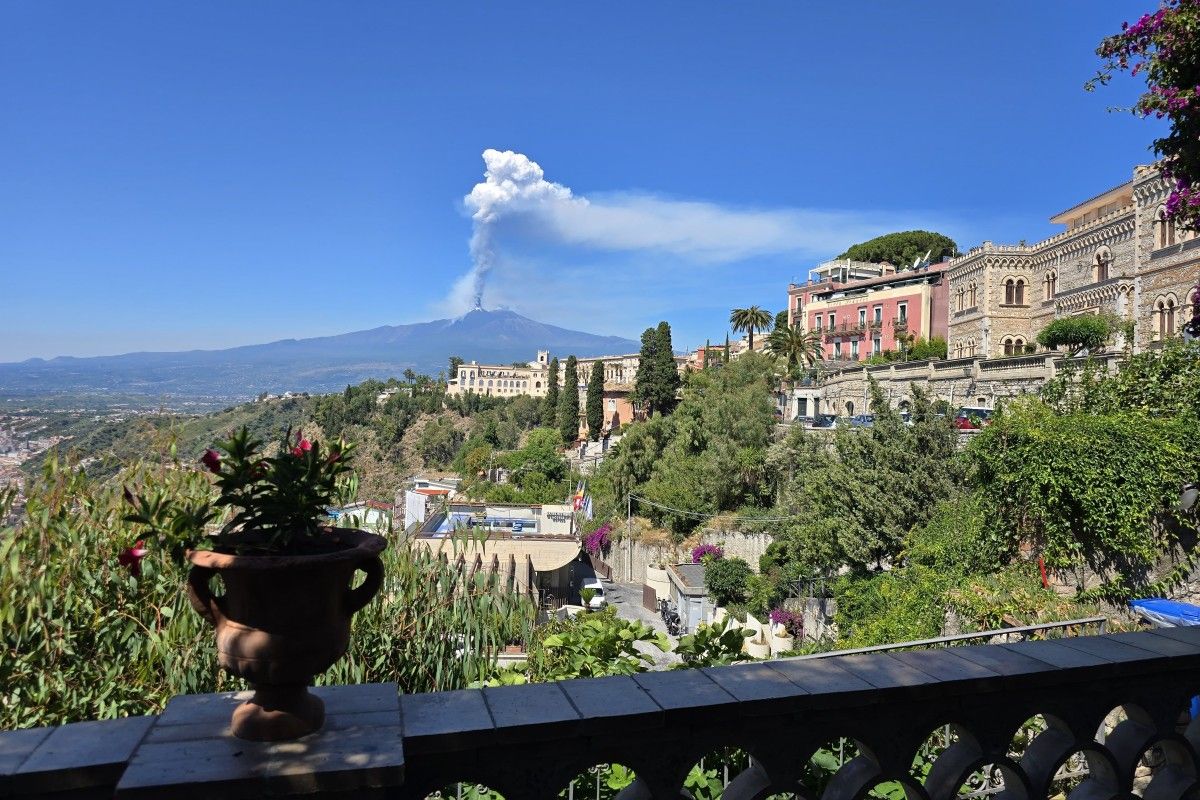
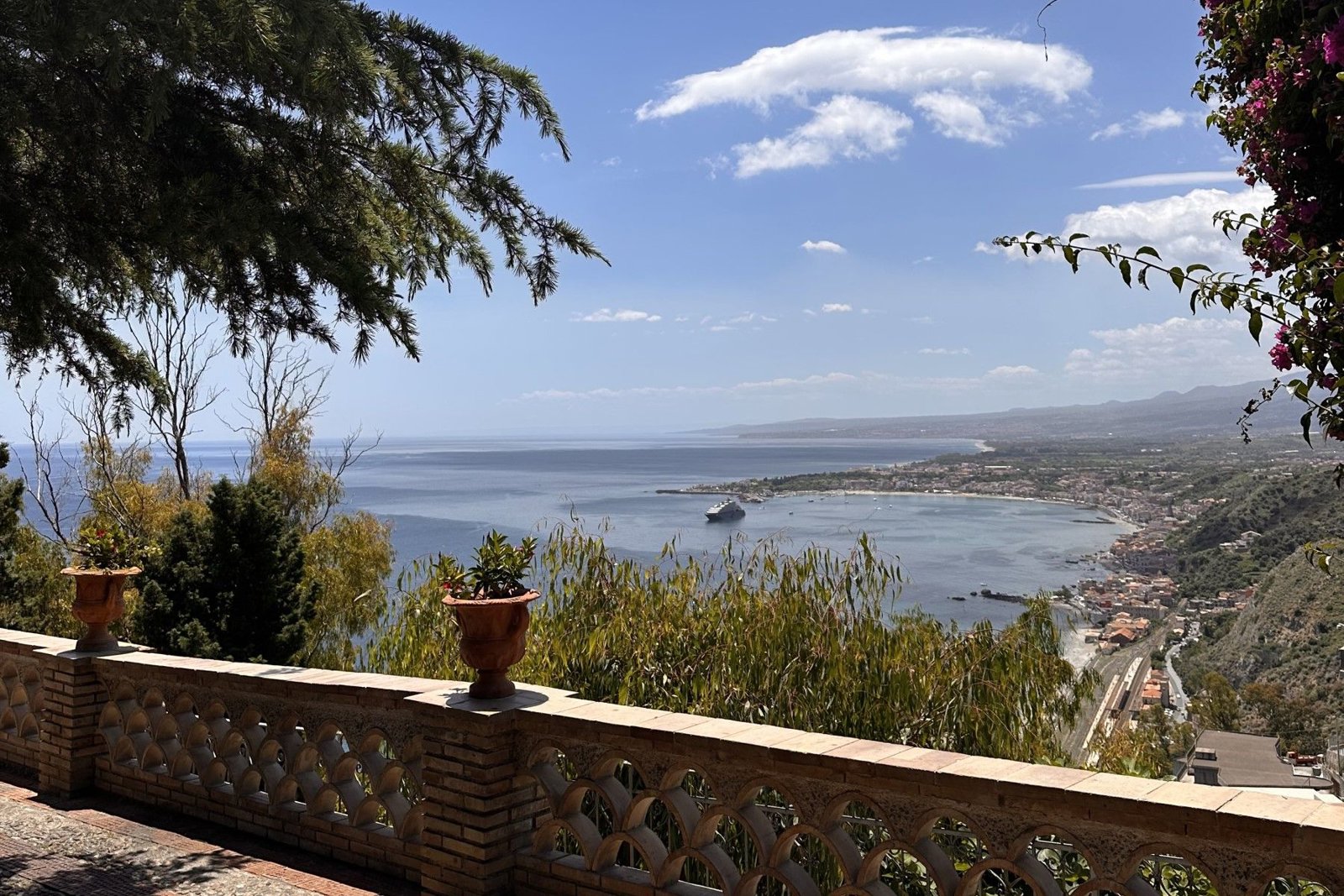
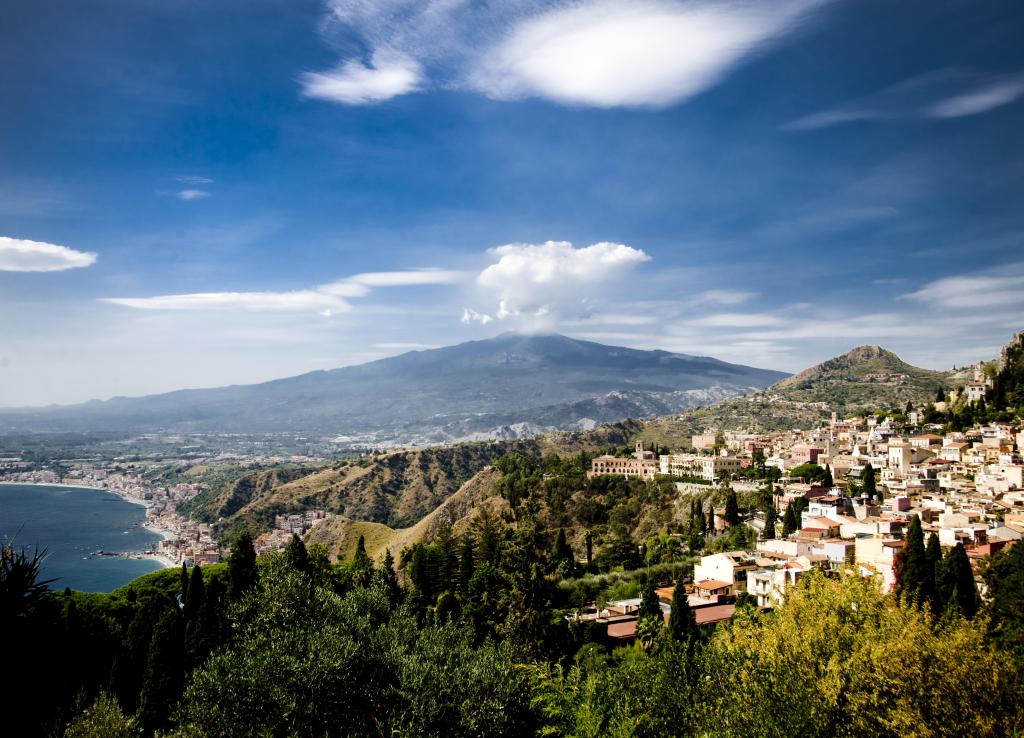
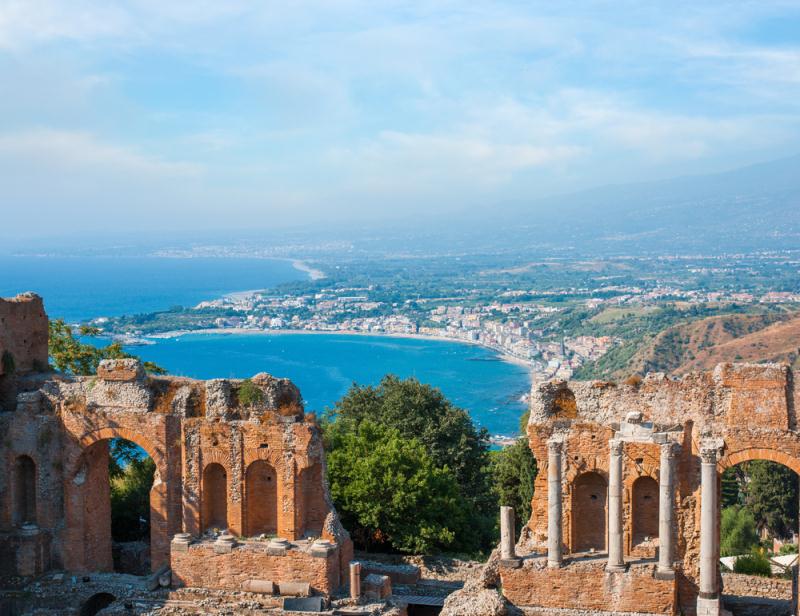
Perched on a cliff above the Ionian Sea with Mount Etna's cone rising behind it, Taormina has been drawing travellers since the Grand Tour era for reasons that remain entirely valid. The ancient Greek-Roman theatre, dating from the 3rd century BC and subsequently expanded by Roman engineers, provides one of the world's great theatrical backdrops: the stage frames a view of the sea and the volcano simultaneously. Taormina's corso (main street) threads between medieval towers, baroque churches and the terrace gardens of the Villa Comunale — a clifftop public garden created by an English noblewoman in the 19th century. The town's small scale and car-free core make it navigable on foot, while the network of paths descending to the sea offers additional exploration.
The Alcantara River Gorge: Lava Meets Water
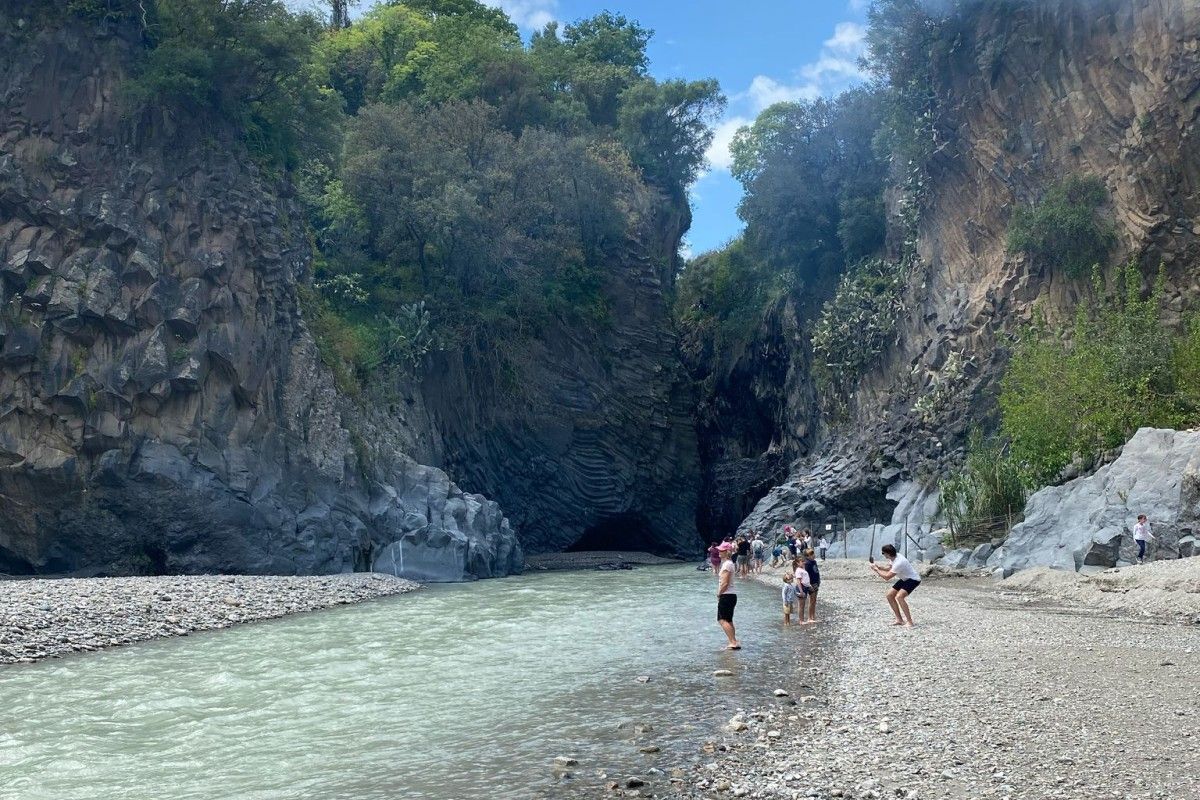
The Alcantara Gorge is a geological phenomenon carved over millennia by the Alcantara River cutting through ancient basalt lava flows, creating dramatic columnar rock formations and narrow canyon walls in shades of grey, black and rust. At its most photogenic points, the gorge narrows to just a few metres wide, with prismatic basalt columns rising vertically like organ pipes from the riverbed. In summer, the river runs cold even as the air temperature exceeds 30°C, and wading through the lower gorge provides a memorable contrast to the parched Sicilian landscape outside. The site sits between Catania and Taormina, making it a natural combination stop on excursions covering both destinations.
Castelmola: Views Beyond Taormina
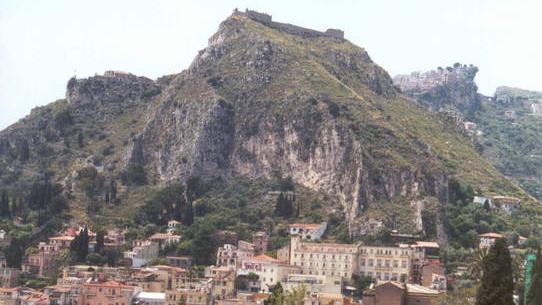
Perched 530 metres above sea level on a rocky peak above Taormina, Castelmola is a small medieval village that extends the Taormina excursion into an even more dramatic vantage point. The ruined castle at the summit has been occupied since at least the 9th century and offers unobstructed panoramic views that take in the Ionian Sea, the Strait of Messina, the Aeolian Islands on clear days and the complete profile of Mount Etna. The village is known for its bar that popularised almond wine (vino di mandorla), a local speciality made from the abundant almond groves of the region. Castelmola's tiny piazza and narrow lanes retain a quiet character distinct from Taormina's busier tourist atmosphere.
Savoca: Walking the Godfather Landscape
The village of Savoca, clinging to a hilltop in the Ionian hills above Taormina, became the fictional Sicilian homeland of the Corleone family when Francis Ford Coppola chose it for the Sicilian sequences of The Godfather in 1971. The Bar Vitelli, where Michael Corleone sought permission to court Apollonia, remains open and largely unchanged — its walls still hung with film photographs and original prop materials. The village itself, a cluster of medieval stone houses and two Norman churches, appears to have changed little in the decades since filming, and the wider landscape of terraced citrus groves, olive trees and dramatic sea views connects the fiction back to a very real Sicily. The Godfather association brings visitors who might otherwise overlook Savoca, but the village rewards exploration on its own terms.
Mount Etna Wine Country: Volcanic Terroir
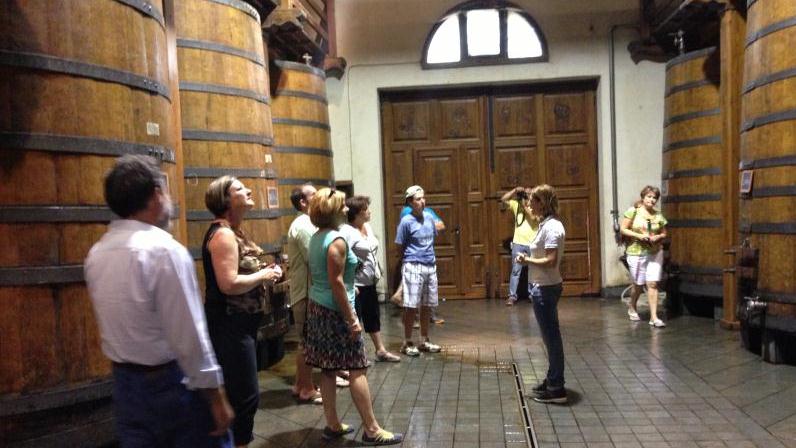
The slopes of Mount Etna have become one of Italy's most closely watched wine regions, with volcanic soils, extreme altitude variation and ancient ungrafted Nerello Mascalese vines producing wines that have attracted comparisons to Burgundy's finest Pinot Noirs. The Etna DOC appellation covers both the reds (primarily Nerello Mascalese) and whites (Carricante) grown across the volcano's slopes, with producers in the north generally cited for the most complex examples. Shore excursion wine experiences combine the dramatic landscape of the volcano with tastings at estate wineries, pairing geological education with sensory appreciation. The contrast between the black volcanic soil, the green vine canopy and the snow-capped summit above creates one of viticulture's most visually arresting settings.
Catania travel tips
Dress in Layers for Etna Excursions. Mount Etna's upper slopes sit well above 2,000 metres and can be 15–20°C cooler than the coastal temperatures. Even in summer, wind and cloud can make the crater area genuinely cold. Wearing light layers that can be added or removed, along with closed-toe shoes (the lava rock is sharp and uneven), ensures comfort at altitude regardless of how warm conditions appear at sea level when boarding your excursion.
Taormina's Crowds Peak Between 10:00 and 15:00. Taormina is among Sicily's most visited destinations and the Corso Umberto and Greek Theatre fill rapidly during midday hours, particularly in summer. Arriving early in the morning or after 16:00 offers a significantly different, calmer experience of the town's lanes and viewpoints. The Greek Theatre is best photographed in morning light when Etna's profile is less likely to be obscured by afternoon cloud.
Granita is a Breakfast, Not a Dessert. In eastern Sicily, granita con brioche is the conventional morning meal — the semi-frozen flavoured ice (typically almond, coffee, strawberry or pistachio) is served alongside a soft Sicilian brioche for dipping. Eating it at 08:30 alongside locals in a Catania bar is a genuine cultural experience quite unlike ordering it as an afternoon treat. Lemon granita in Catania typically uses lemons from the slopes of Etna.
Etna's Eruption Status Affects Upper Crater Access. Mount Etna's activity level directly determines how close excursions can reach the summit craters. During elevated volcanic activity, access may be restricted to lower elevations. This is not a reason to avoid an Etna excursion — even the lower volcanic landscape is extraordinary — but it means that the exact experience varies with conditions. Checking current eruption status through Italian volcanological institute (INGV) updates before your port day gives realistic expectations.
Sicilian Sun Requires Genuine Sun Protection. Sicily's Mediterranean latitude and clear skies mean UV intensity is high even in spring and autumn. Sunscreen, a hat and sunglasses are genuinely necessary rather than optional precautions for anyone spending time in Taormina's open piazzas or on Etna's exposed higher slopes. The reflectivity of black volcanic rock and seawater amplifies exposure. Lighter coloured clothing also helps significantly in summer months.
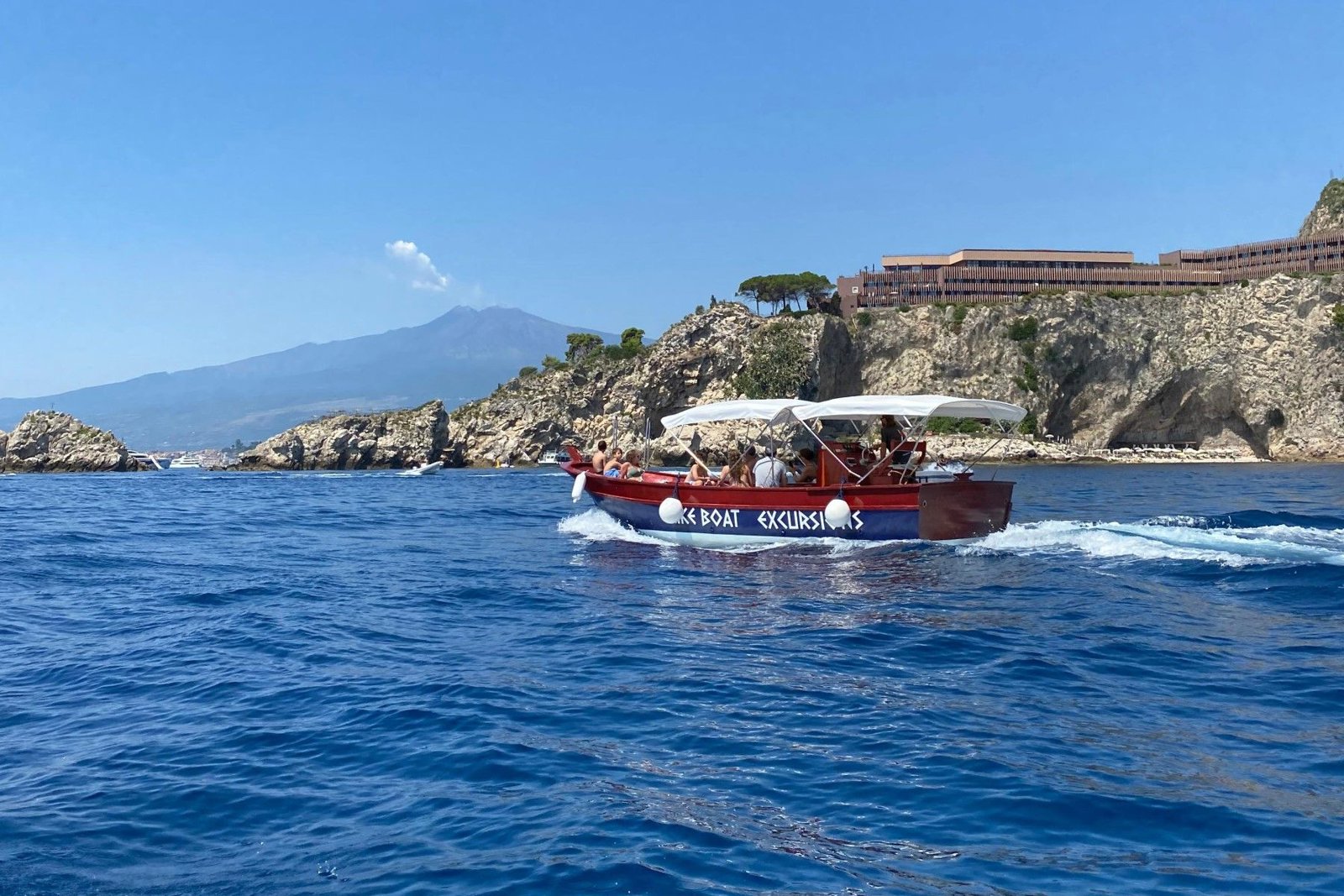
The Cyclops Coast Offers an Alternative to Taormina's Crowds. The stretch of coastline north of Catania, known as the Riviera dei Ciclopi, takes its name from the offshore volcanic rocks (the Faraglioni dei Ciclopi) that mythology identified as boulders thrown by the blinded Cyclops Polyphemus. The fishing town of Aci Trezza and the more genteel resort of Aci Castello, with its Norman castle built on a lava promontory above the sea, offer a quieter Sicilian coastal experience with strong local character and excellent seafood restaurants serving the catch from the Ionian.
Port Facts Every Cruiser Needs To Know
Catania shore excursion FAQs
Taormina is approximately 50 km north of Catania along the Ionian coast. By coach or vehicle, the journey takes roughly 45 minutes to 1 hour 15 minutes depending on traffic. Summer weekends can see significant congestion on the coastal road. Allow at least 3–4 hours in Taormina itself to explore the Greek Theatre, main corso and viewpoints properly.
Mount Etna is an active volcano but is extensively monitored by Italy's National Institute of Geophysics and Volcanology (INGV), and access routes are adjusted according to real-time activity levels. Excursions to the lower and mid-mountain areas proceed under most conditions. Proximity to the summit craters depends on current eruption status and may be restricted during more active phases. The landscape itself is extraordinary at any accessible altitude.
Yes — combined Etna and Taormina excursions are among the most popular options from Catania for this reason. A port day of 8–10 hours is sufficient to visit Etna's volcanic landscapes and spend 2–3 hours in Taormina, though the pace is moderately full. Combining with the Alcantara Gorge adds further interest to the journey between the two.
The Alcantara Gorge is a natural canyon carved by the Alcantara River through ancient lava flows, creating dramatic columnar basalt formations. The upper park area with viewing platforms is accessible to most visitors. Wading through the river gorge itself requires physical agility, cold water tolerance and appropriate footwear — it is not suitable for young children or those with limited mobility. Wetsuit hire is available at the site for those wishing to wade.
Savoca is a medieval hilltop village that served as the filming location for the Sicilian scenes in Francis Ford Coppola's 1972 film The Godfather. The Bar Vitelli, used in the scene where Michael Corleone proposes marriage, remains operational and largely unchanged, with film memorabilia on display. The village itself is genuinely beautiful and historically interesting beyond the film connection, set among citrus groves with panoramic coastal views.
The Etna DOC appellation produces reds primarily from Nerello Mascalese grapes and whites from Carricante, both grown at altitude on volcanic soils that impart distinctive mineral characteristics. Etna reds in particular have attracted international critical attention over the past decade and are compared favourably to Burgundy. Estate wineries on the volcano's slopes offer tastings, and Taormina's restaurants typically carry good Etna selections by the glass.
Catania's baroque city centre is a UNESCO World Heritage site and genuinely impressive — the Piazza del Duomo with its lava-stone elephant fountain, the Via Etnea and the covered fish market (La Pescheria) are vivid, authentic urban experiences. However, given that Taormina and Etna are accessible from the same port day, most cruise visitors prioritise those destinations. Guests with a shorter port call or a preference for urban exploration will find Catania itself thoroughly rewarding.
La Pescheria, Catania's ancient fish market, occupies a lava-stone courtyard behind Piazza del Duomo and operates from early morning until approximately 13:00 on weekdays. The market is one of Sicily's most atmospheric food experiences — a densely packed tableau of swordfish, tuna, sea urchins and deep-sea catch displayed on ice beneath the shouted calls of vendors. It is primarily a working market supplying local restaurants and households, which preserves its authenticity.
Castelmola is a small medieval village situated 530 metres above sea level on a peak above Taormina, offering even more dramatic panoramic views. While Taormina is a well-developed tourist resort with hotels, restaurants and considerable foot traffic, Castelmola remains a quieter village with fewer facilities but arguably superior views — on clear days the Aeolian Islands are visible. It is typically combined with a Taormina visit rather than visited independently.
Comfortable walking shoes are essential — Catania's old town has uneven lava-stone paving, Taormina's lanes are steep and cobbled, and Etna's volcanic terrain requires closed-toe footwear. Sun protection (sunscreen, hat, sunglasses) is important given Sicily's high UV levels. For Etna, add warm layers regardless of coastal temperatures, as the upper mountain is significantly cooler. A small daypack with water and a light jacket covers most scenarios.
Filters
Select a filter to refine results.
Tour Type
Tour Activity
 Cart
Cart
 USD
USD GBP
GBP AUD
AUD EUR
EUR CAD
CAD