



Tours in Ponta Delgada



Cruising to Ponta Delgada in a group?
Skip the crowded ship excursion bus. One dedicated planner will design a private shore experience around exactly what your group wants — coordinated from first enquiry to the moment you're back on board. More memorable, more flexible, and more affordable than you might expect. Spend less time organising, more time enjoying.
Explore Group Travel →Cruising to Ponta Delgada
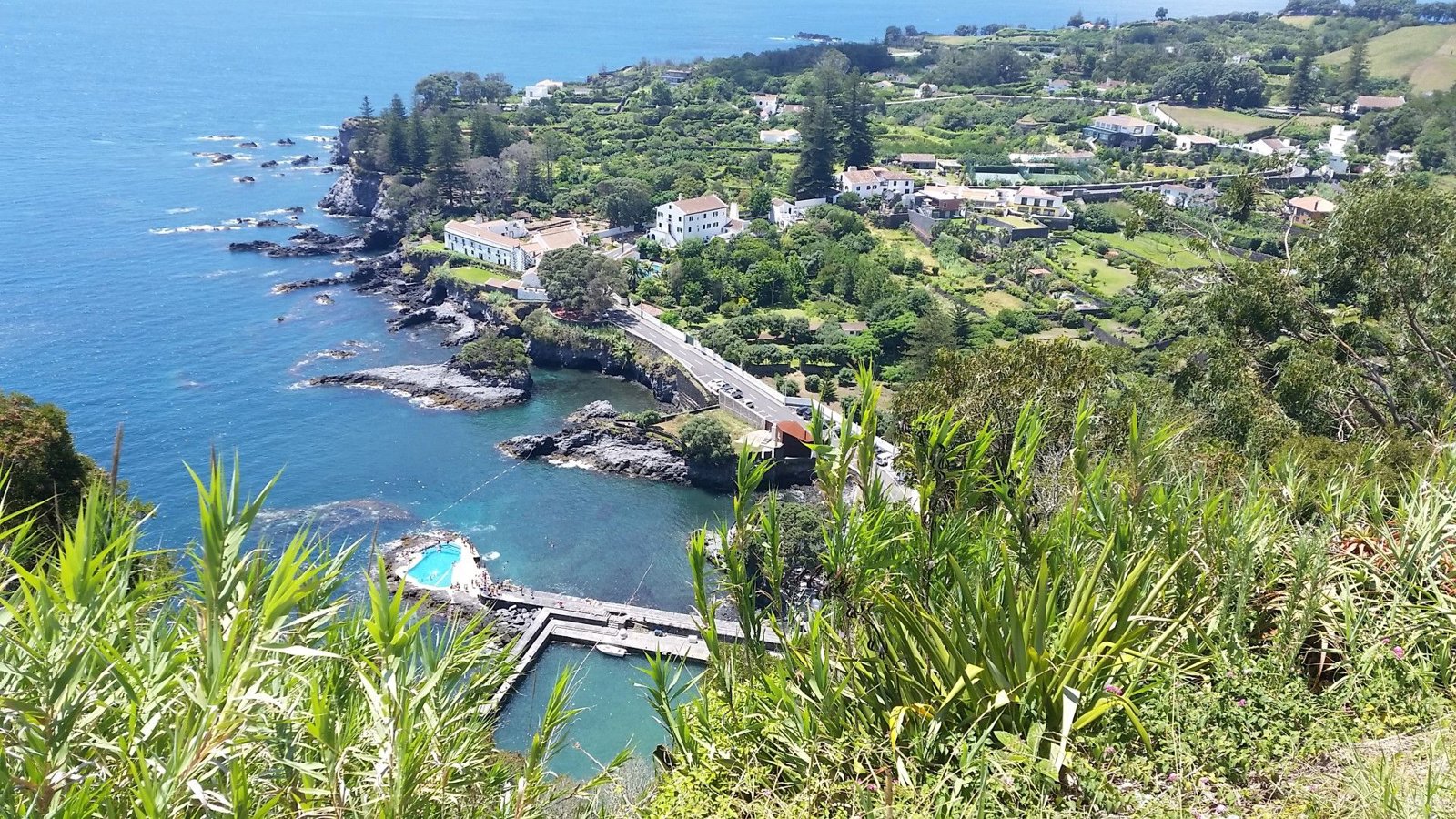
Ponta Delgada is the largest city and principal port of São Miguel Island, the biggest island in the Portuguese Azores archipelago. Sitting roughly equidistant between Europe and North America in the mid-Atlantic, the Azores feel genuinely apart from the world — a place where volcanic craters cradle brilliantly colored lakes, geothermal springs bubble beside lush gardens, and whale watching is not a seasonal novelty but a year-round reality. São Miguel earned its nickname the Green Island honestly: subtropical climate, high rainfall, and volcanic soil produce a landscape of extraordinary fertility, with hydrangea-lined roads, the only tea plantations in Europe, and dense laurisilva forests draping mountain ridges in every direction.
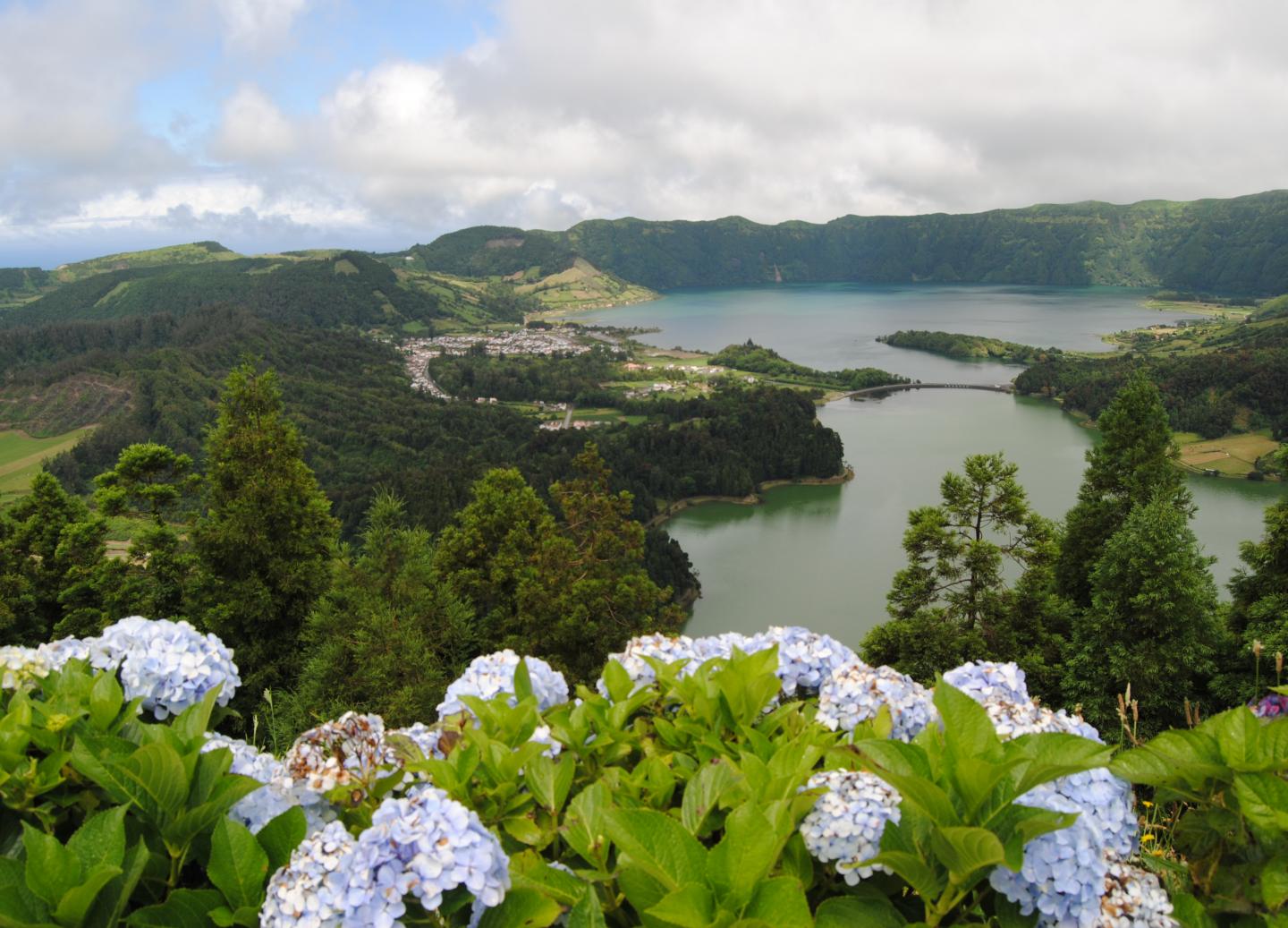
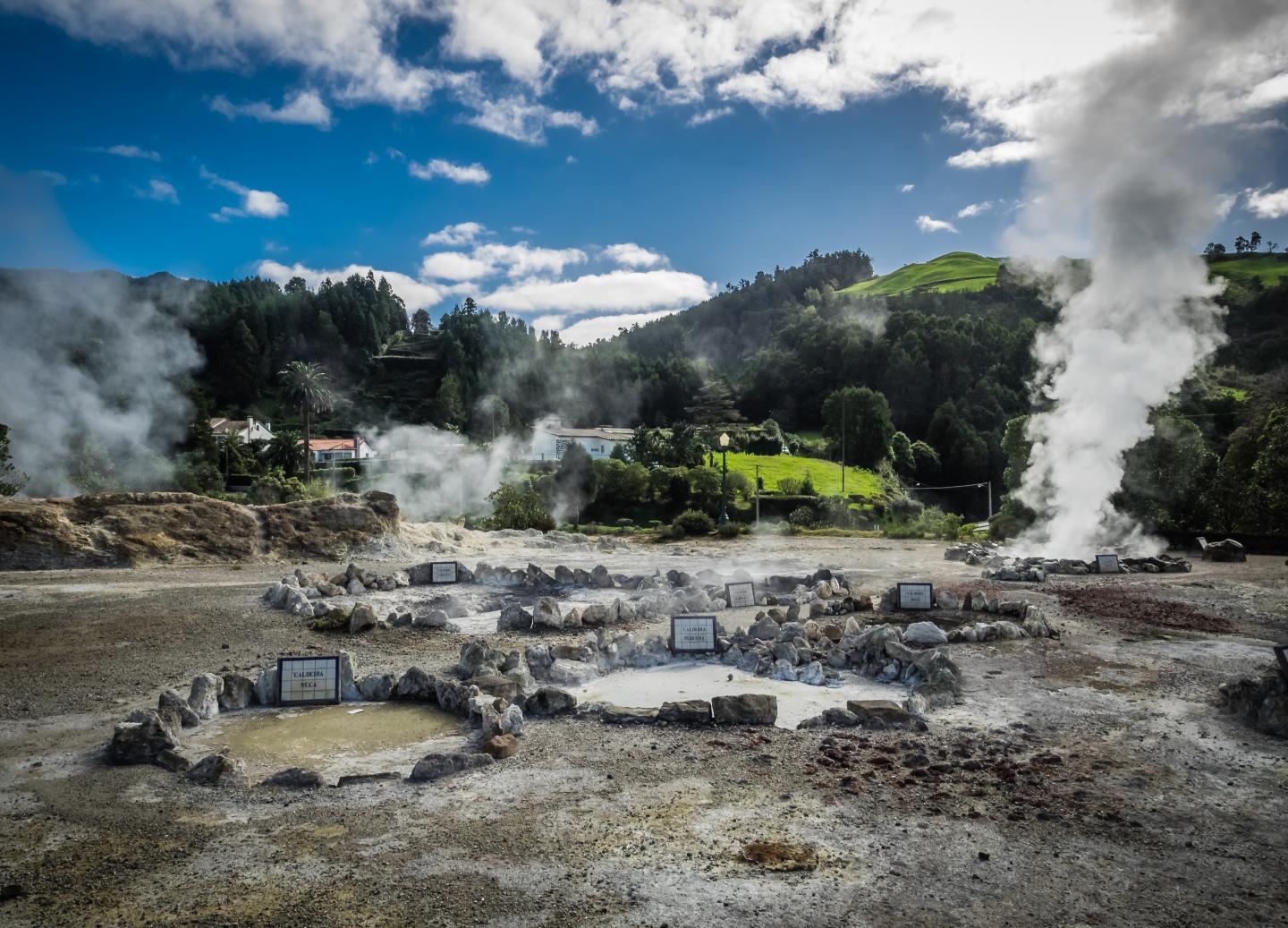
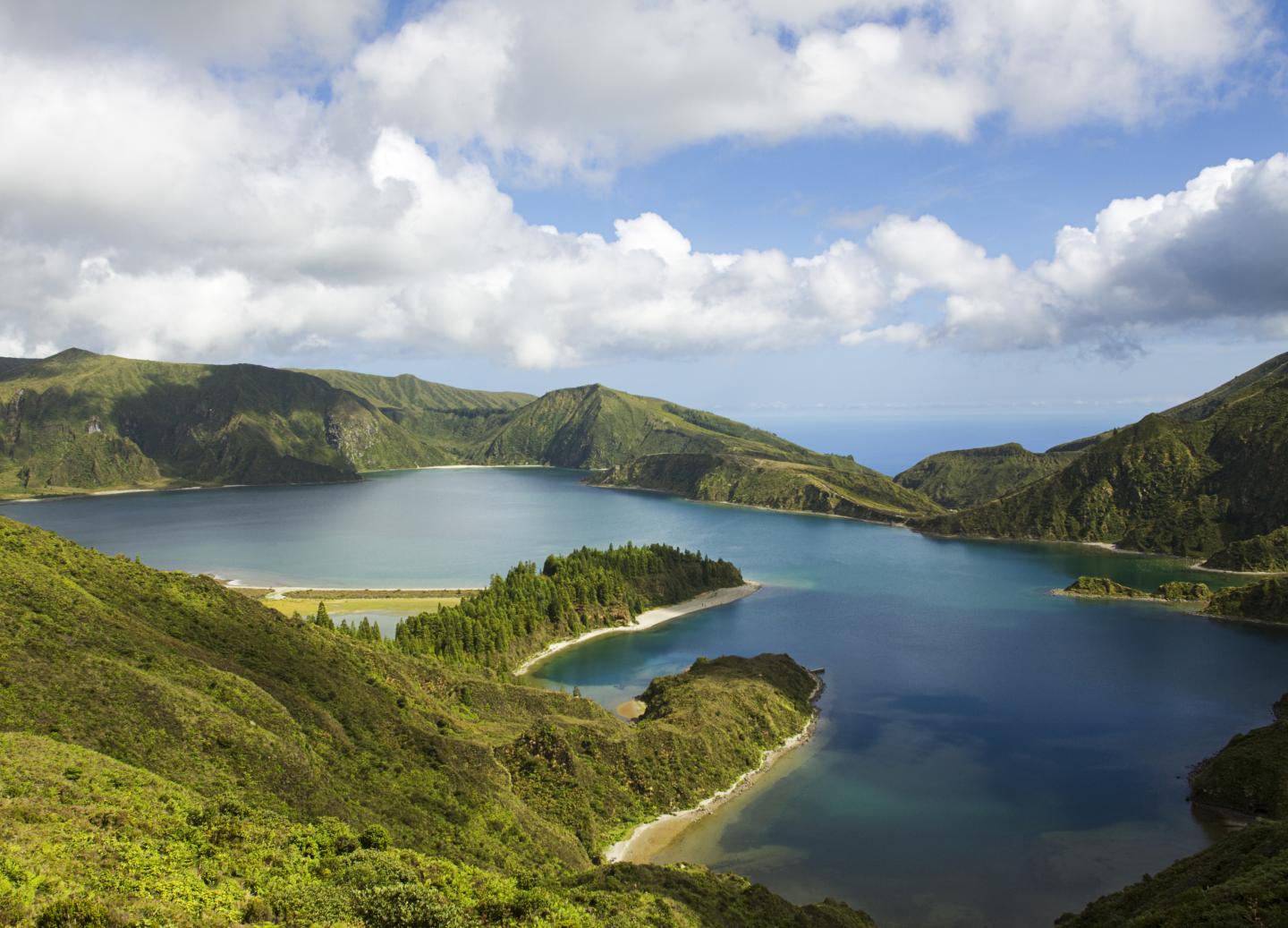
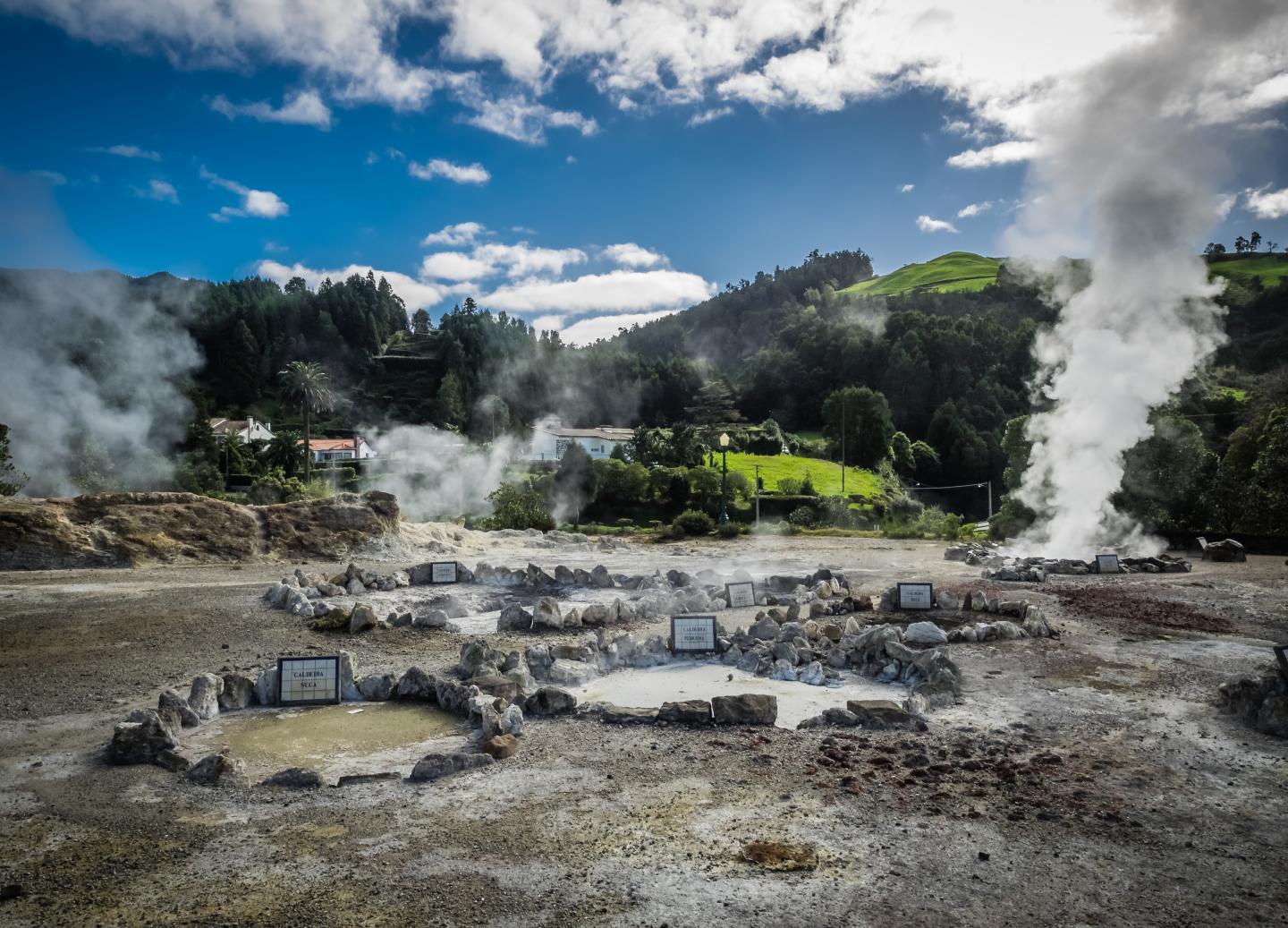
The island's interior is dominated by three volcanic calderas, each holding lakes of almost surreal color. Sete Cidades in the west cradles twin lakes — one vivid green, one electric blue — divided by a stone bridge and best seen from the rim viewpoints above. Furnas Valley in the east offers the most dramatic geothermal experience: caldeiras of boiling mud and steam vents set within parkland, and a handful of restaurants where the island's signature stew is slow-cooked underground by volcanic heat. Between them, Lagoa do Fogo occupies a high interior crater accessible by mountain road, its pristine lake surrounded by undisturbed scrubland and often shrouded in cloud.
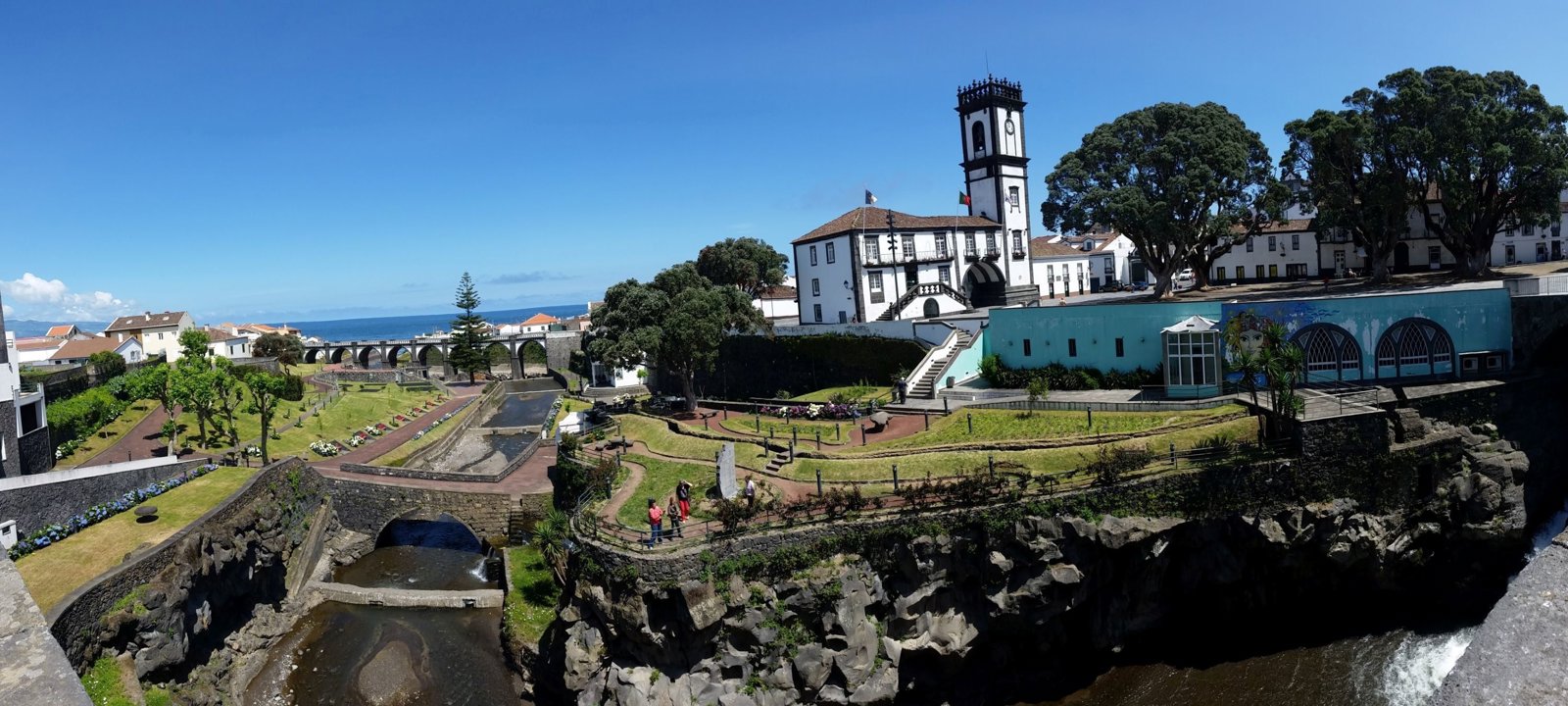
Ponta Delgada itself rewards those who linger before or after an island excursion. The black basalt cobblestones, whitewashed baroque churches, and ornate triple-arched Portas da Cidade gate define a historic center with real character. The working Mercado da Graça overflows with local cheeses, chouriço, and the greenhouse pineapples the island has grown for centuries. Fort São Brás, the 16th-century Church of São Sebastião with its azulejo-covered exterior, and the palm-lined seafront gardens complete a city portrait that is understated but genuine.
Cruise passengers occupy an excellent position here: the port sits at the heart of the city, placing the historic center within immediate walking distance, while organized excursions can reach the island's most spectacular volcanic scenery within 30 to 45 minutes. Whether the priority is geothermal immersion at Furnas, the improbable colors of Sete Cidades, a morning with whales offshore, or simply the quiet pleasure of an Azorean market, a day on São Miguel almost invariably delivers something exceptional.
Top things to do in Ponta Delgada on a cruise stopover
Sete Cidades Twin Crater Lakes
The western caldeira of São Miguel holds two lakes — one vivid green, one electric blue — separated only by a narrow stone bridge and viewed most dramatically from the Boca do Inferno or Vista do Rei viewpoints on the caldera rim. The color difference, caused by differential light reflection rather than chemistry, appears almost too improbable to be natural. Tours to Sete Cidades typically wind along the rim road with stops at village viewpoints, pass through a pineapple plantation greenhouse en route, and often include time at the lake shore. Half-day tours allow time for both the crater and the city center before returning to ship. VA offers small group discoveries and private tours, including jeep excursions that access the caldera interior on off-road tracks.
Furnas Valley Geothermal Experience
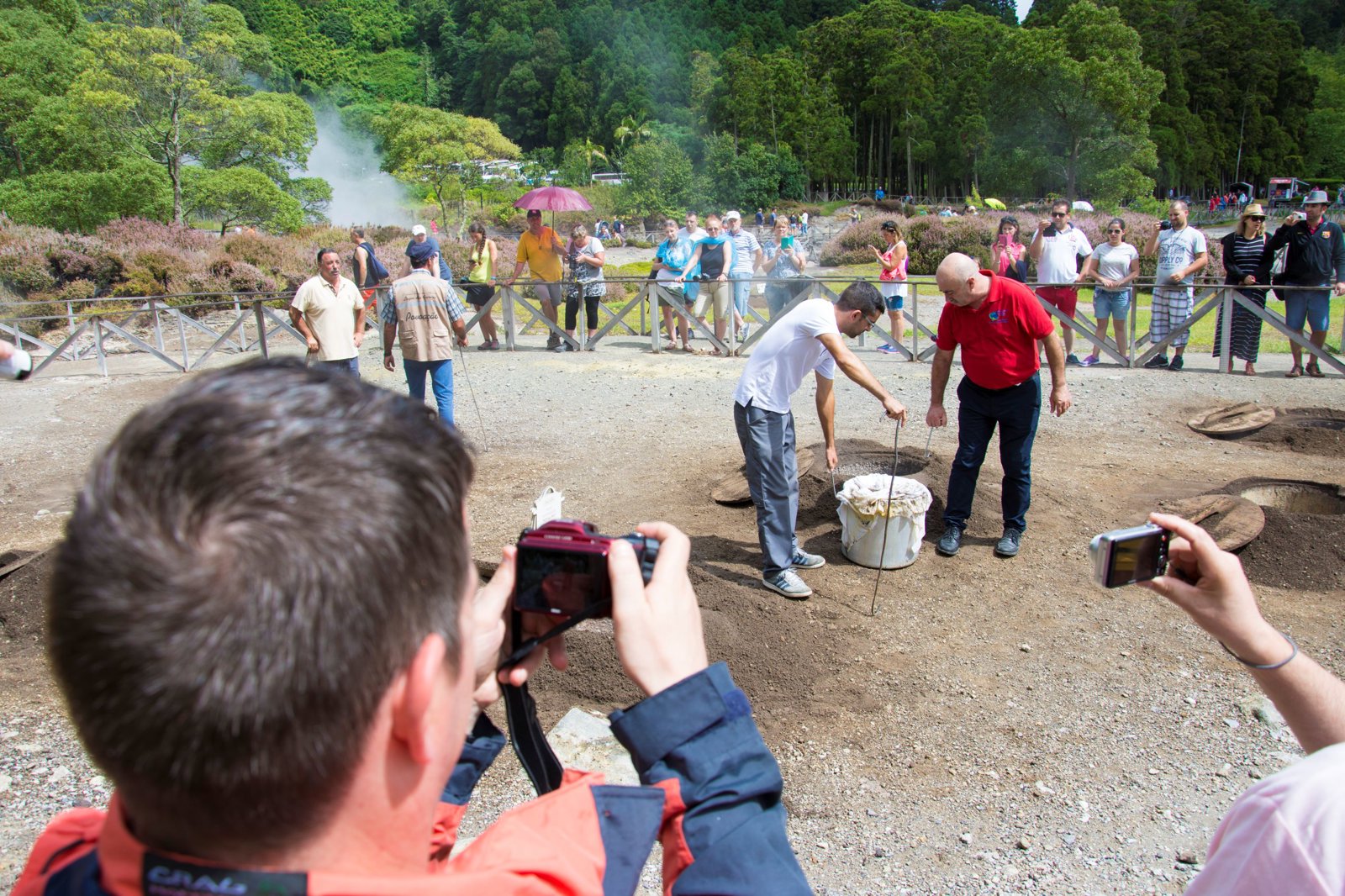
The Furnas Valley is São Miguel's most dramatic thermal landscape — and arguably the most memorable single destination on the island. Caldeiras, clusters of vigorously boiling mud pools and steam vents, bubble within parkland near Lagoa das Furnas, their sulfurous plumes rising above the surrounding subtropical vegetation. The valley is also where cozido das Furnas is prepared: sealed pots of meat, chouriço, and vegetables lowered into volcanic vents for six to seven hours, collected and served at the lakeside restaurants each lunchtime. Full-day VA tours include the 19th-century Terra Nostra Botanical Garden with its iron-rich thermal pool, the caldeira walks, and the tea plantation at Gorreana — the only working tea estate in Europe.
Lagoa do Fogo and Caldeira Velha
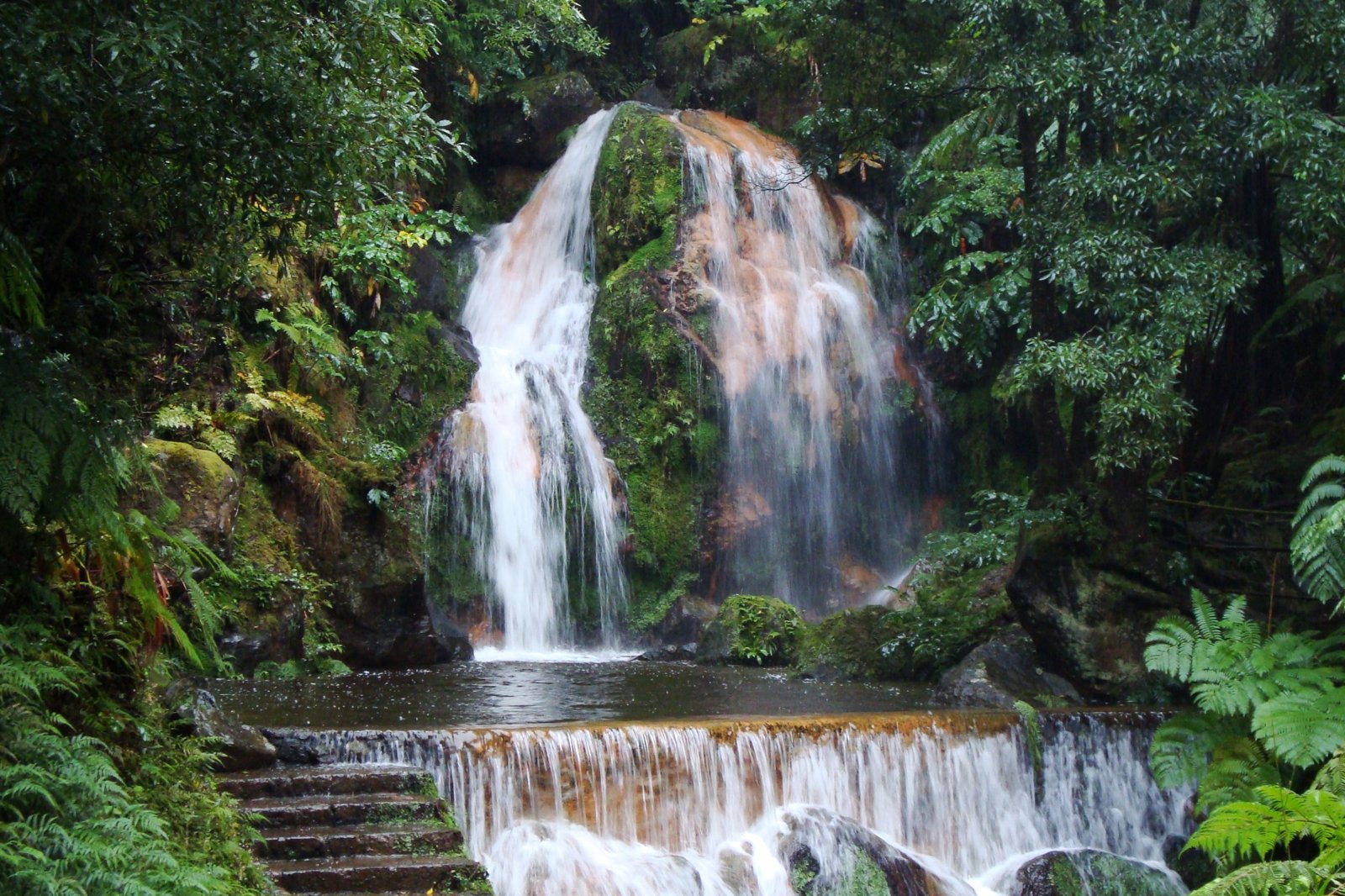
The Lake of Fire occupies a high interior crater, accessible only by mountain road and frequently wreathed in cloud at its upper reaches. When it clears — which it often does dramatically, within minutes — the view across a pristine alpine lake ringed by undisturbed volcanic scrub feels genuinely remote and reward-earning. VA van tours combine Lagoa do Fogo with Caldeira Velha, a waterfall-fed pool heated by geothermal activity and surrounded by dense tree fern forest. Bathing here — in warm, slightly sulfurous water beneath a cascade — ranks among the more unexpected pleasures available on an Azores port day.
Atlantic Whale and Dolphin Watching
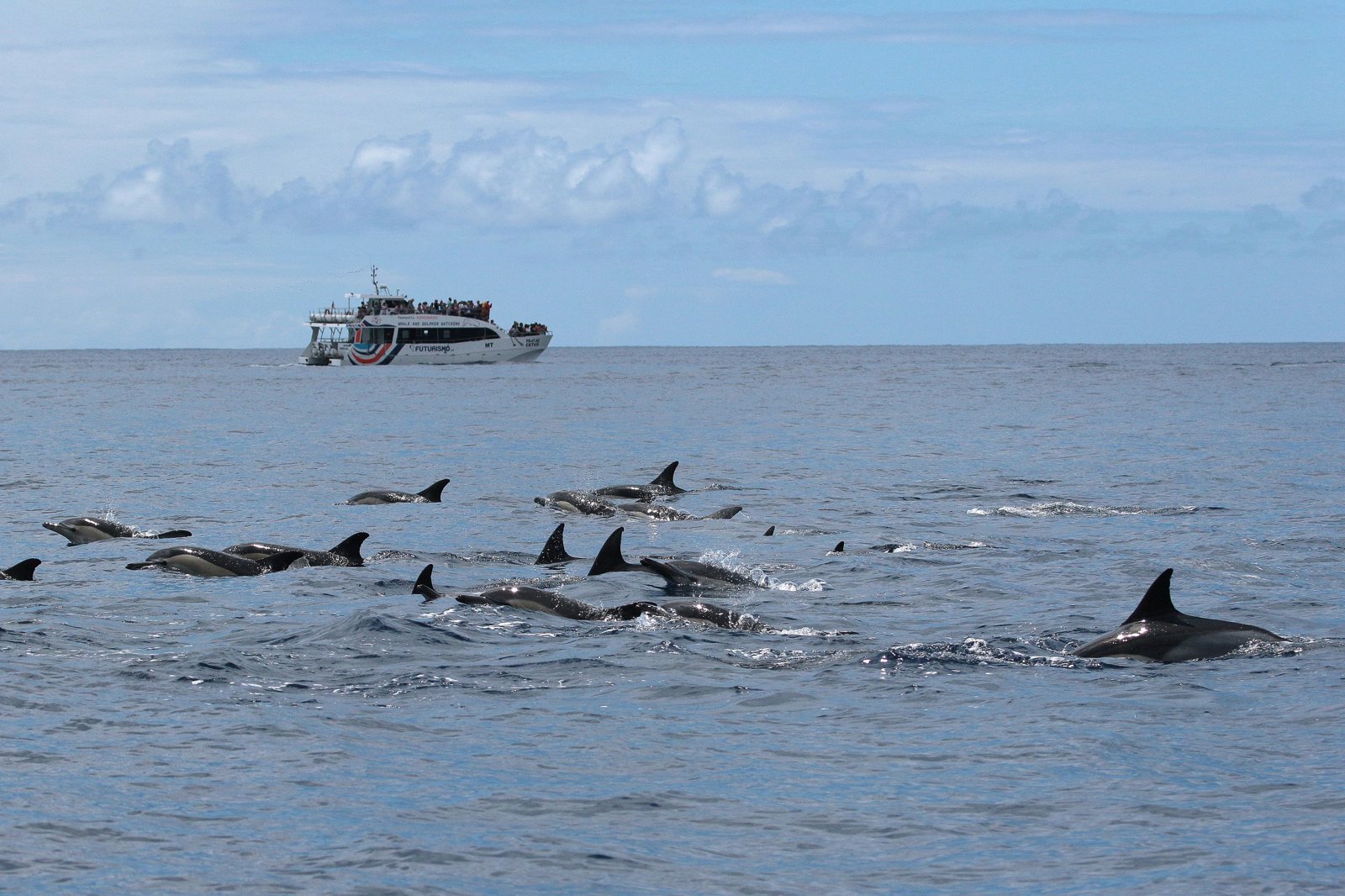
The deep Atlantic waters surrounding the Azores constitute one of the world's premier cetacean habitats, with over two dozen species recorded. Unlike seasonal whale watching elsewhere in Europe, the Azores' warm currents and abundant food sources make sightings possible throughout the year. VA catamaran excursions depart from Ponta Delgada harbor accompanied by marine biologists who provide live commentary on behavior and biology. Sperm whales are resident year-round; common, bottlenose, and Risso's dolphins are frequent companions. The three-hour duration pairs well with morning city exploration, making this one of the most time-efficient island experiences available on a cruise day call.
Ponta Delgada Historic Center
The city deserves more than a brief transit between ship and excursion coach. The Portas da Cidade — a baroque triumphal arch in black and white basalt — frames the main waterfront square with theatrical elegance. The 16th-century Igreja de São Sebastião, covered in blue-and-white azulejo tile panels, anchors the adjacent square. The working Mercado da Graça is the place to encounter local life: fresh queijo da ilha, chouriço, Azorean bread, and greenhouse pineapples that bear no resemblance to the imported variety. The seafront gardens, the 16th-century Forte de São Brás (now a military museum), and the grand Câmara Municipal building complete a city walk that takes no more than two leisurely hours.
Jeep and Off-Road Island Exploration
São Miguel's volcanic interior reveals itself most fully from off the tarmac. VA jeep excursions access terrain that standard vehicles cannot reach — caldera rim tracks, laurisilva cloud forest paths, and viewpoints where the Atlantic is visible in multiple directions simultaneously. Off-road routes typically traverse the spine of the island, combining crater views with forest driving and access to São Miguel's westernmost point, where open ocean stretches uninterrupted to the horizon. For first-time visitors wanting the most comprehensive overview of the island's extraordinary landscapes within a single day, a jeep circuit provides the broadest geographic sweep.
Ponta Delgada travel tips
Dress in Layers for Crater Visits. Temperatures at the caldera rim viewpoints can be several degrees cooler than in the city below, and brief Atlantic showers can appear without warning at any time of year. Pack a light waterproof layer and wear comfortable, closed-toe walking shoes regardless of the season. The same outfit that feels right at the Ponta Delgada waterfront may be genuinely insufficient at the Sete Cidades rim an hour later.
Depart Early for the Best Views. The famous Vista do Rei viewpoint at Sete Cidades and the Lagoa do Fogo crater are prone to afternoon cloud cover. Excursions that depart early — before 9am when possible — typically encounter clearer skies and fewer other visitors at the viewpoints. Morning mist over the caldeira often burns off by mid-morning to reveal the lakes, but by early afternoon cloud frequently returns. Early departures also leave time for city exploration after returning.
Try the Cozido if Your Tour Includes Furnas. Eating cozido das Furnas at one of the Furnas village restaurants is an experience that cannot be replicated anywhere else in the world — food cooked by geothermal energy rather than a stove. Portions are large and service can be unhurried; allow at least 90 minutes for the meal. If you book a full-day Furnas tour, confirm whether lunch is included and whether a restaurant reservation is in place — the most popular spots fill by early afternoon.
Visit the Market Before Excursions Depart. The Mercado da Graça is at its best in the early morning before tour coaches begin their day. It opens early and sees genuine local shopping before the visitor crowds arrive. This is the place for authentic Azorean pineapple — grown in traditional greenhouses just outside the city and incomparably sweeter than the imported variety — along with local cheese, chouriço, and freshly baked bread. Allow 20-30 minutes before boarding any excursion.
Pack Swimwear on Any Excursion. Multiple VA tours include opportunities to bathe in geothermal waters — at Caldeira Velha's warm waterfall pool, in the iron-rich thermal pool at Terra Nostra Gardens in Furnas, or in natural hot springs. Even if your specific tour description does not list swimming as a scheduled stop, conditions on the day sometimes allow for unplanned opportunities. Pack swimwear and a small towel regardless of which option you have booked.
Allow Generous Return Buffer Time. The island's rural roads carry significant traffic during summer, and the drive from Furnas or Sete Cidades back to the port takes 35–60 minutes depending on conditions and the time of day. Always leave a comfortable margin before your ship's all-aboard time — island conditions, including weather stops and variable road traffic, can extend journey times unpredictably. Organized excursions with experienced operators build this margin in; independent exploration requires especially careful time management.
Port Facts Every Cruiser Needs To Know
Ponta Delgada shore excursion FAQs
Yes. The historic city center begins virtually at the port gates — the Portas da Cidade arch and main Praça Gonçalo Velho Cabral square are a five-minute walk from the dock. Most cafes, the Mercado da Graça market, the main churches, and the seafront gardens are within a 10–15 minute walk. The city is extremely easy to navigate on foot.
Not comfortably on a typical cruise port call. The two sites are on opposite ends of the island and each deserves at least half a day. Attempting both in six to eight hours produces a rushed experience with minimal time at either location. Most visitors choose one based on preference — Sete Cidades for the crater lake colors, Furnas for the geothermal activity and the cozido experience. Full-day tours to either destination allow for a genuinely unhurried visit.
No operator can guarantee specific wildlife sightings, as ocean conditions and animal movement vary daily. However, the Azores is one of the world's most reliable whale-watching destinations, and most excursions result in sightings. Sperm whales are resident in these waters year-round. VA's catamaran tours use land-based spotters — a traditional Azorean technique — to locate cetaceans before and during the trip, significantly improving encounter rates compared to untargeted searches.
The caldeiras of São Miguel are frequently cloud-capped, particularly in winter and on afternoon excursions. Morning departures generally have better visibility. When cloud settles on one viewpoint, experienced guides typically know alternative positions or nearby sites that remain clear. Some atmospheric uncertainty is intrinsic to the Azorean experience — the combination of volcanic steam, cloud, and sudden clarity is itself part of what makes the landscape so memorable.
Yes, at several locations. Caldeira Velha offers a warm waterfall pool in a fern forest setting — temperature is pleasantly warm rather than hot, suitable for all ages. The Terra Nostra Botanical Garden in Furnas has a large iron-rich thermal pool (entry fee applies; swimwear required; be aware the minerals may stain light-colored swimwear). Both are included in relevant VA tour itineraries. Pack swimwear and a towel for any excursion that includes either location.
The Azores are an autonomous region of Portugal and use the Euro (€). ATMs are plentiful in Ponta Delgada city center, and credit cards are widely accepted at restaurants, shops, and larger tourist facilities. Small vendors at the market and in rural villages may prefer cash, so it is worth having some euros available.
Ponta Delgada's city center and waterfront are relatively flat and accessible, with wide cobbled streets and minimal steps in the main areas. The volcanic crater landscapes, however, involve uneven terrain, inclines, and steps at most viewpoints. The Terra Nostra Botanical Garden in Furnas is largely accessible on paved paths. VA offers a wheelchair-adapted vehicle option for Madeira; passengers with specific mobility needs should enquire about accessible options when booking any São Miguel tour.
Cozido das Furnas is a traditional Portuguese meat stew — beef, pork, blood sausage, chouriço, cabbage, potatoes, and root vegetables — prepared in sealed pots lowered into volcanic geothermal vents and cooked for six to seven hours by underground heat. It is served exclusively in a handful of restaurants in Furnas village. This is a genuinely unique culinary experience with no equivalent elsewhere in the world, and it is the primary reason many visitors choose the Furnas full-day tour over other options.
Sete Cidades is on the western end of São Miguel, approximately 30–40 minutes by road from Ponta Delgada. The journey involves scenic mountain driving along the caldera rim with views over the ocean. Half-day tours allow sufficient time for the main viewpoints and a stop at a pineapple plantation greenhouse, returning with an hour or two remaining for city exploration before all-aboard.
São Miguel has several beaches accessible from Ponta Delgada. The volcanic geology means most beaches feature dark basalt sand rather than white sand — a striking aesthetic against the green landscape. Praia de São Roque is the closest significant beach to the city. However, given the extraordinary landscapes available inland, most cruise passengers find that prioritizing crater lakes, geothermal valleys, or whale watching makes better use of limited time ashore than a beach stop.
Filters
Select a filter to refine results.
Tour Type
Tour Activity
 Cart
Cart
 USD
USD GBP
GBP AUD
AUD EUR
EUR CAD
CAD